
Marc Lehman sits down with former NCAA hockey player and national cycling champion TJ Mathieson to tackle the intense reality of youth sports pressure. Young competitors face crushing expectations every single week, and learning how to manage that weight makes all the difference. TJ shares how treating personal health like an engineering system helped him master recovery and peak performance. They discuss why building genuine self-confidence and self-acceptance protects kids far better than chasing external validation. You’ll discover practical ways parents and coaches can open real conversations that help young people find their own unique path. Connect with TJ Mathieson by email at tj@missioneer.co.
Reading about mental health is hard. Let’s schedule a free consultation.
—
Watch the episode here
Listen to the podcast here
Navigating Youth Sports Pressure And High Performance With TJ Mathieson
We are here to talk openly about mental health and wellness. I am so fortunate to be joined by our guest, TJ Mathieson. TJ, how are you?
I’m fantastic. Thanks for having me. I’m excited to be here.
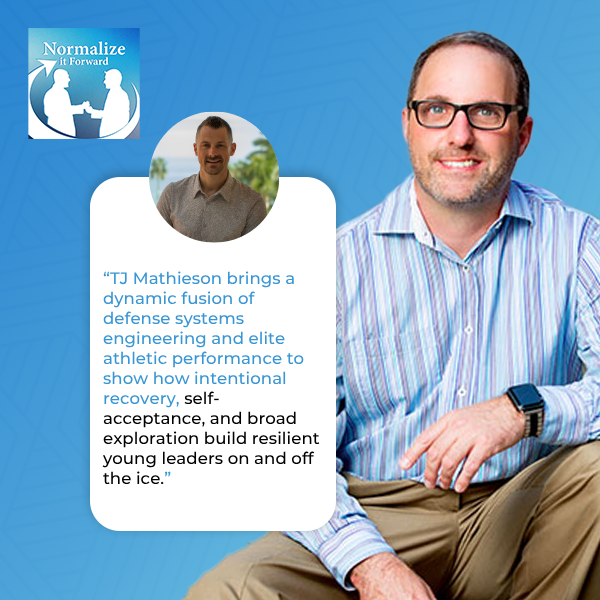
Thanks for being here. I appreciate it. TJ is the Founder of Missioneer, a defense and mission architecture firm, helping organizations solve some of the world’s most complex aerospace, space, and national security challenges. Before launching Missioneer, TJ spent more than twenty years leading mission integration and system engineering efforts, including serving as a chief mission architect at Northrop Grumman.
Beyond his career in engineering, TJ is a former NCAA Division I hockey player at the University of Notre Dame. He’s also a USA Cycling National Champion, a youth hockey coach, a licensed pilot, and a passionate mentor. His unique perspective on leadership, teamwork, resilience and high performance, both on and off the ice, make him an incredible guest. TJ, welcome.
Thank you. I appreciate the introduction.
I have to tell you, as someone who enjoys cycling myself. Let’s chat a little bit about that. USA Cycling National Champion, tell me about it.
Mastering The Mental Side Of Sprint Cycling
It’s a fun story. I moved to Australia for work and found myself riding on a velodrome, so a banked track, a circular track. From my days from ice hockey, the anaerobic aspect of sprinting on the track came naturally. I got out there. It was an absolute rush. I loved it. I got into racing on Friday nights in a very small town in Australia and realized, “I can do this.” When I moved back to the United States, I picked it up, competed in some local races, and made my way into the national scene somewhat quickly just by, again, natural experience at that similar type of muscle output.
I found that I loved it. I’d love mountain biking growing up. This was very technical. It’s a technical race. If you follow track cycling at all, it’s very precise. It’s very quick. Things happen in an instance. The longest race I did was called a Kieran. It was about eight laps long. It lasted maybe two minutes. Everything was prepared. Talking about the mental aspect of sports. You had to do all your preparation for a 30 second race or a minute long race or a two minute long race. There was very little room for error and I loved it. I thrived on that. That’s the quick version of it.
That’s a pretty cool story. You’re an athlete through and through. I’m assuming your big sport growing up was hockey.
It was.
At what age did you start playing that?
I got into it about nine years old. I started asking my parents when I was seven if I could play hockey. No one in the family played, but I happened to see it on TV. I happened to go to a professional game or two, and thought, “That looks like a blast. I’d love to try that.” I spent about two years petitioning my parents to let me try, and they convinced me or tried to convince me to go try other sports first.
They said, “Make sure you want to do this before you get into it.” Finally, once I gave it a go, they realized it was a blast, and they loved it, too. We got all in and from that point forward, from about nine years old on, it became the central aspect of physical output and physical activity. The focus of what we did on weekends. It became a lot of fun.
You’re downplaying the amount of time spent because I’ve treated a lot of kids that play hockey. It seems like they’re living at the rink, and so are their parents. A lot of dedication.
The Hidden Demands Of The Youth Hockey Grind
You hit it spot on. I mentioned weekends. It was also 3-4 nights a week. It did become a lifestyle. Even during my senior year of high school, I would jump in the car after high school and drive an hour and a half to practice. After practice, I grab a quick bite to eat and then drive an hour and a half home, start homework and rinse and repeat. I did that pretty much every day for a year. It is a lifestyle.
That is serious dedication. I’m curious. You’ve got this hockey background and the cycling background. As you’re talking, I’m thinking to myself, how taxing that must have been for a young person to go through. I’m impressed when I have a young person in my office and they’ve dedicated that amount of time to a sport at such a young age. I’m wondering the biggest downside that you saw growing up, dedicating that much space and time to a sport.
The social aspect of high school is what suffered for me. A lot of my friends ended up being my hockey teammates. Even competitors that I saw on a regular basis became friends with them because I spent more time at the rink, more time on the road than I did at home with friends. That was a hard aspect to it. The best way I looked at it at that point in time was, I need to get through this weekend. We’re traveling.
When a race lasts under two minutes, mental preparation and zero hesitation make all the difference. #NormalizeItForward Share on XI’m home next weekend. I’m going to take a break and I’m going to spend some time with friends.” That’s my chance to catch up. It almost became a week by week. Survival sounds a little too harsh, but in a way, it was, get through this week and do everything I can to maximize the output, the performance and reset, recover and start over and maybe have a different goal for the next.
Interesting. It requires a ton of focus and the ability to dedicate, which a lot of young people don’t have, at the detriment, as you said. Something’s got to give. The social aspect comes out of that. I’m curious. You shared with me offline that you’re coaching. You’re coaching your kids’ teams. It puts you in a position I counted once because I coached my son in baseball. I coached him for nineteen seasons.
It allowed me to be around not only my son. I had the best seats in the house, watching him grow up on the baseball field, but also around a lot of other kids and meeting his friends and just meeting other kids. It taught me a lot as to what kids go through, the ups and the downs. I’m curious as a coach. What are some of the things you see with young people? I know it’s a big question.
It’s a very big question and it’s a very important one. It has been fascinating to be there in the locker room and to be part of the team. Be part of the culture on the bench and you see growth. The best way to put it is you see growth in every single person, generally for the positive. There are swings, ups and downs throughout any given season.
The composure of the team changes from year to year. As a coach, I try to instill a baseline of what is right and wrong. Essentially bring respect into everything you do and most things fall into place afterwards. Experiment is too strong of a term, but it takes them some time to find what that means to them.
Having a front row seat to that, again, I’ll use the term experimentation, to that adaptation, is probably a better term, for 10 to 13-year-olds. It is fascinating. As long as the support structure around them is there, strong with the parents, the coaches, the other players. I’ve had good luck and seen good teams, players and people work through ups and downs. It’s a bit of a long-winded answer, but it is. It’s a complicated question.
It’s a great answer. It is complicated. I agree.
I enjoy being there because I like that aspect of teaching, coaching and mentoring in a way to find what works and what doesn’t for each individual player. It is very different for each player. You mentioned a brief bit in the introduction. My background is systems engineering. Everything to me is a system, including the people, the players and the team.
There are certain days and weeks where players will click. They’ll work well together, and certain weeks where things aren’t coming together. It might be someone again, exploring what their emotions mean in a team setting and how that affects the overall team. Again, it’s lots of exploration at this age range.
I’m a family therapist and I was trained in family systems. When you said that, I’m like, “That’s interesting.” I, too, thought through that mindset all the time when I was coaching and there’s so much to that, kids and their interactions. I told the story. I had a friend ask me, of all the of all the times I coached, does anything stick out to me? I said, “I had this one practice years ago. The kids were just riding each other and it was not a great practice.”
Breaking Team Tension With Structured Play
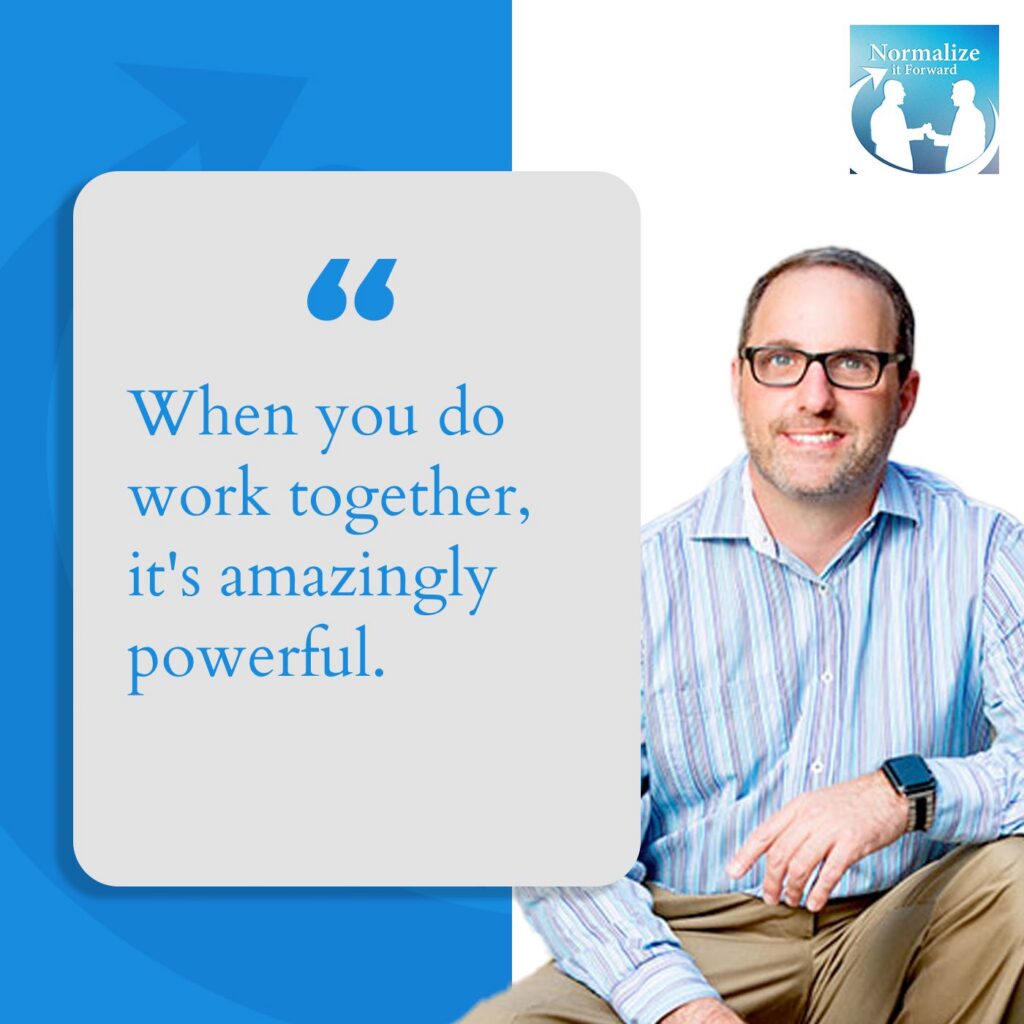
I thought, “I could do what every coach does and keep going. Everyone will be miserable and we’ll go home crying,” or I could go to my car and I happen to have a kickball in my car. I grab the kickball. We had the greatest practice ever. Parents were like jumping the fence to play kickball and the kids just loved it to the point where I’ve had kids recently. This was like fifteen years ago. I’ve had kids say to me, “Do you remember that?” I’m like, “I totally do.” In some ways, that’s our job, is to teach kids that, 1) Sports can be fun. 2) How to work together. When you work together, it’s amazingly powerful.
That’s a great story. I love it. We had days where we played dodgeball on the ice. A reset and get people out of a rut and try to find something that is a collective topic to gel on. That’s a great idea.
That’s maybe a good segue to talk a little bit about. Kids are under a lot more pressure than we were. When you look at the stats around things like anxiety and depression, they’re higher than ever. In some ways, kids are talking more openly about mental health but they’re also struggling and suffering in some ways more now than ever. I wonder. There’s a lot of factors involved. You’re a dad of three and you’re watching your kids grow and they’re around other kids. Any of your own thoughts as to maybe why the mental health stats aren’t in a good place?
Navigating The Modern Avalanche Of Performance Expectations
You made a good point that it’s becoming a topic of conversation, which is, I’ll say, the first step towards progress. That also indicates there are a lot of challenges that we collectively, as a community, whether it’s a hockey community or a school community or even a family. We have to work through and the pressures are real. I see that internal of the family, not intentionally, but we certainly apply those pressures indirectly.
Both my wife and I work. We have fairly rigorous schedules and the expectation is that the kids will follow suit. They’ll also have fairly rigorous schedules, but they’re also kids. They also need to play. That’s internal to the family structure. As you get into the school structure, there’s always the competitive aspect of grades, of who’s in the top class. There’s no escaping it.
Some people find the drive and competitiveness positive. Others find it overwhelming. The ability to find the right way to approach it, again, as a system. I always get back to systems. That each person in the system, the inputs and the outputs, equal the overall success. Trying to find the right inputs, the right drive, the right push is something that requires attention and requires fine tuning and continual fine tuning. It’s not just an answer today that sticks forever. It’s an answer today that works today, and an answer perhaps tomorrow that works differently. That’s how I see it in terms of where things have gotten to.
Sometimes the best coaching move isn't another hard drill. It's pulling out a kickball and resetting the mood. #TeamCulture Share on XIt’s a good way of looking at it. I asked you a bit of an unfair question because you hit the nail on the head. Every kid’s different. Whether you’re coaching them or mentoring them or parenting them. Every kid is different and every kid’s needs are different. You have some kids that juggle three sports in a given season pretty easily. You have other kids that are overwhelmed with one sport or some kids that don’t want to play sports.
I feel like there’s a little bit of everything out there from one kid to the next. Our job as adults, our job as parents around some of these kids is to try to figure out individually what their needs are, but you’re right. There’s a degree of, we can’t escape it. We live in a fairly intense world. I can imagine the University of Notre Dame and USA Cycling. I can imagine those are intense environments where you probably saw a handful of people not be able to handle the pressure.
I did. Certainly, in the academic side of things at a fairly challenging institution, on the athletic side of things. As you continue in a sport, people begin to drop out. It’s the natural pyramid that happens. Sometimes, it’s because they have peaked. They’ve hit the max for their skill. Sometimes, it’s the mental aspect of it. It does get extremely demanding. I saw all kinds of things. Me and myself, I love the mental aspect of it, but I had hit the peak of my skill. I topped out. I realized that. I accepted it. I moved on and ended up in a different sport and then went through that whole process again.
It is real in terms of watching the pressures, feeling the pressures, and trying to find a way. I go back to high school and I try to get through a given week. It sometimes shrunk down to a given day, a given practice. Can I get through this practice and take a deep breath and reset? That’s what helped me. It doesn’t always work that way for everybody, but I had to find at least a solution to get through from day to day.
TJ, I can imagine there’s some athletes reading and they’re thinking, “This guy’s played hockey at a pretty high level. He’s an athlete by nature.” I’m curious to ask suggestions for those athletes that are reading in terms of how to manage the day to day.
I’m pausing on my answer right there because I have a lot I love to talk about. What I learned transitioning from a team sport into an individual sport was a totally different way to have a retrospection, to look inside, and figure out what’s going on. When you have a team sport, when there are mistakes or things happen, there’s a team there to cover. Very rarely is a loss pinned on one person. Generally, if that happens, it’s egregious, but it’s rare. In individual sports, performance is yours. It’s your own. You own that. It is extremely noticeable.
Treating Physical And Mental Recovery Like A System
In the sport that I got into, like track cycling. Races were won and lost by hundreds of a second, every aspect of your preparation made a huge difference. More importantly, every aspect of your recovery made the biggest difference. We went through this entire process of learning max peak output. How can you do that? Once you’ve topped out there, you have to look at other things. What we found was the recovery. Not even your performance, your active performance, but your passive performance. Your recovery performance made the biggest impact.
In order to mentally be prepared for the race, you had to do all the things and you had to take time off. You had to let your mind rest and your body rest. You had to take moments to do a cold plunge to get a massage to recover the muscles to do something mentally stimulating to make sure you weren’t constantly in the drive of go. We put together a fairly comprehensive spreadsheet for day by day. Here are all the things that you can do to recover. You get scores. You get points for each one.
The goal was to try to maximize those points on any given day and correlate that to performance the very next day. Again, what we found from empirical data, from doing it over and over again, in very controlled settings, when we would practice and train. We were in an indoor velodrome. There was no wind. The conditions were perfect every single day. You could essentially equate what you did the day before almost directly to how you did the next day.
It became a 24-hour cycle. Can you maximize recovery on the given day, which includes mental recovery, spiritual recovery, physical recovery, everything? Could you maximize that and determine what had the biggest output or the biggest contribution to your output the next day? That’s my long-winded answer to say there is a lot that can be done, but it is structured. Being able to correlate taking time off to performance the next day through experimentation does pay off.
I love that. It’s a great answer. My takeaway when I’m listening is, I find myself working with young adults in college and talking to them about self-care all the time. These are non-athletes and the importance of sleep. The importance of eating right, prayer, meditation, and getting some exercise. Your athletes have that built in some ways. Many young people don’t do that well. They may do one of them well, but they don’t do all of them well. In a very formal way, your point of tracking that and recognizing the output and the next day, reward, let’s say, of cycling better or cycling faster, getting a benefit from is an interesting segue.
I say so many young people in college, or many young people in general, don’t often think of these things. When I bring them up, I bring them up more in a way of like, “These are tangible things you can do.” You put your phone down early and get some rest. You’re buying your brain two more hours of sleeping and that’s invaluable for young kids eating decently.
I’m a pretty decent eater and I’m amazed when I hear kids talk about what they’re eating and what they’re putting in their bodies. Many young people nowadays don’t necessarily think about that connection between what we’re eating and how we’re feeling. I’m curious on a more general non-athletic basis. You’re around lots of young kids with your coaching. I’m curious as to what you see on that level of self-care.
I’ll be honest, I don’t see it. It’s not there yet. Part of that is that the age range is more forgiving. The bodies tend to burn whatever fuel they’re given. There are performance benefits to better fuel. As people get older, as they get into their teenage years and into their twenties, that performance correlation between inputs and outputs becomes more noticeable. I’ll say at the 10 to 13-year-old range, I’m continually amazed by what they can eat and what they can produce. It’s fascinating, but as we begin to talk about it, because I do every year. I sit down and talk to the team about the exact thing we spoke about, which is recovery and which includes nutrition.
Everyone says, “This is fascinating. I’d love to learn more about that,” and we talk about it. I’ll see them eating pizza between games. We always have to get back to it. We got to practice what we preach, so let’s now go do this. It tends to only come into play when there are extremely strenuous weekend tournaments when you have 5, 6, 7 games. By that seventh game, the fuel that they choose to eat starts to show.
Anything less than that, honestly, there’s a lot more forgiveness in that age range. I haven’t done the science, the research behind it to find out exactly why, but some kids of that age tend to think they’re invincible because they can eat whatever and still perform. The other side of this is trying to convince them it will catch up, and so start practicing it now to make sure that by the time you get there, you’re at least prepared and you’re knowledgeable about it.
You can't out-train poor recovery. Peak performance starts with what you do during your downtime. #YouthAthletes Share on XI’m smiling because I’m fond of memories of kids walking to my office with these swirly, very blue drinks from Starbucks. I’m like, “What in the world are you drinking?” Kids at that age seem to process that stuff pretty well and way better than we do. It is a hard sell because if kids, young kids aren’t seeing it as an issue, then it’s like we’re just talking. We’re not necessarily making a shift. I’m curious, though. Mental health nowadays is making the topic. It’s making more of an appearance at a younger and younger age.
It’s unfortunate because, I’m hearing the dreadful word, suicide. I’m hearing about suicides of younger and younger kids. Certainly, kids in high school, but even in middle school. In middle school, I was still learning how to tie my shoes and these kids are dealing with major issues. I’m curious because your kids are creeping up in that age bracket. It’s a hard topic for parents to talk about and I was curious about your points of view and your thoughts on that particular topic from a dad’s perspective.
Fostering Unshakeable Self-Acceptance In Teens
It’s terrifying, honestly. It seems that the exposure surface of kids these days is significantly larger than will be experienced in our days. Partly because of digital media, digital profiles. The fact that there is access to a larger audience, both on the good and the bad sides of that. Our conversations center around self-confidence, being happy with what you bring, how you bring it, and what you can do with it, because it is different. That’s a positive.
Trying to be somebody else is doing yourself a disservice because your particular wiring, your particular composure, composition, is made to allow you to do things that other people can’t do. As a dad, I try to center conversations around that. That was one thing. I’ll be honest. When I was that age, probably high school. I do recall going through some challenges and having challenges with friend groups. I mentioned early on that I didn’t have an active social scene because of hockey travel.
My friends tended to be in the hockey world. When I was in the school world, I had to find my way. It got to a point where I had to learn to accept who I was and bring that into whatever conversation, whether it fit or it didn’t. It took me until about 15 or 16 years old to learn that aspect of it. From that point forward, I felt like a different person. That no matter how the conversation went, if I had to excuse myself from it, I could.
It didn’t bother me quite as much having a little comfort in that. I’m trying to figure out how to pass that on to my boys so that they don’t go through the challenges to get to that point but feel comfortable with who they are from the beginning. Again, I don’t have the job that you do. I don’t know the science behind it, I know having that level of comfort gives a cushion, a pad from what might be surrounding you.
There’s so much about that answer that I love. First of all, thank you for sharing that and just being genuine. Also, the self-confidence/self-acceptance concept is huge. Every parent is wanting to help their kid be more confident but maybe not so willing as you. You put it well, to look at the individual things. Their makeup and what they’re good at and ride that. You have some kids that are great at acting.
Maybe play is their thing. You have other kids that are fantastic at drawing and maybe art is their thing. Helping them explore their default setting and this is them. This is what they’re good at and this is what makes them feel good. Versus, shoving them in a square peg into a round hole. It’s like, “That doesn’t often work.”
I also have to say I can imagine a lot of people. What you said about high school, I can imagine a lot of people identify with that because a lot of people that I know have gone through that. It’s one of those experiences of a high schooler and you’re reading this and you know they’re going through it. Talk to them about it. Put yourself out there. If you’re their coach, mentor, therapist, or just a neighbor and you happen to know that a high schooler might be going through it. You may be the only person that asks them, “How’s it going? What’s new? What’s going on?” You’d be shocked at what comes out of a person’s mouth because those are some hard years.
They can be, and one thing to add to that aspect of individualism. Many times finding that niche, that thing that drives with someone, only happens through trying a broad array of different things. Exposure is hard. It takes time. It takes conscious effort to go out and try an acting class, an acting class, if you never had one, to go try an art class. Use those two examples to go on some outward-bound style adventure and see if maybe the outdoors is it.
Honestly, the more exposure, the more that vision of self-exposure worth seems to formulate. I’m starting to see that with some of the players that I coach. That’s only through conversation of, “What do you like to do? Have you thought about it? Go explore this. You seem to love whatever it might be.” I’m by no means an expert in all those things, but at least the encouragement seems to help. Back to your idea of, having the conversation with the high schooler and giving encouragement is huge. It’s the support structure.
Opening Genuine Conversations Through Simple Curiosity
It is. I hadn’t shared with you, but I have another business called U Are Heard. It’s a virtual private practice where we see students in college all over the country. We support them when they’re away at school. The whole reason I named it U Are Heard is I want kids to have that voice. I want kids to have the ability. I want everybody to understand you don’t have to be a therapist. You don’t have to be a coach.
If you are an adult in a kid’s world, you can be extremely impactful. Sometimes just asking that open-ended question, “What do you enjoy?” That elusive self-confidence, which I look at, by the way, is the opposite to anxiety. A kid who has self-confidence has less anxiety. Every parent’s looking for that. They’re looking to help restructure that for their own kid. It’s a matter of asking those questions and digging a little bit and trying to get a sense of like, what makes this particular kid unique and special? I feel like every kid has something. It’s just a matter of finding it.
You don't need all the answers to support a young person. Just listen closely and ask the next question. #MentalHealth Share on XThat was a great answer. I have to say I was blown away by your answer, honestly. It was pretty awesome. You offer a great perspective of both. I apologize. I didn’t touch much on your engineering, but with regards to athletics and your own, not only your own story, but your coaching and also being a dad. You have that triple background of perspective on kids. None of us have all the answers, TJ. We’re all doing our best and we’re trying. To me, that trying goes a long way when a kid recognizes, “You’re not just that person.” Who asked me, how are you doing, then they kept walking. You actually care, and we all have the ability to do that if we choose to.
Certainly. It doesn’t take much time. Honestly, it’s listening to the answer and then asking a follow-up question. That bit of interest goes a long way. I always come back as a coaching player or even mentoring. I do a lot of mentoring with college students about career exploration. Some athletes, and some not.
Many of them tend to feel overwhelmed by, “I feel like I should go do investment banking because everyone does investment banking.” You start to find out what they like, and it’s completely different. I’m like, “Have you thought about taking an anthropology class? Try it. See what you think.” That conversation and encouragement, “Maybe I’m going to explore that. It seems to go a long way.” For hope, if nothing more.
I keep coming back to that phrase, “Life is a journey. You don’t have to have all the answers immediately. Even though young kids think they have to. They don’t have to, and you’re constantly evolving. If I had told you when you were playing hockey at Notre Dame, you’re going to be cycling in the velodrome. You’d be like, “What’s that?” That’s an important point to make and for kids to understand big time. Can I put you on the spot for one second?
Absolutely.
People love that question. In Normalize it Forward, the way I created it is I want the conversation to continue to move in the direction of having more open conversation about mental health and wellness. I typically will ask each of my guests if they have a friend, a coworker, a relative, or someone in your circle that you think would be good for me to interview next. I would love to get your thoughts on that or if you have to think a little bit and tell me offline, that’s cool too but I figured I’d throw it at you and ask.
That’s a great question. I have to think a bit about that. I can think of a dozen folks who would be fantastic. I’d love to give almost an ordered list.
That would be great. Brainstorm some ideas and you shoot me an email and we’ll see what we can do to get them on the show. TJ, thank you so much for your time and your energy. I know you’re super busy. You were kind enough to make the time and spend it with me on this show. I truly think my readers will appreciate a lot of your comments and thoughts around these issues. Truly, I appreciate you being here.
Fantastic. It’s been an honor. I appreciate the opportunity to do that and am always happy to connect and talk anytime.
I appreciate it. We’ll talk soon.
Thank you.
Important Links
About TJ Mathieson
 TJ Mathieson, founder of Missioneer, a defense and mission architecture firm helping organizations solve some of the world’s most complex aerospace, space, and national security challenges. Before launching Missioneer, TJ spent more than 20 years leading mission integration and systems engineering efforts, including serving as Chief Mission Architect at Northrop Grumman.
Beyond his career in engineering, TJ is a former NCAA Division I hockey player at the University of Notre Dame, a USA Cycling National Champion, youth hockey coach, licensed pilot, and passionate mentor. His unique perspective on leadership, teamwork, resilience, and high performance—both on and off the ice—makes him an incredible guest for today’s conversation.
Reading about mental health is hard. Let’s schedule a free consultation.