Normalize It Forward - Marc Lehman | Dr. Mariela Podolski | Mental Health For Teens


Rising rates of anxiety and depression among teens and young adults aren’t just statistics—they’re real stories playing out in families every day. Dr. Mariela Podolski, a Connecticut-based child, adolescent, and adult psychiatrist, joins host Marc Lehman to explore the forces behind this trend and what parents, students, and communities can do about it. With more than 20 years of clinical experience, Dr. Podolski breaks down how instant gratification, phones, and “toxic positivity” affect mental health; why delayed gratification and frustration tolerance matter; and how parents can model wellness through sleep, nutrition, movement, and purpose. Packed with practical tips on managing devices, scaffolding self-care, and normalizing help-seeking, this conversation empowers families and young people to build the resilience they need for school, college, and beyond.

Reading about mental health is hard. Let’s schedule a free consultation.

Watch the episode here


Listen to the podcast here


Practical Mental Health Tips For Teens And Parents With Dr. Mariela Podolski

We are here on this show to talk about all things mental health and wellness. I’m super excited to be joined by my friend and colleague, Dr. Mariela Podolski. Mariela, how are you?

I’m doing great. Thank you so much. Thank you for having me.

Thanks for being here. Mariela is a Connecticut-based licensed clinical psychologist with over twenty years of experience helping individuals and families navigate emotional wellness. Known for her compassionate, thoughtful approach, Dr. P specializes in trauma, anxiety, and life transitions. Working with adolescents, young adults, and parents alike, her work blends evidence-based therapies with a deep belief in the power of connection and storytelling. As a strong advocate for normalizing mental health conversations, she brings warmth, insight, and authenticity to every interaction she has, making her a perfect guest for the show. Welcome, Mariela. How are things going? How are you?

Thank you so much for having me and for those kind words. One correction, though. I’m not a clinical psychologist. I’m a child and adolescent psychiatrist and an adult psychiatrist.

My apologies. I read it, and I was like, “That doesn’t make any sense.” I knew you were a psychiatrist. Thank you for the correction. That’s very helpful. I will share with my audience that you and I share a number of patients, and have for years. Honestly, you’re one of my favorite colleagues to work with. Mariela is a super-talented doctor who is always very down to earth and considerate of her patients. Parents, in general, would be lucky to have you as their practitioner and have you treat them.
 

Normalize It Forward - Marc Lehman | Dr. Mariela Podolski | Mental Health For Teens


Thank you so much. Right back at you. I enjoy working together.

The Rise Of Anxiety & Depression In Young Adults: What’s Driving It?

I appreciate it. We’re putting our heads together on our favorite topic, which is mental health and wellness. The vast majority of our patients we work with are in high school and college, aged 14 to 23-ish, somewhere in that age bracket. I’m curious. I’m going to throw you a few questions. I want to pick your brain. My audience would be interested in hearing your thoughts on this.

First, let’s ask this. A lot has changed in our careers with young adults. Early on, when we began working with patients, things like social media were different. Even phones themselves were different. I’m curious from your point of view. The levels of anxiety and the levels of depression among young adults are on the rise. Even though we’re living in a world where it’s being talked about more and kids, in general, are more comfortable talking about it, the statistics or the numbers are moving in the wrong direction. From your point of view, why do you think that is?

That’s a loaded question. To answer that in the next 30 minutes will be impossible, so I want to try to summarize it in one. There are many factors. Social media and access to our phones are big contributors. I don’t want to diminish or dismiss it because I do think it’s the source, but for me, the bigger contributor to the rise in mental health is the immediate gratification. It’s not only in terms of social media.

Social media alone brings immediate gratification to the table. Kids or individuals in the world are looking for the likes, the sharing, the comments, and everything that has a little dopamine hit in our brains. It certainly causes that immediate gratification. I consider myself guilty of this, too. If I need shoes for tomorrow’s party and I don’t have time to go to the shoe store, I will order them online. They’re going to be at my house in less than 24 hours, guaranteed, and so on and so forth. That immediate gratification extrapolates to every aspect of our lives.

It’s not only about consumerism. It’s also about relationships. We want that immediate gratification with relationships. We have a very hard time being let down. There is this movement, to say it in some way, that I dislike a lot, which I named toxic positivity. There is no room for distress. We’re setting ourselves up for failure with this new way of living, which means everything needs to happen right here and right now. Two, everything has to feel good.

School & The Challenge Of Delayed Gratification For Teens

Well said. You did great with that answer. That was a great answer. It was a tough question. I agree. Along those lines, there’s one huge thing that we deal with all the time that is anything but fast and instant, and that is school. Kids are in school for a lengthy period of time. We see it all the time. Kids want things to happen fast for them. There’s no speeding up school. Here they are. They’re having to study for hours, or they’re having to do lots and lots of work. That goes against the grain in some ways in terms of what you’re describing. Everything is fast. Everything is immediate. Everything is moving super fast.

It’s hard to be a psychiatrist or anybody in mental health. I always joke about this, but it’s not a joke because it’s a true fact. Nobody comes to my office telling me how great they’re doing. Everybody who comes into my office has something to share that is not going well. With that in mind, what I see in my office is a lot of anxiety related to school.

Two things are tied together. It requires extra effort, patience, and learning those skills to be frustrated over and over again. Our world is less set up for that than it used to be. I work a lot with little kids and adolescents. I’m a mom, too, so I’m guilty as charged here. We have learned to save our children more and more. We email the teacher, and it’s like, “That wasn’t fair.” We do all of these things to save the day. We don’t allow them to get frustrated and tolerate the distress that comes with that.

Going back to your question, which was about school and how difficult it is for them because it’s a long process, we have removed from their experience of growing up so many opportunities to experience frustration and delayed gratification that school becomes a completely new world, in which it’s very overwhelming. They come to our offices with this powerlessness. They don’t know the how-to. They can’t get through. It feels so important and so drastic if they make a mistake because they have not experienced that before. That’s my answer.

It’s a good answer. I read somewhere, and this is accurate, that as parents, we’re stealing their opportunities to grow self-worth when we jump in and do that. I understand why we do it. We do it because we want things to be smooth, we want things to go well, and we want our kids to be happy. Parents, oftentimes, when they do get involved in those scenarios, are impacting their kids negatively and disrupting the growth opportunity for them.

Parenting In The Digital Age: Managing Phones & Social Media

I see that a lot with college. When kids go to college, they make that jump. Parents aren’t allowed in, so kids have to do it themselves. It’s challenging. I’m curious. Talk to my parents for a minute, if you would, about phones because you have a sound viewpoint on this. I’m wondering. As a parent, let’s say, of a middle schooler and even a high schooler, what suggestions would you have in terms of management of these devices?

This is something that I have invested a lot of time in learning how to deal with in my practice because it is such a big problem. The first piece of advice that I have for any parent is to delay. Hold off until the very last minute before you provide them with a phone. When you do so, as a parent, I want you to think about that phone not as the child’s property, but as your own property. It doesn’t belong to the kid. They don’t pay the bill. They don’t know how to handle it. It’s the parents’ property.

With that said, before you give your child a phone, sit down and establish X number of rules that you’re willing to follow together. I learned this from a friend, not a patient or anyone. He told me that when he was thinking about giving a phone to his son, he came up with a contract. It was a contract with twenty items. He didn’t want to have all the power. He wanted his son to come up with some ideas in there, so he gave him the opportunity to come up with 3, 4, or 5 things that he wanted to have in the contract.

I did this with my own son. My daughter doesn’t have a phone yet. My son is a teenager. I did this with my own son, and it worked beautifully because we could negotiate. His first statement was, “I can use my phone for five hours a day.” I immediately was like, “That’s not going to happen. Let’s move it back.” We could negotiate a time that seemed to be right for communication with his friends and whatnot. He also put in there that he wanted to have a warning whenever I’m going to remove the privilege of having a phone, so he could tell his friends, “I’m not missing in action.”
 

Normalize It Forward - Marc Lehman | Dr. Mariela Podolski | Mental Health For Teens


That’s reasonable.

It’s a text message, like, “My phone is being removed. I’ll see you next week,” kind of situation. He has a heads up of, “You have five minutes to send all the texts you need to send, saying everything you need, and the phone is going away.” We developed this contract, and it has worked well for our family. For my patients, I started doing that, and it works very well. I have more advice for parents.

Please. I want to hear it.

I don’t want to make this a monologue because I could talk about this forever. In those rules, remember always that the phone is a privilege, not a need. It isn’t a need. Nobody needs a phone to survive. I didn’t have a phone growing up. You didn’t either because we’re in a different age group. Remembering that the phone is a privilege at all times is very important and helps you with that mindset. You have to decide what you are going to allow the kid to have on that phone. What apps are you going to allow? Are you going to have parental controls or not? For me, research is very clear.

Remember always: the phone is a privilege, not a need. Share on X

Social media is not helpful in the developing brain. There are a lot of risks that come with having access to social media, particularly for girls. What we know is that there is a higher risk of eating disorders. For boys, there is a higher risk of getting into pornography. There is a risk of gambling as well. For both groups, there is a risk of anxiety and depression. We can’t deny that.

What I tell parents and kids is, “This is not my opinion. This is what we know from research.” As a clinician, I can say that I am a firsthand witness to this being accurate, so I don’t doubt myself when I have to give this recommendation to the families. As a matter of fact, my son asked me, “Can I have whatever social platform is like, ‘When you’re sixteen, we’ll talk about it.’” It was like, “It’s not going to happen no matter how many times you ask because I know the danger. I see it here.” The constant comparison is not good for a brain that is not developed.

Remember, it is a beautiful thing how science works. When you’re an adolescent and you’re developing your brain, your limbic system is in overdrive. It’s all about emotions. You want to feel good, so you’re going to be seeking behaviors that are dangerous and have high reward. Your frontal lobe is underdeveloped, particularly because that’s the only way that could happen.

Those risky behaviors keep us alive. Back in the day, exploring, finding a better place to build a fire, or finding a better place for water required a lot of risk, less frontal lobe, and less rational thinking. That’s the way that we have allowed our species to survive. Adolescents have that. They have an overdrive limbic system in a very underdeveloped frontal lobe or executive functioning.

Introducing social media at that developmental stage is dangerous, because one bad decision can go online and stay there forever, harming someone for the rest of their life. Share on X

When you introduce social media in that developmental stage, it’s a dangerous place to be because you can make not smart decisions that go out on the internet and are there forever, harming somebody for the rest of their lives. Maybe they have very poor impulses when it comes to seeking that dopamine hit, like the likes, the comments, etc. Be careful. My summarized advice is that.

Beyond Screens: Essential Wellness Habits For Young People

It’s great advice. I know I’m pushing you to comment on these things. I know we could talk for hours about them. There are a couple of things you mentioned that I want to highlight. You and I have both seen in our practice over and over again the effect of some of this. For parents, it’s not like you can resist and give your child a phone when they’re 25. They’re going to get a phone at some point. The management post giving them that phone becomes our responsibility as those parents to stay involved.

Parents will ask me all the time, “Should I look at my child’s phone?” The answer is absolutely. You’re going to find things on there that will surprise you and shock you, and that allows you to have a conversation. There’s a lot out there. From our generation to this one, it is the ultimate comparison and harsh criticism that kids will get from pics, follows, likes, and all the other stuff that comes with it.

I’m curious. To segue out of phones for a minute, I want to ask this. One of the things we deal with all the time is general wellness for young adults. I know I’ve been working on better hydration, drinking water all the time, trying to get some movement in, and making sure that I’m taking care of my body and my brain. I’m curious. When you think about wellness with young people, what are your thoughts and suggestions? What do you think?

It has been maybe one month since I started using this term in my practice called “the boring things.” When patients come and tell me, “I have anxiety. I can’t do this,” and they tell me all of this rollercoaster of emotions, I stop for a second, and then I look at, “How are the boring things going in your life?” What I’m referring to with that phrase is, “How is your sleep? How well-hydrated are you? Are you moving your body? How much screen time are you using? How are you eating?” Nutrition is so important. I’m like, “What are you eating?” Last but not least is, “What purpose do you have in life?”

If we’re not connected to our community, it’s a big crack in our defense for depression and anxiety to come in. If somebody who doesn’t have a purpose is not connected in the community, is not a student, or is not working, they are not going to feel good about themselves. I call those the boring things. I have started to put a lot more importance on those in my life, too, but with our patients.

Inevitably, this conversation is going to lead back to some screen time. If you’re on your phone until 2:00 AM in the morning, your sleep quality is not going to be good. It doesn’t matter what you tell me. It’s not only because the timing is not right or it’s not within your circadian rhythm, but also because it is very clear that it’s not only that it’s postponing our sleep. It’s also that we’re changing the architecture of our sleep when we are on the phone for so much time, particularly before we fall asleep.

Also, we can’t say it enough. It’s a bigger conversation. We would have ten episodes that would last ten hours each. The quality of her food is not the same as it was before. We have to make a conscious effort to look for the food items that are going to nourish our body, but more importantly, our brain. A malnourished brain is a brain that doesn’t function well.

A malnourished brain is a brain that doesn't function well. Share on X

That is the concept of integrative psychiatry. You know that these are some of the things that I do. We pay attention to the micronutrients. What are the things in your brain that are missing in order for us to supplement those and provide you with better brain chemistry? All of that comes from Food Mart. That statement that we are what we eat was right. It’s from years ago, but some people still use it. Wellness is important.

The beautiful thing that we have in front of us is that it has never been easier to access things that can help you. Social media is not all evil. I don’t want you to think that. There’s access to so many people who have good advice and bad advice. Be careful. You can also find a lot of information at the tip of your fingers on what are good things for sleep, how you can meditate before bed, and other things that you can do.

I’m glad you said that. Let me go back to integrated medicine for a minute. One of the things that makes you special as opposed to other providers I’ve worked with is that your scope is larger. You look at these things, and there are things you’ve caught with my patients that I know other doctors would not have.

I want my audience to understand the difference between integrative medicine. We’re looking at other things. Other things involve wellness. Other things involve our nutrients. Other things involve our levels within our systems. If they are off or they are depleted, we are going to have issues. How many patients have we seen together who have had low B12 issues and whose energy levels have plummeted?

The other thing you mentioned that’s important to put out there is that there are positive sides to technology. We’ve got smartphones. We’ve got smart rings. We’ve got smart water bottles. We’ve got all of these things that allow us to measure stuff that helps us. When families are thinking about what you call the boring things and I call self-care, it is our basics of eating, sleeping, and exercise.

To me, one of the coolest parts about it is that we have access to changing these things. If we’re young people, we have a choice when we open the pantry. What do we have in there? What do we choose to eat? We have a choice as parents. What do we choose to buy in the grocery store? What do we bring home? We have a choice to be active or not be active. There are certain things in life that we don’t have a choice in. This, we do. Our wellness, if we’re wrapping our arms around it and letting our kids know, “That’s a message I am paying attention to as an adult,” we’re teaching that.

It doesn’t matter what type of parent you are. With all of the good, the bad, and the ugly of being a parent, because it’s not an easy job for anyone, our kids are going to learn what we teach them. There’s school and whatnot, but the foundation of our children is going to come directly from their most immediate circle, whether that’s their parents, their grandparents, or whomever it is that is taking care of and raising them. Making those choices is very important, and also acting by example.

I also work with eating disorders. One of the things that I teach families all the time is, “Before we talk about Susie or Johnny’s relationships with their own bodies, what is your relationship with your body? Are you a parent who is constantly cutting calories on their plate or is constantly talking about how they dislike their arms, their thighs, or whatever it is?” Kids learn by example, so we have to be mindful of what we do, good and bad.

Please ask for help before it is too late. Share on X

My parents never exercised in their lifetime, so exercise never came that easily to me. It’s something that I had to dedicate a lot of time to. Since I have been very mindful of that, it’s easier for my children. They do not imagine a world in which they’re not moving their bodies. We have the power of change, too, which is a beautiful thing. We, as parents, have the power of change to break cycles that we didn’t like from before and to normalize them forward. We do that for our children to get them in a better place.

Navigating The College Transition: Wellness & Responsibility

In many ways, we have. I see so many families normalizing the concept of mental health and general health. I’ve seen that, heard that, and witnessed that, which is great. There’s always room for improvement. Your point is a great one. We’re always teaching, and kids are often listening.

Let’s pivot to college for a minute. Many of my readers are either in or going to college. I’m curious. You see students, as do I, transitioning from high school to college. I am sure you have a lot of tips or suggestions. Any larger tips or suggestions that come to mind that may help kids with the jump into a college environment? What do you think?

I never experienced college. I’m not from the US. In my country, we don’t go to college. Culturally, we’re different. I went to medical school, but I lived with my parents, so it was completely different. I never had a “college experience.” From what I learned from my patients, when they are in college and in that transition, it often is very individualized. There are kids who go with a mindset of, “I’m going to have a lot of fun. It’s going to be great.” For others, it’s very anxiety-provoking.

Individualizing that transition is important. Understand that everybody who goes into this situation is living their own journey. It’s completely different than yours, but also, at the same time, it has a lot of sameness. It’s a new environment for everyone who’s there. Everybody is a little anxious, even though some of them show it more than others.

Where I see kids stable in college is when they are not able to do the boring things. They’re not able to have regular meals. They’re not able to sleep well. They’re not able to stay away from drugs and alcohol. They’re not able to take care of their wellness. That’s where I see them stumbling and not being successful. They get into trouble in one of these areas.

Their schedule got off, so they’re sleeping all day and are up all night, so they miss class. That snowball goes forward. Maybe they stopped eating at the cafeteria because of XYZ, and then they lost a lot of weight. They have to come home. Maybe they started drinking too much. That scaffolding of wellness will carry you through more than it’s evident to them. Hopefully, most of them had it at home, so it’ll be new for them not to have it. They have to be responsible with their sleep, diet, exercise, contributions to society, and everything else.

There is less awareness around mental health, and we, as mental health providers, need to do a better job of distributing this information. Share on X

You mentioned it. Do they have it at home? Some do, and some don’t. For those parents who are reading that don’t have that structure and aren’t working on that, that might be something to consider. When a kid does make that transition, whether someone shakes their hand and tells them all of this, they’re granted the responsibility of managing all of that. Some kids don’t do a great job. From your point earlier, that keeps them moving in a positive direction.

At 11:30, when their friend approaches them to watch a movie and they’re like, “I got to get my rest. I’m going to take a pass. Maybe we’ll do that in a couple of nights, but right now is not the right time. I’m going to go to sleep,” to me, it is that simple decision, which all kids have the ability to do. They say, “I’m going to take care of myself.” To your point, that keeps kids in a position to fend off things, in many ways, like anxiety and depression. Those are good suggestions.

I can’t leave this conversation without saying to please ask for help. If you’re struggling, please ask for help. Hopefully, you can ask for help before it is too late.

Breaking The Silence: Why Asking For Help Matters In College

That’s a great point. Let me ask you this, because it’s a huge issue. I research this all the time, and I see different numbers. I was looking into it, and it said that something like 60% to 70% of kids who need help in college don’t get it. In your opinion, why is that?

There is still a lot of stigma about mental health. Being vulnerable is not necessarily a strength for many. Also, there is this pressure of not wanting to be a disappointment to their parents. There’s that kind of narrative they have, like, “If I ask for help, it means I’m failing.” Quite the contrary, we want to help you before you fail. Ask for help early so we can keep that going.

There’s a lot of awareness in your world and mine because this is what we do, but for college kids who are getting there, they don’t even know their struggles, so there is less awareness. They might not know that the fatigue that they’re feeling, why they do not want to hang out with their friends, or why they have no interest in getting to know somebody might be a little bit more than just missing home. It may be depression. There is less awareness. We, as mental health providers, need to do a better job of distributing this information, like in this show, for them to have that.

That’s a great point for all of those reasons. I can only say to the young adults reading that your words are very wise. Sometimes, kids start to struggle, and they don’t necessarily recognize where that’s going to lead. It reminds me of swimming. You start to have trouble in the pool, and you don’t necessarily think you’re going to drown. You’re like, ‘Maybe I’ll be fine.” Maybe you won’t.

To me, my advice would be that the wise person, as they’re growing, recognizes we all need help. Think about it. We’ve got a lot of years in our careers. You and I talk to each other all the time because we need some advice, some direction, or some assistance. To me, parents need help, and kids need help. We all need help. The difference is admitting it.
 

Normalize It Forward - Marc Lehman | Dr. Mariela Podolski | Mental Health For Teens


It’s that fear of being vulnerable, which ties to one of my first statements. It is this idea that we have to live in the positive all the time.

That’s right. That’s in our lives.

It’s not. Having anxiety, fear, sadness, and all of these emotions are what make us human. We need to normalize them. We need to allow ourselves to be vulnerable and ask for help when it is needed.

The more young people tune into shows like this, the more they’ll hopefully realize that those are human emotions, and we all have them. It’s okay to struggle, but you’re not alone. You don’t have to struggle alone. In my opinion, it is pushing through some of that uncomfortability and saying, “I’m not sure exactly who to ask, so I’m going to try to talk to an RA,” or, “I’m going to try to talk to a professor,” or, “I’m going to call a therapist, a psychiatrist, or whomever and ask, ‘I don’t know if you work with this or not.’” I’ve had those conversations with patients over the years. It’s so valuable when young people do that because they get the answers when they ask. That’s important. Can I put you on the spot for a minute?

Sure.

I didn’t warn you about this. With this show, usually, what I ask of people who come on is a recommendation to keep the conversation moving forward. That’s where the name comes from. Give us a recommendation of an individual that you might know in your world, whether it be a friend, a coworker, or a relative, who would be helpful for me to interview next going forward on the show. Any thoughts?

Yeah. I have a great person for you. Her name is Rebekah Bardwell.

Who is Rebekah?

I met her years ago when we worked at the same institution. She is an LPC by training and had some more administrative roles at the time. She’s an eating disorder expert and a fabulous clinician. She has her own company called Bardwell Behavioral. She’s the lead there. She does psychotherapy. In particular, she does what I love, which is accelerated resolution therapy. She has clinicians working with her. She’s a fabulous person to talk to.

That’s fantastic. I’ll get her info from you offline. I appreciate the recommendation. I appreciate your time and energy. I know you’re super busy. I know you wanted to come on, and I wanted to have you on. We finally did it. We made it happen. This is great. Thank you for being here. I appreciate it. Have a great rest of your day.

You too. Thanks so much.

Thanks.


Important Links


About Dr. Mariela Podolski

Normalize It Forward - Marc Lehman | Dr. Mariela Podolski | Mental Health For TeensDr. Podolski completed medical school at the Universidad de Costa Rica in San Jose, Costa Rica. As her first attending job, she worked as a general physician in a rural area in the south east corner of Costa Rica. Excellent clinical skills were a must, given the lack of resources in the area at the time. This experience strengthened her medical knowledge, and she still utilizes these lessons in her daily practice.​

She pursued her Psychiatry Residency at the Institute of Living in Hartford, Connecticut. This was followed by a Child and Adolescent Psychiatry Fellowship at The Medical College of Wisconsin in Milwaukee, Wisconsin.

Dr. Podolski joined Eastern Connecticut Health Network after graduation, working in a Child and Adolescent Psychiatry Clinic in an underserved area from 2012 to 2015.

She has been working with Walden Behavioral Care, since 2012. Initially as a Consulting Psychiatrist for their Partial Hospital Program. In 2016, she assumed the role of Medical Director for their Inpatient Eating Disorders Unit at Rockville General Hospital. This role allowed her to expand her eating disorder knowledge, as she treated patients with extreme eating disorders that required specialized inpatient medical and psychiatric stabilization.

She continues to work hand in hand with Walden Behavioral Care as a consultant.

She has held academic appointments for the University of New England College of Osteopathic Medicine, and for the Quinnipiac University Frank H Netter School of Medicine.

Dr. Podolski is an active teacher and provides Eating Disorder lectures for psychiatry residents at The Institute of Living, University of Connecticut and for ECHN Family Practice Residency. She is frequently asked to present on the topic at different hospitals in the area.

She holds medical licenses in the states of Connecticut and Massachusetts.


Reading about mental health is hard. Let’s schedule a free consultation.
 

Normalize It Forward - Marc Lehman | Dr. Emily Gordon | Eating Disorders


Body image and eating disorders aren’t just clinical issues; they’re lived realities shaped by culture, technology, and family life. Drawing on nearly 25 years in private practice, licensed clinical psychologist Dr. Emily Gordon explores how perfectionism, social media, and comparison culture amplify these struggles — and how parents can support teens and young adults without adding to the noise. She mixes practical strategies with warmth, showing how boundaries, honest dialogue, and tuning in to one’s inner experience can become powerful tools for resilience and healing.

Reading about mental health is hard. Let’s schedule a free consultation.
Watch the episode here


Listen to the podcast here


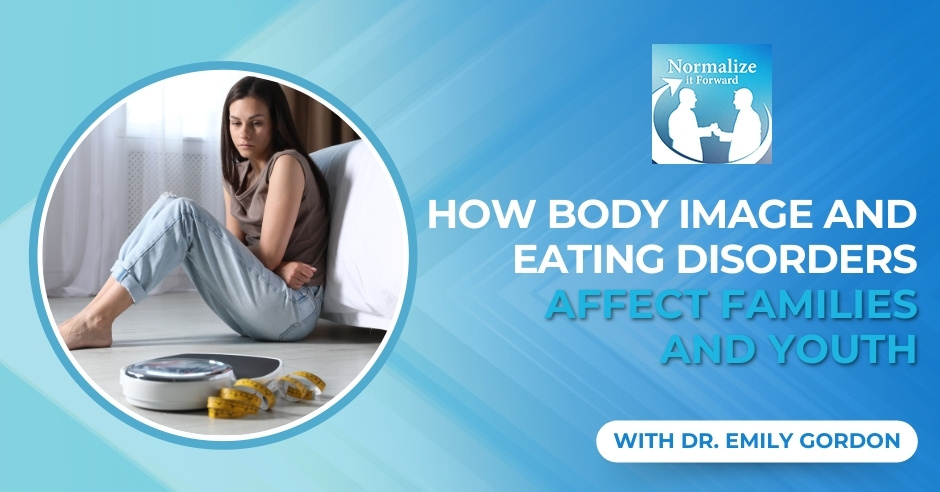
How Body Image And Eating Disorders Affect Families And Youth With Dr. Emily Gordon

I am super excited to have Emily Gordon join us. Emily, how are you?

I’m good. Thanks.

Let me read a quick intro, and then we’ll dive right in. Emily is a licensed clinical psychologist with almost 25 years of experience. Dr. Gordon maintains a private practice in Natick, MA, where she provides therapy, supervision, consultation, and psychoeducation. She specializes in treating eating disorders and body image disturbances in adolescents, young adults, and women of all ages.

Emily often works with people navigating life transitions and parents looking to better understand and support their developing teen, and better care for themselves along the way. She enjoys speaking and writing about topics relating to eating disorders and body image, adolescent development, young adulthood, and parenting. In addition to our work with teens and families, Emily is also a parent to three teenagers. Emily, welcome. How are you?

I am good. Thanks. I’m glad to be here.


Normalize It Forward - Marc Lehman | Dr. Emily Gordon | Eating Disorders


From Practice To Parenthood: Dr. Gordon’s Journey And Expertise

Welcome to the show. We’re excited to have you. First, I’m going to flip-flop and start with the last thing I said. Three teens. Tell me. How old are we talking?

Two are young adults. I don’t know if I can say teenagers anymore. Teenagers are so much easier. I have 2 in college and 1 in high school.

Like me, you’re around this personally and professionally. This age bracket, that is. You and I treat similar-aged individuals. We treat middle school, high school, college-aged, and beyond. Why don’t we start off with you telling us a little bit about your practice?

I have an office here in Natick. I have a lot of experience treating adolescents with eating disorders. I work with people in a dynamic, relational, IFS-informed way. I integrate CBT and DBT. I try to take a perspective of trying to understand what is going on for someone and how they tune in to the inside and tune out all of the outside. I’ve increasingly been working on supporting parents and people navigating mid to older life challenges. I’ve enjoyed doing that as well. I’m working on a range of issues.

It sounds like you cover a lot of ground in your office and see a lot of different people for a lot of different things. Eating disorders are such a fascinating specialty. I have that as a subspecialty of mine as well. My background is in family therapy. I was drawn to it because there’s such a family component to every individual who suffers from an eating disorder. I’m wondering if we could start with the basics. Can you tell my audience a little bit about what an eating disorder is?

With eating disorders, part of what’s so interesting about them is that they’re so complex. They impact so many different areas of life and functioning. An eating disorder is a focus on food, body, and preoccupation. What truly categorizes an eating disorder is a fear of fatness or gaining weight and an inability to maintain one’s health, however we are defining health.

There is a lot of talk about what is disordered eating versus what is an eating disorder. There are a lot of people on diets. There is all sorts of noise out there about what’s the right thing to do, what’s the healthy thing to do, what we should be doing, what we should look like, and what we shouldn’t look like. There is certainly a preoccupation in our culture. An eating disorder marks itself as this intense preoccupation in a way that gets in the way of health and healthy functioning.

That’s a good definition. That’s a challenging question I asked. That’s a good way of saying it. Having worked in hospital settings in the past, where I’ve eaten with patients who are severely impacted by eating disorders, meals take on a whole new level of intensity. I have seen patients being tube-fed and so forth. I don’t think people understand how impactful an eating disorder can be.

That’s very well said and important. What we also have to know and recognize is that eating disorders are incredibly serious. They have one of the highest mortality rates of all mental illnesses. That’s because it affects your mood and also your health, like your physical body. It is incredibly serious. We can’t talk about eating disorders without talking about this cultural piece. When you sit with somebody, whether you are treating them, or a friend, or a family member, it’s a brain-based illness. There’s something that happens in the brain that feels irrational sometimes. That’s what you’re speaking to.

Social Media’s Shadow: Impact On Body Image And Mental Well-being

I’m glad you brought that up. Maybe that’s a nice segue to talk about our culture and how that impacts things. I have a funny feeling that you and I can talk about this for hours. I promised I’d only take a little bit of your time, though. When it comes to this, social media has had a major impact on what I’ll call the competition amongst people.

I’m on Instagram and TikTok regularly for my business, and even LinkedIn to some degree. What I see in the social media world from young adults and what they post is disturbing and sad. It’s been a little bit since you and I were young adults. I often wonder what that would be like for us because we didn’t grow up with social media. Young adults have this interesting perspective. They don’t know anything but social media. I’m curious. I’ll ask you a huge question.

That’s a huge question, and I’ll try to answer that or speak to some of the themes and things that come up.

It’s perfectly fine. It’s a big one. How do you feel social media impacts body image?

There’s the larger issue first of social media and our culture, even before we get to eating disorders. I know your audience here is the college kids and young adult population. We have this culture of achievement, perfection, and having to be successful. There is all this pressure on all of us. Adults and parents are stressed. College kids and young adults are stressed. High schoolers are incredibly stressed.

One thing I want to say when I go on these shows is that we’re talking generalities. I understand that for each individual identity or population, it’s hard to come up with these generalizations, but we’re going to do that anyway for the purposes of this episode. There is this larger culture of achievement and perfection, and then we get into social media, appearance, looks, body image, and what we call diet culture. You said competition. I think what also happens is comparisons. Biologically, we compare ourselves to other people. There’s competitiveness.

When we talk about social media, what you and I may have first encountered with social media, however many years ago that was, the social media of today is very evolved and different. What’s driving social media now are the algorithms. That has added a whole new layer of danger, quite honestly, when it comes to all sorts of things.

What we know is that social media platforms get paid. They make their money by keeping your eyes on their platform. They’re competing with other platforms. How do they do that? They do that by making you feel bad about yourself. That’s the marketing industry. That’s the diet industry. That’s the cosmetic industry. The forces that we’re up against are these financially deep ways that these companies have of making us feel bad about ourselves, and then pushing us to more and more extreme content.

I know we’re here to talk about body image and eating disorders, but that has other risks in terms of truth, facts, and politics. This feeding us of more and more extreme information keeps us on the platforms. It keeps us feeling bad about ourselves. It keeps us feeling like we’re not okay the way we are and that we need to change. The magic bullet is, “If I look better, or if I eat this and not that, everything will be great. I’ll feel good. I’ll be happy. I’ll be able to compete with that other person.”

You probably have heard this. In the eating disorder field, we say that it’s about the food, but it’s not really about the food. It’s about something deeper in the way that people are using the behaviors around food and body to help them feel better. That is a valid and essential piece of how we feel good about who we are in this world, where it’s always in front of us. There’s always something more. There’s always something better. There’s always something coming at us. There are all these messages. We’re afraid to put it down. Teenagers are afraid to put it down because they want to be connected to their friends. They’re afraid that they’ll miss out on something, or they’re not there. It’s challenging.

Eating disorders are not really about the food. It's about something deeper, in the way that people are using behaviors around food and body to help them feel better. Share on X

The “Fast, Cheap, And Easy” Trap: Social Media’s Influence On Youth

It is, on so many levels. I feel like we could talk about this for months. I have a theory that I call fast, cheap, and easy. When I look at young adults, I feel like they’ve been groomed for fast, cheap, and easy. If things aren’t brought to you fast enough by Amazon, they create Amazon Prime so that everything’s fast. The kids that I work with love to eat fast food because it’s fast, cheap, and easy. They don’t care if it’s unhealthy. They love to eat that.

There are certain things in this world that aren’t fast, cheap, or easy. I try to point out to kids that most things in life that are fruitful take time, like school, for example. School is not fast by any means for kids. One of the loops that social media ends up teaching kids, whether it’s on purpose or not, is, “You can do this thing. Take this pill. Drink this. Do this. Do that. You’ll feel so much better.” Kids will order those things. Kids will buy those things. They’ll take those things and then, after the fact, find out, “That’s not the case. I ordered an item from a business, and they’re trying to make product.” In this world, if we want to feel better about ourselves, it takes time.

It takes time, depth, and tolerance of being able to tolerate discomfort, feelings, and disappointment. You’re right. There’s this fast, quick, and easy mentality. We can’t fault teenagers for that because that is the world in which they have grown up.

Agreed.

I don’t know why this moment stands out to me, but I had a baby in my arms, and I was pushing the button on the Keurig coffee machine. I had this moment of like, “We’re screwed if my kid thinks that all you have to do is push a button and the coffee will come out.” Not to mention the whole farming industry and what it takes to get a coffee bean, but all you do is push a button, and you get a cup of coffee. That’s the world in which they’ve grown up, and it looks like everybody else is doing it. It looks like everybody else is happy and successful.

I had a fascinating conversation with someone who was talking about their feed. It made me think about not only the fast, quick, and easy, but also what is real and what is not real. There is this way in which when you spend so much time on your device or on whatever platform, it feels real, and yet it’s not real. It’s also not always true, and yet it’s very easy to think that it is. That’s another obstacle that we are up against.

When you spend so much time on your device or platform, it feels real, yet it's not always true. It's very easy to think that it is. Share on X

I’ve had lots of conversations with my teenagers. It depends on how long they’ve been intertwined with technology that they can understand some of these concepts, like when you talk about privacy, companies having your data, or where a screen belongs and where it does not belong. To me, the screen does not belong in the bathroom. Some people look at me like I have five heads when I say that. It depends on how old the kids are, what their experiences have been, how old they were during the pandemic, and what the family attitudes are around technology.

I agree. In many cases, I feel like when I talk to teens, these are what pacifiers are like to babies. They’re self-soothers. When you take a pacifier from a baby, it usually screams bloody murder. That typically will happen when a parent takes a phone from a kid. To me, that’s a little concerning because they’ve convinced themselves.

One of my ideas or something that I built my practice on and I fundamentally believe is that teenagers are pretty awesome. That’s why I love doing what I’m doing, and I love talking about what I’m talking about. It’s fascinating to me when you give a teenager an opportunity. I use the word teenager, but I mean teens slash young adults. To review, we know that teens are still developing. Their brains are still developing.

One of my supervisors once framed this for me in such a beautiful way. Even though somebody is 13 years old or 15 years old, they’re not 13 or 15 in every single way. Somebody who is 18 has some skills of a 9-year-old, some skills of a 12-year-old, and some skills of a 25-year-old. We’re talking about this wide range of skills and abilities.

We went away one time, and I kept saying, “We’re going to do a family day with no phones.” They finally looked at me and were like, “Do it already. Stop talking about it. We’re fine. Do it,” but I felt like I needed to prepare them. When you can ask them questions about what their experience is, what they notice, and what they think, it’s pretty awesome what they can come back at you with. I try to encourage those kinds of conversations.

Getting back to body image, I’m like, “What do you feel like when you open your feed? What’s in there? Who are you following? What are your friends posting?” We have a lot of rules in our house around what is okay and what is not okay. I’ll get a question, like, “Is it okay if I do that?” I’ll say, “What do you think? What do your friends think?” They’re like, “Is it okay if I ask my friends and I do this?” We’re having lots of conversations that are asking them to think and reflect.

Redefining Self-Care: Inner Wisdom In A Fast-Paced World

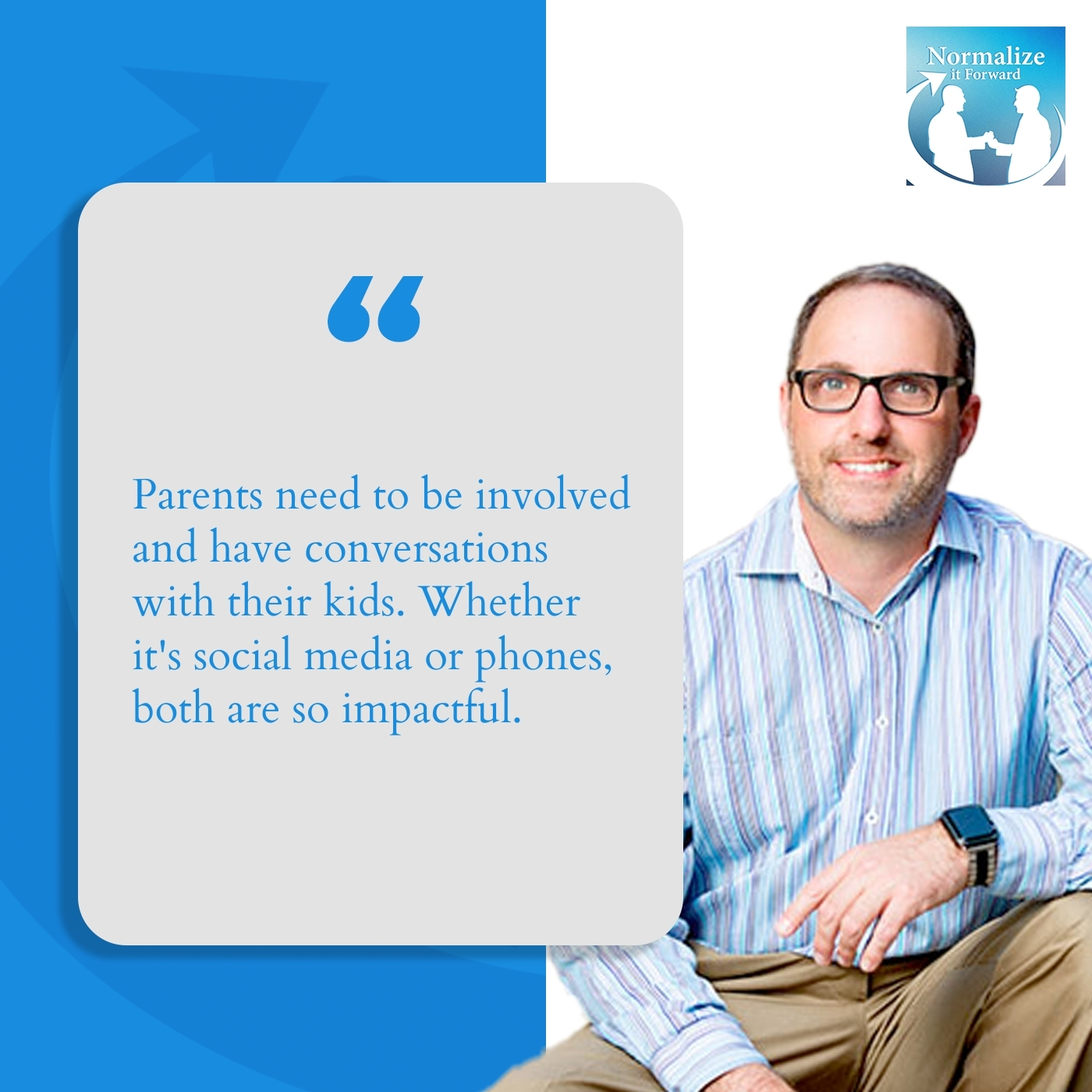
The theme of what you’re saying is so important, and that is parents need to be involved. They need to be having conversations with their kids. Whether it’s social media or phones, or both, they’re so impactful on kids. Sometimes, even picking their phone up and taking a look at their feed as to what’s in there can give you a sense of what they’ve been looking up and what the algorithm is sending them. That’ll tell you a lot. Let me pivot away from the topic of social media for a minute and ask this. Self-care is a buzz phrase that’s been talked about a lot in our field for many years. What do you think of self-care?


Normalize It Forward - Marc Lehman | Dr. Emily Gordon | Eating Disorders


Self-care is tuning in and knowing yourself. In order to do self-care, you have to know. You have to be able to identify and label your own feelings. One of the things I’ve been working on is neurobiologically with our nervous systems and regulating ourselves. Whether we’re in the world, on social media, or dealing with conversations, we get activated.

It is being able to regulate our nervous systems to identify feelings, to be able to tolerate feelings, to be able to know what relationships feel good and are benefiting us, and what relationships are not working so great, to be able to have boundaries, and to speak up for ourselves. It’s nice to go for a walk or have a massage. Those things are important, too, but it’s way deeper than that. Self-care is building relationships so that you have them when you need them, and being able to make decisions about keeping yourself feeling good and healthy.

That’s a great answer. I’d love for my young adults who are tuning in to take heed to what you said. There are lots of ways to do what you suggested. Probably one of the most important things I heard is paying attention to yourself and asking the question, “Am I happy?” You could be lying to the rest of the world if you want.

In order to answer, “Am I happy?” you have to say, “What does this feel like to me?” Sometimes, as teens are developing, they may not be able to have the words that go with a feeling. It is like, “Where do I feel that in my body? What am I feeling? What am I not feeling? What’s happening in terms of my behavior? What are my goals, and how am I doing at meeting those goals?”  It is asking yourself, “If my goal is to plan a soccer game, do well on a math test, or try out for a singing competition, am I taking the steps and making progress towards those things that I have identified as of value and meaning to me?”

Great point. What I was getting at was those teenagers who deep down know they’re not in a good place and are walking around with a mask on. Your point is very important. I would also point out the simplicity that we all have the ability to take those steps. Some kids may say, “I don’t want to,” or, “I’m feeling a little lazy,” or, “I’m not in the mood.” That’s fine, but we all still have the ability. I’m curious. I would love to put you on the spot. You seem like someone who could handle being put on the spot. I’m thinking of doing something new for my Instagram, and I would love to test it out on you. How about that? Can I do that? Is that good?

As long as you handle the technology part, because I tried something new on Instagram, and I failed at the technology.

College Transitions: What Parents Wish They Knew

No tech here. I’m just reading a question. I wanted to ask you a question as a mom. You’re stepping out of your therapist role and into your mom role. Having had two kids of my own go through college, I’m fascinated by what we learn as parents. Each year, there seems to be a good amount of learning. Let me read. As a mom who had kids go through college or even a couple of years of college, what’s one thing you wish you knew going into their first year?

My kids will tell you I can never take the psychologizing out of being a mom.

My kids tease me about it, too.

One of my friends had given me this advice, and I didn’t appreciate it at the time. As they’re getting ready to go, you feel like they’re leaving forever. The advice or feedback was that they come back, and you are building a new relationship. That has been important to remember. It’s also a lesson that’s related to something else I like to talk about, which is that change doesn’t necessarily mean bad. It’s different.

Change doesn't necessarily mean bad. It's just different. Share on X

One of the things I talk a lot with the kids I work with who are going to college is that there is a loss and a change. One of the things that we do a disservice to our aspiring college students is that we talk so much about, “These are going to be the best four years of your life,” or, “Aren’t you excited? You got into the school of your dreams.” We don’t talk about what it feels like to experience disappointment and what it feels like when we miss home. Those things are normal and okay. That’s something I wish I knew.

Those are good points. As you were talking about the transition and the loss, I think growth is hard. I also had a friend give me some advice, and it helped a lot. It was that they’re supposed to do this. As simple as that is, you forget that. You’re right. As a parent, there’s that loss and that sadness. It’s harder for families in some ways because our lives are the same, minus our kids. Their lives are new and exciting.

You’re on this precipice where you don’t know what’s coming. With a lot of things in life, we can look back and say, “It was okay. I got through it. I made it.” When we’re facing a precipice and we don’t know what’s coming, it can be scary. It’s also super cool to watch kids figure things out.

I agree.

It’s cool to watch them become themselves and find things. That is not to say that it’s always easy or that it’s always a smooth road, but to see them navigate, meet challenges, and find people and things that are so awesome is cool.

Empowering Students: Mental Wellness For College Life

I have one more question. This is more clinical, though. That was more for the moms. From our counselor backgrounds, when you think about kids that are reading this who are going off to college and their mental health and wellness, is there a suggestion you have for a kid that can help keep them balanced and managed heading off to school?

That is a great question and an important one. My advice would be similar to what I said, but tailored to a young person. It is that there are going to be ups and downs.

There will be ups and downs, and that is normal and expected. You're going to learn a lot about yourself. Share on X

No doubt.

That is normal, expected, and okay. I remember doing a semester abroad. I will never forget standing in the post office in a foreign country. At that time, we did not have cell phones or social media. I was trying to mail a letter home. I was in tears, and nobody would help me. Yet, those 3 or 4 months were the most amazing experience, not because they were easy, but because I saw, learned, grew, and did.

What I would say to students is, “There are going to be ups and downs. You’re going to learn a lot about yourself. You can do it.” Also, there’s so much support and help out there. It’s pretty amazing. There’s so much going on at these schools. There are so many people like you and me. It’s okay to want or need help. Everybody else doesn’t have it as together as you think they do.

That’s well said. I’m hoping my young adults are taking notes of your words. I would further that by saying I can’t tell you how many kiddos I’ve worked with that go off to school with maybe no anxiety or very little anxiety, and they come back with some challenges because growth is hard. The challenge can be high for some kids, but what you said makes so much sense and is so important. They need to realize there are people out there who can help and support.

In all different ways, whether that’s social, academic, health, or mental health. There are resources and support.


Normalize It Forward - Marc Lehman | Dr. Emily Gordon | Eating Disorders


Kids have to be willing to ask and realize, too. If you don’t believe us, look it up on Google. Statistically, there are a lot of kids out there struggling. Homesickness is, to me, a pretty natural thing that most kids will encounter. I love what you said in your comments. “You’re going to do this. You’re going to get through this, and you’re going to grow as a result.”

I always tell kids, too, “If it’s not working for you, that’s okay. Let’s figure out what will.” Sometimes, we have to go and try things. Sometimes, we need to change our roommate. Sometimes, we need to change our school. Sometimes, we need to change our major. Sometimes, we need to change our path. We can deal with anything.

I transferred when I was in school, and I’m so thankful that I did. It brought me to UConn. When I was at UConn, I met one of my mentors there who opened up the whole world of counseling.

I know you’re trying to wrap up, but that’s another thing. We do this to kids. They feel like they have to know their path and that they have to have it figured out. I don’t know why we need to have kids applying to majors.

It’s a little crazy.

How do you know it’s seven? You don’t know things until you try to do things. There’s this pressure to know and to be sure. We can’t know things. All we can do is make one decision at a time. We as parents, as professionals, and as a culture can try to take the pressure off that you have to know and figure everything out, and trust that one thing will lead to another. It may not be the path you thought. That’s okay. Maybe it’s a more meaningful path or a more satisfying one.

Finding Your Path: The College Journey And Beyond

I completely agree. When kids come into my office at seventeen, they’ll go out of their way to tell me, “I’m majoring in Neurosurgery.” I’m like, “That’s cool.”

Some people know. Somehow, I knew I wanted to be a psychology major. I don’t know how I knew. I didn’t know that I was meant to be a psychologist, but it worked out for me. It doesn’t always, and that’s okay, too.

Let’s face it. When kids are in college, they’re pursuing something that they’re going to do for the next 40 years. To me, it seems like a decision we should take our time making. Some of my readers might be wondering because I often, at the end of interviews, ask you to nominate a friend, a coworker, or a relative to keep the conversation moving forward. I want to let everyone know that Emily and I have chatted offline. She has made some amazing recommendations that I do intend to follow up on. I appreciate all of the suggestions you made and want to thank you for your time and your perspective. It has been wonderful connecting with you.

Thank you. I agree. I somehow had a feeling we would have lots to talk about. Maybe we can continue the conversation someday.

I would love that. Thanks again. You have yourself a wonderful evening. You take care.

You, too.

Thanks.


Important Links


About Dr. Emily Gordon

Normalize It Forward - Marc Lehman | Dr. Emily Gordon | Eating DisordersEmily Gordon, Psy.D., is a licensed clinical psychologist with almost 25 years of experience. Dr. Gordon maintains a private practice in Natick, Massachusetts, where she provides therapy, supervision, consultation and psychoeducation.

She is licensed to practice in the states of MA, FL and VT. Emily specializes in treating eating disorders and body image disturbances in adolescents, young adults and women of all ages.

Emily often works with people navigating life transitions and parents looking to better understand and support their developing teens and to better care for themselves along the way.

Dr. Gordon graduated from Northwestern University and earned her Psy.D. in Clinical Psychology from Ferkauf Graduate School of Psychology at Yeshiva University in New York.

She completed a Postdoctoral Fellowship in Child and Adolescent Psychology at McLean Hospital in MA, and was part of the team that started the Klarman Center for Eating Disorders also at McLean. Dr. Gordon has since supervised psychology trainees at both McLean Hospital and at the Boston Institute for Psychotherapy.

She enjoys speaking and writing about topics related to eating disorders and body image, adolescent development, young adulthood and parenting. In addition to her work with teens and families, Emily is a parent to three teenagers. You can find more about her practice at www.dremilygordon.com or on Instagram at www.instagram.com/dremilygordon.


Reading about mental health is hard. Let’s schedule a free consultation.
 

Normalize It Forward - Marc Lehman | Greg Kligman | Suicide Loss Support


Suicide loss support takes on a deeply human dimension in this conversation with Greg Kligman. He opens up about a decade on crisis lines and in survivor groups, explaining how empathy and presence help families carry the weight of traumatic loss. Listeners hear about the Survivor Support Program, why stigma and shame surround suicide, and how simple outreach can ease crushing isolation. Greg also shares the practices that protect his own wellbeing and offers practical ways anyone can contribute to a culture of compassion without burning out.

Reading about mental health is hard. Let’s schedule a free consultation.
Watch the episode here


Listen to the podcast here


Inside Suicide Loss Support: Healing Conversations With Greg Kligman

I am here to talk about mental health and wellness with a very excited guest, Greg Kligman. Greg, welcome to the program. How are you?

Thank you, Marc. I’m doing well. I’m grateful for the opportunity to be here and talk about a very important topic, among others.

From Amazon To Crisis Support

I appreciate it. Greg, why don’t we jump in? Tell us a little bit about yourself.

Why don’t I do it in the reverse order that people usually might do it? I’m going to start in reverse chronology with the most recent. I became a coach certified with the International Coach Federation. That was an outcropping of work I was doing before, which was at Amazon Web Services. I was there for about four years. I started on the employee engagement team. I transitioned into leadership development, where I started my coaching trajectory. I finished it after I left the company.

Before Amazon, I worked at a communication skills training company in a sales role. We were helping people learn how to be effective communicators on the spot, how to do presentation skills, and how to be an effective writer before computers came along and did everybody’s writing for us, which is maybe the case right now with AI and so on. Amazon was one of my clients. That’s what led to my transition into Amazon. All along at that time, I was doing what I wanted to focus on here, which is the volunteer work that I’ve been doing for the past ten years or so through the Distress Centres of Greater Toronto.


Normalize It Forward - Marc Lehman | Greg Kligman | Suicide Loss Support


I live in Montreal, which is my hometown. I moved back here a few years ago, but I lived in Toronto for about twenty years. There, I began volunteering with the Distress Centres of Greater Toronto, first on the crisis line. It’s called the crisis line. There’s nothing funny about it, but an actual acute crisis or the most serious thing we could ever face on the crisis line would be what we call a suicide in progress, where we have to get very active and quickly take control. That is such a rare occurrence, at least it was for me. I got maybe one or two calls in the two years that I did that work.

By and large, it’s people calling out of isolation, which is crushing. People want to reach out and connect with another human being. It was through that work that I got into the next stage of my volunteer work within Distress Centres of Greater Toronto, which is what I’ve been doing ever since. I stopped working on the distress line. I joined what’s called the Survivor Support Program, which is run by a gentleman named Alex Shendelman. As far as I know, not only is it unique in Canada, but it’s unique in the world, where volunteers specifically work with people who have suffered traumatic loss. It is mainly suicide, but there are homicide supports as well, which I’ve done a little bit of.

I’ve focused on supporting people who have lost somebody to suicide, starting off mostly working with individuals. Since then, I have focused mainly on working in groups. The participants have the choice. Do they want to be in what we call a one-on-one or in a group? Many people do both. It’s never one-on-one. It’s always a volunteer team. They pair a volunteer who has lived experience, who themselves have lost somebody to suicide, and somebody who has not. I’m the one who has not lost somebody to suicide. Since then, I’ve become part of their training to train new volunteers. It has changed my life in numerous ways.

It was that experience and the training I got in listening, empathy, and being supportive that I brought a lot of into Amazon. I created a workshop called the Language of Empathy, which was on how to lead with empathy. I also introduced a grief group. This was a serendipitous thing. It wasn’t part of my job description. My manager at Amazon said, “Greg, when you’re at Amazon, it’s not so much what you do. It’s what else you do.” They’re always welcoming new ideas to bring to the table. In that case, I launched a group for child and baby loss, which is not something I’d ever expected to be involved with. It’s not something I have personal experience with, but there was a need for it.

Certainly, there are a lot of overlaps in terms of how you support somebody going through that kind of grief, because grief essentially is grief. We’re all going to experience it eventually, if we haven’t already. Suicide loss has some particularities that are unique to that kind of grief, unfortunately. If I had to list three, it would be stigma, shame, and guilt. This is one of the unfortunate things about people who are dealing with having lost a loved one to suicide. In the many people I’ve worked with, I don’t know that I’ve ever met one who hasn’t blamed themselves in some way. “I could have, should have, what if,” and that kind of thing.

Grief is grief, and we're all going to experience it eventually. Share on X

The Profound Impact Of Suicide Loss: A Therapist’s Perspective

I’ve worked with some families myself that have been impacted by suicide. You’re right. It is a different type of loss. You’ve got quite a bit of experience. I want to frame this a bit for families. Suicide is a topic that nobody likes to talk about. It’s a topic that I think most people avoid talking about. It’s a topic that is out there. A bit about my background, Greg, I work with students across the country in various college settings and have been doing so for quite some time now.

It’s quite sad. Often, maybe a dozen times a year, I hear a story from a student. It’s always the same context as someone who took their own life on a particular campus. Maybe my student knows them. Maybe they don’t. The ripple effect of all of the people who are affected by that loss is tremendous. You’re right there in the middle of working with families that have been affected. What is that like? Can you describe that?

It’s many things. It’s a privilege to do it, but I’m not going to sugarcoat it. It’s some of the hardest conversations I’ve had in my life. What I’m offering in those conversations is mainly presence, empathy, and holding space for them to express themselves and to talk. It’s the stories I’ve heard and seeing what people live with every day. I have to say that when it is young people, I tell people grief is not a competition. Sometimes, people will be in a group, and they’ll say, “I just lost my brother. I didn’t lose my child.” It’s like, “You didn’t just lose your brother.” There is something particularly awful about young people who are drawn to that outcome. I’m not going to use the word decision because that’s a pretty contentious word to use. Is it actually a choice? They’re drawn to that outcome. It’s awful.

It is leaving people with a lot of pain. Awful covers it in terms of its impact. As we’re talking about this topic, I want families to understand, too, the why behind it. I created Normalize It Forward to be able to have these hard conversations and to be able to talk about these difficult topics, mainly so that we can avoid having to be in them and avoid having to experience them. There are young people out there who are hurting, isolating, and by themselves. They’re at risk. The risk is very real, Greg, as you know.

Could I give a quick message because you mentioned young people?

Yes, please.

Young people or less young people, anybody tuning in, if you’re having thoughts of taking your own life, please talk to somebody. I assure you. You’re not alone. It’s awful. You probably feel alone. You feel that nobody can understand what you’re going through. You might be right. You might be living with a level of pain that nobody can understand. I don’t want to say that’s not true, but there are people who care, who will listen to you, and who do want to help. Please do talk to somebody.

Volunteering For Connection: How To Offer Support And Empathy

Such an excellent point, Greg. I appreciate you putting that out there. I would highlight that over and over again. It’s amazing to me when young people do reach out. Not only are there people out there, but how many people out there care? There are a lot of people out there who care, and a lot of people out there who understand. One thing that always bothers me is when young people struggle by themselves because they shouldn’t be by themselves. You’re doing tremendous work, Greg. It’s amazing what you’ve done over the years. Tell my audience. How does a person get involved in something like this?

I suspect wherever you happen to be living, and I’m speaking directly to the audience now, there are probably organizations, community service organizations, and so on that are looking for people. Look up volunteering, helping, and supporting. See what’s out there. That’s how I did it. It started with a Google search. In my case, I knew it was something I wanted to do going back to when I was a teen. I remember that I called the distress line.

I don’t remember what I spoke about, but I do remember how I felt after the call. The only words I remember that the woman said to me during our conversation were, “That sounds hard, Greg.” Hearing those words that somebody was validating the fact that what I said sounds hard, even though I never met her, and she was a voice, had such tremendous therapeutic value that I felt somebody got it. People lose hope for many reasons, but one of the worst things is when you feel hopeless that nobody gets it, and there’s no help.

You hit the nail on the head. You also said this before we started recording. I want to bring it back to our conversation. I’m a licensed therapist. I’ve been doing this for 25 years. You don’t need to be a licensed therapist. You need to be a human being. You need to be a person who expresses empathy, care, and concern. You need to be a good listener. A lot of people fall into that category.

Thanks for bringing that up. It’s true. The Distress Center Program runs on peer support. You don’t need to be a therapist. Anywhere in your life, you’re going to have an opportunity to be supportive of people who are grieving. I want you to know, don’t be worried about saying the perfect thing because there is no perfect thing. There is nothing you can say that’s going to take the pain away. Take that pressure right off yourself. There are no such words that can do that. If you show that you care and you’re available to listen, even send a text saying, “Thinking about you. No need to respond.”

Don't worry about saying the perfect thing. There is no perfect thing to say that will take the pain away. So take the pressure off yourself. Share on X

That’s big.

It is to take the pressure off, but to let them know, check in. We hear that a lot. People feel that a lot of their community is going away. As you said before, people are very uncomfortable with the topic of suicide. People are uncomfortable with any version of death. It scares a lot of people because it’s waiting for us all, and we prefer not to talk about it. Suicide takes that to an extra level.

What do you possibly say to somebody who has lost a family member to suicide? “I don’t know what to say to somebody. There is nothing to say. I understand that people could put that on themselves. I don’t know what I’m going to say. I’m only going to make it worse if I say something, so I’m not going to say anything. I’m just going to let them come to me.” The heart is in the right place when one is thinking that, but the impression it could leave is, “People are afraid of me now,” or “They’re avoiding me.”

That could add to the loneliness that people feel when they’re dealing with this. I would urge people to invite conversation. Don’t force it, especially if it’s something that happened recently. People are taking their lives not only day by day. Sometimes, it’s minute by minute. A text showing, “I’m thinking about you. Available if you want to talk. No need to respond,” that’s important. Any extra pressure is an extra heavy weight at that point.

Youth Mental Health In The Digital Age: Social Media’s Influence

Let me ask your opinion about something because you’re around this a lot. The stats on mental health, especially for young people, are moving in the wrong direction. The suicide rates are up tremendously. From your point of view, is there one reason? Are there several reasons? What seems to be causing some of that?

Marc, this is strictly in the domain of my opinion because I’m not an expert in any of this. I would say social media presents a perfect life that is not attainable for a lot of people. I would say that bullying is very easy online. People will be mean online in a way that they wouldn’t if they were face-to-face. You can type something. I’ve seen with my own teen daughter that what goes on is that there will be these group chats that she gets pulled into. People will start sending screenshots of group chats to other people. These are teenagers.

Social media presents a perfect life that is not attainable for a lot of people. Share on X

Teenage is hard in the best of times, but social media has made it a lot harder. It’s so easy to be nasty to one another. I’d like to think it makes it easier to be nice to one another, too. It’s not all doom and gloom. From what I’ve seen, social media has made people more isolated and more likely to aspire to something impossible. They’re aspiring to something that even if they got it, it wouldn’t give them the satisfaction and happiness they think, the perfect lives, these influencers, and so on. There’s so much insincerity now. A lot of young people don’t know where they fit. Marc, I defer to your expertise on this. As I said, I’m just giving my opinion.

It’s a great opinion. I would add to what you said about satisfaction. I heard it from a young person in my office asking young people, “What would satisfy you? What would make you feel satisfied as a human being in the future?” Most of them don’t have answers. Most of them have no idea. It’s part of our journey in life to try to figure out what makes us happy. Unfortunately, some young people are searching down the wrong paths. Social media can be detrimental to some kids. It’s also done in privacy.

For us as parents, unless you’re aware of what your child is doing online all the time, there are probably some things that you’re not aware of. Some of it can get pretty awful or pretty terrible. As you said, Greg, I have the opinion as well that social media can be used for positive reasons. One of the things I do with my business is to spread the gospel, this type of stuff. It’s got its intentions. I will say this, and I don’t know if you see this with your daughter. It’s an intense world that we live in. It is way more intense, in my opinion, than when we were kids.

I often find myself, when I’m working with young people, thinking, “What would it be like for me if I were a sixteen-year-old or a seventeen-year-old now?” The qualifications in the United States to get into certain colleges have gone way up. It is the intensity of life. I remember when I was a kid. I love baseball. I play Little League. You play your game, you’d have your soda, you’d go home, and that would be it. Now, kids are playing three games a day. They’re in four different leagues. It doesn’t seem fun to me. It seems intense.

They’re being overprogrammed and so on. I totally get that. Also, when I went to university, it was never expected that getting a job would be easy. I can’t imagine what it’s like now when you go into university and you’re hearing through your other ear, “All those jobs you think you’re going to be getting, AI is going to be doing that.” What are you at? I can’t imagine the stress and the prices of everything. Real estate has gone up.

What is it like to be a teenager now? I’m going to go to university. I earned my way in. Am I actually going to be able to learn skills that I could earn a living with in the world when all I hear is that AI is going to be taking over so many jobs? What is it like to feel that the prices of everything are going up? The jobs are going away. Somehow, I’ve got to figure this out. I’m sure it was never easy to be a teenager, but I can’t help but think that nowadays, it’s got to be incrementally or exponentially harder than it ever has been before.

Prioritizing Personal Wellbeing: The Non-Negotiable Art Of Self-Care

I would agree. I see it every day. It’s definitely a challenge. Let me shift away from that for a minute, Greg, and ask within the vein of mental health and wellness. I’m always asking about self-care. I feel like that’s a buzz phrase that people throw around a lot. They mean different things by it. What does self-care mean to Greg?

Self-care is certain things to Greg. I also want you to know that self-care is an actual topic that we are very deliberate about when we do the support work, not only for people who are grieving, but also among the volunteers who are supporting people who are grieving. Self-care to me means being deliberate about it and not making it an afterthought. It’s realizing that life is hard. I’m doing hard things. I’m carrying a mental burden, especially for some of the co-volunteers who happen to be empaths. They face an extra burden. When I say empath, you have to be wired that way to be so in touch with your fellow humans.

Self-care means being deliberate about it—not making it an afterthought. Share on X

It is to be deliberate and realize that it’s hard. I’m going to realize that it’s hard. I’m not going to be ashamed of that. I’m going to budget time for myself to give myself pleasure and rest, whatever that is for me. If you’re an empath, dealing with a world like this, I urge you to take it seriously because you’re carrying weight that other people are not. To me, self-care is being deliberate about realizing that I deserve to recharge my batteries, and I’m going to figure out what that is for me. I’m going to make sure it happens. I’m going to do it unabashedly, without compunction and without shame. I’m going to make that happen for myself.

It’s so interesting. When I talk to some people who get the concept, they talk about self-care like it’s a pillar of your world. It has to be, in order to survive. Other people talk about it like it’s optional. The individuals who talk about it like it’s optional, oftentimes, become inundated with the stressors of life. I like the way you put that. That’s important. It’s carried out differently for different people. Some people play pickleball. Some people lift weights. Some people meditate. Some people write poetry. There are lots of different ways to take good care of oneself. The bottom line and the message you’re sending is a great one, Greg. You should take care of yourself. You should find a way or several ways to do that.

I don’t want to get preachy here, but I will for the next ten seconds if I have your permission.

Go ahead.

I want to disabuse some people of a possible belief they have that running on all eight cylinders or nine cylinders is a badge of honor, not taking vacations. We’re talking about young people doing homework until midnight every night. Good enough is good enough.

Good enough is good enough. Share on X

No doubt. That’s a great message to send. As a matter of fact, I find that those people often get sick, the people who run that way.

That doesn’t surprise me. I’m sure that underpins a lot of mental health struggles. People don’t give themselves any grace and don’t realize they have the right to ease back and honor whatever it is about themselves that gives them joy. They don’t have to always be firing, achieving, yearning, and striving. For what? You might get that pot of gold, but who are you going to be? How healthy are you going to be at that point? What are the values you’re living by here? Make your own mental and physical health a key value and a key pillar of your life. Work backwards from that. I am off my soapbox now.

Empowering Youth: Good Enough Is Good Enough

I like how you said that. You can’t say it enough. It’s important. I’m curious for a young person tuning in, Greg. Maybe they’ve never done that before. Maybe they’ve never prioritized it. Do you have any suggestions for a team?

When I got the expression, “Good enough is good enough,” I didn’t make that up myself. It was actually a therapist who was working with my older daughter. A number of years ago, she was very much a perfectionist. She didn’t see 95 on a test as an achievement. She saw it as she blew 5%. She’s probably a bad person because of that. She was driving herself to be sick. The message was, “Good enough is good enough.” Do your work. Try your best. We’re not saying don’t do that, but then ease off.

Honor the fact that you’re not a machine. You’re a human. You’re allowed to make mistakes. You don’t need to get 95. She happens to be academically inclined. My other daughter is quite a bit less so. In her case, we’re celebrating a passing grade. That’s fine. I told her, “I don’t care what your mark is. I just care that you worked hard and did your best. That’s okay. Live healthily.”

It’s funny. Young people lose sight of that so much. I joke that I have an occupation where I hang my degrees on my wall. In 25 years, I’ve been asked about it five times, three of which people wanted to talk about basketball. People don’t care. They’re talking to me about intimate things in my office. You would think they would care. I say that because kids put so much pressure on themselves.

This is what kids say to me in my office. “My grades will lead to my school, which will lead to my occupation, which will lead to my happiness.” I hear that sometimes from kids who are 15, 16, or 17 years old. I talk about it a lot because I want kids to understand that most of us in our generation, if we were in school and we were pursuing something, our path would change four or five times throughout the journey. It’s almost impossible to lay that out and stay with it all the way through.

I’d love to ask you, Marc. When kids or young adults talk like that, where is that coming from? Whose voice is that? I’m sure there are some people, it’s within that they’ve got this fire. Are they living somebody else’s life? Where’s that message coming from that is the trajectory to a happy, fulfilling life?


Normalize It Forward - Marc Lehman | Greg Kligman | Suicide Loss Support


It comes from a few places. For some kids, that comes from internally. For some kids, that comes from their parents. Some kids get it offline. They see an individual in their 40s or 50s with endless bank accounts and a big smile on their face. They think, “I have to be on a certain path to get into that occupational world.” What’s sad is nine times out of ten, the person they’re seeing isn’t real. The path is marketed specifically to engage them. Kids are too young to see that. It’s a great question about where it comes from.

I would say to you that, on the whole, kids chase happiness. That’s what they want. They want to be happy, but oftentimes, they do that in the wrong way. Putting pressure on oneself at 15, 16, or 17 years old, or putting immense pressure on them to the point where we have to put them in a hospital or something like that, is not the way to seek happiness. I like what you said earlier. It is recognizing when you’re putting your best foot forward. It doesn’t matter what the grades are. If you’re doing your best, that should be enough.

Beyond Formal Practice: Finding Your Own Path To Meditation

Results do matter, but at what expense? At what cost? I also want to ask you. You mentioned the word that stuck with me earlier when we were talking about self-care. You mentioned meditation. This is Greg’s opinion again. Some form of meditation can be one of the most important things you could do for having a contented, happy life. It doesn’t mean you need to sit with your eyes closed for hours or go to a retreat. What I mean is becoming aware of your own thoughts and the influence they have on you. What do you think of that?

Do you believe that meditation is something that should be encouraged with young people to notice, “What is the story I’m telling myself?” and to step back and realize, “That’s not me. That’s just the story. These thoughts, I’m watching it like a movie. You’ve got to do more. You suck if you don’t do this, or if you don’t get that new purse, you suck. I’ve learned, and it’s taken a lot of work and discipline, to hear the story and to see it for what it is. I can choose how to engage it, but it’s separate from me now. I’m not just living the reality of my story. I’m going to examine my thoughts and what I want to do about them.” How practical do you think that is as a tool for young people?

It’s very practical. I would say to you that meditation, in my eyes, comes in various forms. I’m sure there are people out there who are going to disagree with me. I like to get a bucket of balls, go to the golf course, and hit balls off the range. That’s meditative to me. It helps me think things through. A nice, long bike ride helps me think things through. When young people think of meditation, they think of one avenue. I think of lots of different behaviors that can be meditative. The point is always exactly what you said, which is being more aware of your thoughts and where they’re coming from. Do you, in fact, digest those? That’s never a thought that kids have. “Should I always digest it?”


Normalize It Forward - Marc Lehman | Greg Kligman | Suicide Loss Support


“Should I swallow this thought, spit it out, or let it fly by?” You also mentioned some other important things about golf or bike riding, which is also self-care. If you’re someone who knows that hitting a few balls or riding a bike is good for you, then do that. Carve out time and defend that time. Turn off whatever you need to do. That is your time. You have every right to do that. It pays dividends in your life. You’ll be a better, happier, more fulfilled, and content person. You’ll show up in the world better. You’ll be better for everyone.

Greg, that’s excellent advice. I’m hoping people are tuning in. I personally do that. I’ve met people who do that. We were talking about happiness earlier. That creates happiness. It creates satisfaction. I’m a better dad. I’m a better therapist. I’m a better person when I take care of myself. To me, if this world were filled with people who took that seriously and protected that time, we’d have more smiles on faces than we do now. It’s an excellent piece of advice. It is definitely something young people should digest, think about, and consider how they could do it. It’s unique to everybody, but it’s something special and important. When the world gets on us and sits on us, and we’re overwhelmed, we have to have a go-to or two.

No Time For Self-Care? Why You Must Make It

This is something that ties into the grief work, but it’s also a universal principle. Maybe it’s not so much one that affects younger people, but definitely their parents. I’m wondering how you would handle this when somebody tells you, “I don’t have that luxury. I have responsibilities to take care of people. What you’re saying is great. I see the value, but I don’t have the time. I have kids, I’ve got the job, and I cannot afford the luxury of focusing on me.”

I would say bluntly to make the time. The time doesn’t have to be an hour or two. It could be fifteen minutes. It could be ten minutes. There are times when I’m in my office and I’m stressed because I’ve seen a lot of patients. I go outside, and I take a walk for five minutes. That fresh air clears my head. Moving my muscles a little bit clears my head. It is necessary for human beings. When people say that, because I’ve heard that many times, it’s an excuse. That’s all it is. If we needed to, if God forbid, our doctor said, “Marc, you know what? You just had a heart attack. You have to do this now,” we will somehow find the time.

People might be waiting for a heart attack. That’s the challenge.

That’s a good place for us to end the conversation. Don’t wait for the heart attack. Make sure that you’re taking good care of yourselves. Please hear Greg’s words. They landed with me. I’m hoping they land with parents and kids out there as well. We all need to take care of each other, but we also need to take a look at how we’re doing with ourselves.

Greg, thank you so much for your time. I know you’re super busy. Please hear me say a huge thank you from Connecticut. The work that you’re doing is so valuable. I can only imagine those families needing that opportunity to be heard and to be present with. You’re providing that. Just know that what you’re doing is massive. For those families in need, it’s immense for them. Thank you so much for what you do.

It is a pleasure and an honor. So nice to talk to you, Marc. Thank you so much.


Important Links


About Greg Kligman

Normalize It Forward - Marc Lehman | Greg Kligman | Suicide Loss SupportA certified coach with the International Coach Federation whose path into coaching grew out of years of professional and volunteer experience. Greg spent four years at Amazon Web Services, beginning on the employee engagement team before moving into leadership development—where his coaching journey truly took off. Prior to that, he worked in sales for a communications training company, helping people sharpen their presentation, writing, and on-the-spot communication skills.

But what really grounds Greg’s work is his decade-long commitment to mental health advocacy. While living in Toronto, he began volunteering on the crisis line with the Distress Centers of Greater Toronto. Over time, he transitioned into the Survivor Support Program, where he has spent years walking alongside people coping with traumatic loss—primarily supporting those who have lost someone to suicide. Now back in his hometown of Montreal, Greg continues to carry this vital work forward, blending professional expertise with deep compassion.


Reading about mental health is hard. Let’s schedule a free consultation.
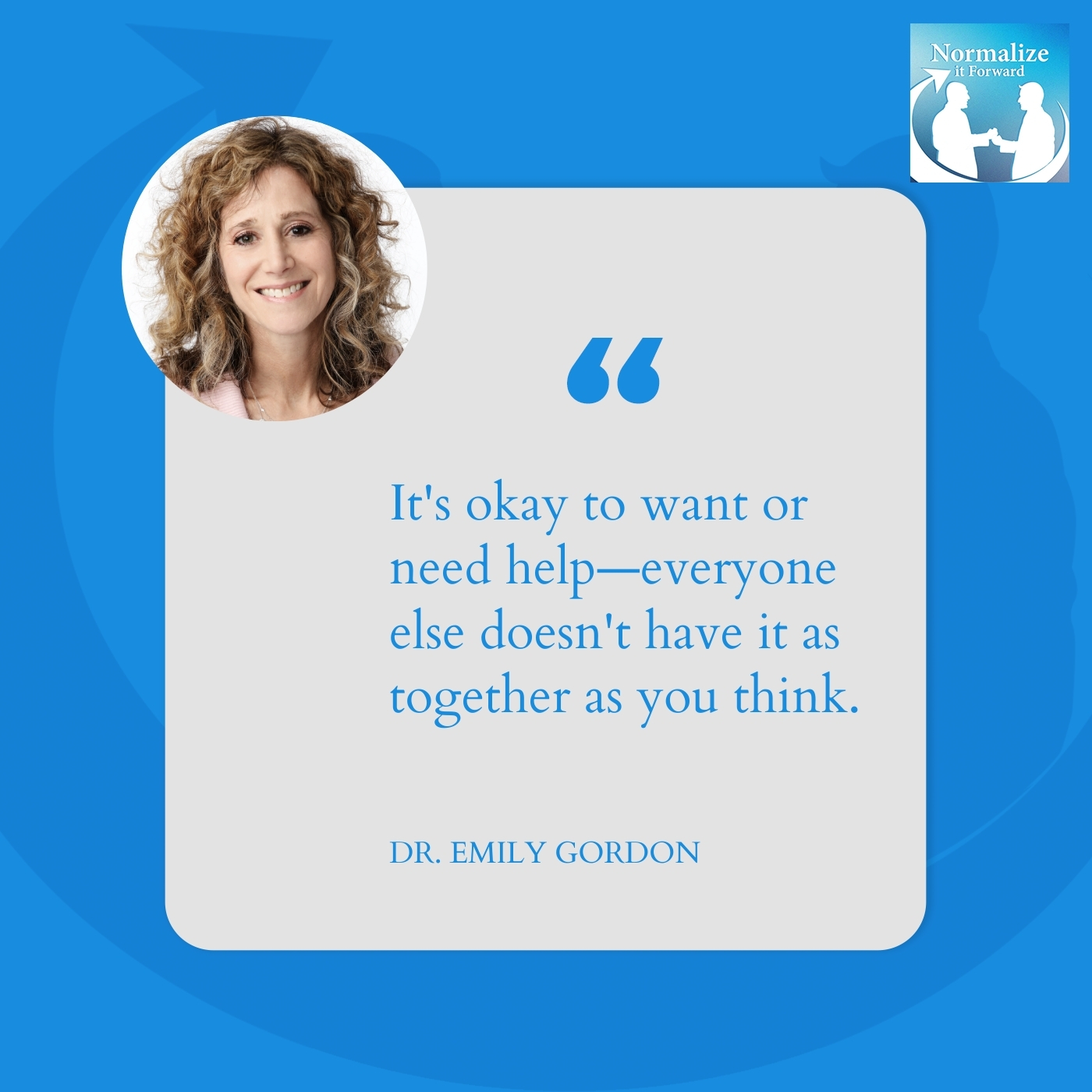
 

Normalize It Forward - Marc Lehman | Olivia Healey | Social Anxiety


Many teenagers these days, despite their interconnectedness through digital means, are suffering from social anxiety. Their mental health is not that well, and panic attacks are becoming all too frequent. Actor and screenwriter Olivia Healey shares how she uses her storytelling skills to help young people deal with these challenges and become more open to creating genuine relationships. She warns about the dangers of social media, particularly its adverse effects on teenagers’ social skills and awareness. Olivia also opens up about her own experiences with social anxiety and how she overcame these inner battles to unlock her fullest potential.

Reading about mental health is hard. Let’s schedule a free consultation.

Watch the episode here


Listen to the podcast here


How Teens Should Handle Social Anxiety With Olivia Healey

I’m so excited to welcome Olivia Healey. Olivia, welcome. How are you?

Thank you. I’m so excited to be on your show. I’m doing well. How about you?

I’m great. Thank you for being here. I appreciate it. Let me read through your intro for a moment here. Olivia Healey first discovered her love of storytelling at the age of ten when she played Juliette in Madeline’s Christmas in Atlanta, Georgia. She pursued theater for six more years before realizing the depth to which she could take her craft in front of the camera.

Since then, she has appeared in various featured films, such as Grounded, The Family Plan, etc., and moved to LA to actively pursue her career in acting. Not only is Olivia an actor, but she is an average screenwriter as well. She has written over 60 scenes for clients in both LA and Atlanta, and wrote the impactful short film Breathe.

Breathe was screened in June 2023 and received praise from multiple recognized mental health organizations. Olivia has worked with the highly regarded Berman Center to screen Breathe and inspired their patients to express their anxiety through art. She looks forward to continuing her journey, bringing Breathe to more organizations in the hopes of reaching a broader audience. Welcome, Olivia.


Normalize It Forward - Marc Lehman | Olivia Healey | Social Anxiety


Thank you.

That’s awesome. I viewed it myself, and it was awesome. Breathe was tremendous. Those of you who haven’t looked up Olivia and haven’t looked up Breathe, please do. It is worth your while. I’m curious. Can I jump in and ask you a little bit about that?

Please do.

Finding Purpose In Screenwriting

Your acting career began young, right?

Yes, very.

You then began screenwriting at the same time or after? How did that come about?

After. It came about through necessity because I wanted to tape something to send to the casting directors and agents when I was starting out in the screen acting field versus musical theater. I wanted to play a mean girl, but I couldn’t find the exact mean that I wanted to be on TV and film. Thirty minutes before I went to my coaching, where I was going to tape this little clip, I decided, “I’m going to whip up my own script.”

I wrote myself a very mean girl scene that scared my cousins in Texas and used that to get my very first agent. I had such a blast with that that I decided to keep going from there. Since then, I wrote Breathe. I’ve written for clients both in Atlanta and Los Angeles for little scenes that they can put on their reels, like I did for casting directors. I’m writing a screenplay, which you’ll be seeing within the next ten years on a big screen.

You guys read it first. That’s cool. What is that about?

It is about an unlikely friendship between a high school senior and a man towards the end of his life, and they meet at a therapist’s office. It explores how two people at such opposite ends of life and living different lessons can learn from each other, and then from there, infect each other’s lives and impact people in each of their lives as well.

Dealing With Panic Attacks And Social Anxiety

Speaking of, I’m guessing you were in high school yourself. I would love to ask you a little bit about that. I work with young adults all day long. The premise of the show is to bring the conversation of mental health and wellness to the masses, get people talking more about it, and normalize that conversation so that people aren’t afraid to talk about topics.

I wanted to ask about your journey through high school, when you think about mental health and wellness around you with your peers, the aspects of mental health and wellness, and how it played out around you in your world in high school. I’m wondering. Can you tell us a bit about that?

Absolutely. First, I’d like to say that at the time when I was in high school, experiencing mental health for the first time, and I was conscious of it, I felt very alone. Upon reflection, I think about peers that I had who were probably going through the same thing. I’m glad that you have this show because a lot of people will probably open up more. Hopefully, grades of peers will open up more to each other, and hopefully, students going through what I went through won’t feel as alone.

Thank you.

It’s so important. I became conscious of mental health at a young age in fifth grade, secondhand through one of my best friends’ experiences, which I’m not going to dive into out of her privacy. I’ve never thought that it would affect me because she was going through depression and some suicidal tendencies. Towards the end of middle school and especially freshman year of high school, that’s when anxiety started to get me.

I will never forget the first memory of me having a panic attack. I’m sure a lot of people reading this might be able to relate. It all started because I didn’t know who I was going to sit next to on a bus on a field trip. That, for a high school teenager, is a nightmare. I remember sitting there having very cyclical thoughts about that. All of a sudden, my heart started racing. I felt like I was going to die, and I didn’t know what to do.I was texting my mom about it, and she didn’t know what to do either. Both had me googling up lavender fields and soothing images to try and do whatever we could.

From there, I realized that I had that scenario more often than I thought I did and that I had something a little bit deeper that I needed to look into and take care of. I had a hard time with social anxiety to the point where I self-isolated a lot. I would have symptoms such as the heart racing. I had a lot of skin flushing in my knuckles, my rosacea, and my cheeks. I would stutter a lot. I would get a lot of brain fog.

I would try to talk to somebody that I was a little bit intimidated by, and not know what to say at all, and then you go home, and you’re so hard on yourself. It wasn’t until I went to traditional and art therapy, and it wasn’t until I separated after COVID and did some online school that I had a lot of time to get to know myself. I understood my triggers and started to see that it didn’t matter who you sat next to on the bus. You grow up a little bit.

Good for you. I have so many questions. I appreciate you taking us through that. Probably my biggest takeaway from what you said is that so many people I’ve worked with have gone through something very similar. Even the buzz phrase, social anxiety, I feel like, whether it’s COVID or whether it’s growing up in this day and age with phones and everything else, social anxiety has become pervasive. It’s everywhere.

Many kids struggle. I was glad to hear you say you reached out to your mom because so many kids struggle alone. They don’t reach out to a parent. I was thrilled to hear you say that you had that individual as a support for you. Social anxiety is an interesting thing. There’s a development that happens from freshman year through senior year in high school of how you’re supposed to be.

Identity. Your peers have a large impact on that. You want your peers to like you. At the same time, you’re trying to learn about yourself. It’s a very hard time. I empathize with anybody going through that.

Impact Of Your Peers On Mental Health

Tell me more about that. I like what you said. Your peers have an impact on that. What do you mean by that?

I feel like, as a teenager or as a kid, we learn a lot through observational learning and mirroring. A lot of times, we don’t see our full identity at home, if that makes sense. That’s a part of who we are. We then go out into the world, and we want to find those other things that we connect with. A lot of times, we see that in our peers. If you like something that your peers do, and if you see somebody that you want to be friends with, you reach out to them or mirror them.

For somebody with social anxiety, if you reach out to this person and it doesn’t exactly go the way you want to go, it turns into, “We’re not going to be friends.” Instead, it turns into, “What’s wrong with me? I did something wrong. They don’t like me.” That’s not correct, but that is the physical response that you have. As I’m much older, I’m able to take a step away.

I was explaining this to my mom in acting terms. When we go on sets, we have takes. We shoot 1 take of 1 scene. If it goes poorly, it’s okay because you have a whole other take. As an adult, I’m thinking about social situations the same way. If I go to a coffee shop and I leave, and my friend felt a little bit more distant or didn’t laugh at the jokes that I make, and I didn’t feel like we connected as much as I wanted to, instead of leaving and immediately thinking the socially anxious thought of, “I did something wrong. This person doesn’t like me,” I try to let it go and be like, “Maybe that wasn’t my favorite take, but we’ll get them next time.”

That’s right. That is a good way of looking at it.

Usually, it does happen. You never know what’s going on in somebody else’s life, and it’s usually never about you.

You never know what is going on in somebody else’s life, and it is usually never about you. Share on X

That’s a good way of looking at it and a great piece of advice for young people to know. A lot of young people, when they head into high school, have that sense of self that’s negative. Immediately, when something doesn’t go well, they blame themselves. As you get older, hopefully, and certainly, in your case, it has happened, you turn positive toward it. It’s like, “Instead of blaming myself, I recognize, eighteen different things could have happened to this person before they saw me.”

The Negative Impact Of Social Media

That’s a good way of looking at the younger high school person and then the older high school individual in terms of social anxiety. Anxiety and depression, I feel like, are everywhere you turn. I don’t know what life was like with some of your peers that you were around in high school, but I feel like most kids that I work with, when I ask them what some of their friendships are like, kids are struggling with a lot of stuff. Do you see that? You recognize that?

Absolutely. I recognize that. I’ve also seen it start young, too, as far as 8 and 10-year-olds I know who are already going to therapy and having anxiety. It’s sad to see. A large part of that could be due to social media and online presence. You were talking about it in your episode with Sue, Dealing With Societal Pressures. The fact that you’re reachable all the time has a major impact on me. To see that start out so young, especially with school and friends, my heart breaks for kids and makes me grateful for the time I did have before phones. It became this large entity.

That’s a great point. I was thinking about that. I was talking about it with a patient of mine. They are about my age. We were reminiscing about playing on the playground when we were in elementary school, going out to recess, and how much fun that was. I bet you that if we drove by an elementary school, we’d see kids playing with their phones. I don’t know if kids are allowed to use them during recess or not, but it’s sad that kids have their heads down and they’re typing away.

You’re right. It’s happening at a young age. It’s important for parents to know that, too, as we’re talking. Some parents will read an episode like this and think, “How can I help my kid?” Lots of parents will try to restrict the use of these, so they’ll say, “We’ll give it to you a little bit at a time,” but these things are pretty powerful. Lids are going to find lots of ways to entertain themselves on it. Unfortunately, it takes away from this.

I have this theory, and I feel like I’m right. I tell everybody about it.

Let’s hear it.

I feel like the things that we are drawn to that we can’t help ourselves from doing as a kid are the things that we’re meant to do as an adult for our career, if we are so fortunate enough to chase our dreams. My brother and I are both examples of that. For me, it was me with my dolls or playing imagination with my friends. I didn’t just dress up my dolls. Instead, I would direct scenes with them. I would act with them. If I didn’t like this scene, I would take it back to one and I would reshoot it the next day.


Normalize It Forward - Marc Lehman | Olivia Healey | Social Anxiety


With my brother, he would sit. He had this thinking sword, and he would play with it. Now, he’s this incredible mathematician. I think about that because if we aren’t allowing our brains to be bored at that young age, or if we need to do something to feed that boredom and we’re reaching for our phones, we’re not allowing ourselves to discover those dreams and pursue that passion later in life. Instead, we’re already being affected by dwindling attention spans.

That’s a great theory. I love that, and I love that you used the word passion because that’s what it is. It’s our passion. I, too, have a story similar to where, from a pretty young age, I enjoyed helping my friends with their issues and their problems way before I became a licensed therapist. It fit hand-in-glove for me. When I figured out this profession, I’m like, “I get paid for this? This is unbelievable.” I agree with you.

I use that all the time with my patients. Discovering someone’s passion, which is different from yours and mine, and everyone has their own passion, becomes one of the ways that you seek happiness as an adult, if you’re able to discover that. It all goes together. The ability to be bored and the ability to be able to dream, play, and do those things when you’re younger gives you that concept. So I love that theory. We have to name that, like Olivia’s Theory.

Please do. You proved me right with your personal connection.

I talk about this a lot in my show. It’s no secret that the anxiety levels of young people, unfortunately, are at an all-time high. Unfortunately, the depressive symptoms and disorders are also at an all-time high. Suicidality is the second leading cause of death in young people. That has moved in all the wrong directions. Several years ago, it was number twelve. It has gained in strength. It’s unfortunate.

That’s one of the topics no one wants to talk about, but it is out there. We hear about it all the time, whether it’s public figures in the news or whether it’s private family, friends, or friends of friends. I hear about it way too often. I often ask my guests. We point to things like social media, phones, and other things as reasons why. I want to ask you. What do you think? What comes to mind when you think about why mental health is in the place that it’s in?

If I were to point my finger, I would point it at social media, to be honest. That’s when I saw it affect me and my peers the most. My generation is the Guinea pig generation for social media and how it affects young minds. I would also suggest that we are more open about talking about it than other generations used to be.

If we need to feed our boredom by reaching for our phones, we are not allowing ourselves to discover our dreams and pursue our passions later in life. We are just dwindling our attention spans. Share on X

I know my parents and I, and we’ll probably touch on this later, had a hard time connecting over this matter because it had been drilled into their minds not to talk about it. Maybe these things were already present, but we’re more open about them. We post about it on social media, so more people are more aware. I know that there are some people who believe this awareness may not be good because sometimes, if you suppress it, then we can keep moving on. I would disagree with that.

How Adults Should Discuss About Mental Health

I would, too. I’m glad you brought it up, though. It’s important. The premise of the show is to bring this conversation forward and to help not only young people, but adults as well. Parents who are in their 40s and 50s, like myself, grew up in a generation where it was somewhat taboo to talk about these topics, so we’re going to parent in that same way. How do we talk to our kids about depression, anxiety, eating disorders, bipolar disorder, and all that stuff if we can’t even talk about it amongst ourselves? You brought out an excellent topic. In some ways, I feel like kids teach parents when it comes to topics like this, right?

Absolutely. My parents and I have talked about that a lot. To plug my short film, that is who I created it for originally. It was not just patients with anxiety that are going through the same thing as me, but especially for systems. My mom and my dad are two of my best friends in the entire world. I saw how much they were struggling with the fact that they couldn’t understand. I saw how much it rocked their world. I felt like the only way words could help was by using adjectives, which never quite got to how I was feeling. To tell you the origin story of my film.

Please.

After many disconnects with my mom, and it was pushing us apart, I went to my therapist’s office and I told her, “I can’t connect with my mom. We’re having a hard time.” She said, “Are you looking at it from a descriptive point of view? What if we looked at anxiety as what it looks like to you, not how you can describe it with words?”

For some reason, something that clicked with me was this metaphor of a white room with four white walls where I wake up in it when I’m in a panic attack or a moment of high anxiety. I don’t know where I am, but I receive a note that tells me to look for a door, and there are no doors in this one. As I’m looking around, I keep receiving more notes telling me to go faster and that the clock is ticking, which does not help with the panic. The physical symptoms set in. I feel like I’m suffocating, and I pass out. The only thing that can get me out is focusing on breath, and then I leave exhausted. I never know when I’m going to re-enter that room.

I connected with that as a metaphor for my anxiety, so I drew a picture of that with my therapist. When I got home that day, I wrote that story out in short story form in my journal, and I had my mom read it. That was the first time in all the years that I’d been going through this paralyzing anxiety that I saw my mom understand, and she vocalized that.

That moment with my mom meant so much to me, and later my acting coach as well, who I wanted to understand me a little bit more. I wanted to turn it into a film so that it could be accessible to other people, so they could then share this with their support systems as well, and hopefully have that moment of connection. With art, when you’re looking at it or you’re listening to it through music, a lot of times, it can do what words simply cannot.

When you are looking at art or listening to music, it can usually do what words simply cannot. Share on X

I agree. What an awesome description. What a fantastic concept. I’m thinking as you’re talking that I have had so many patients try to explain a panic attack in my office to their parents. It’s almost like they shoot and miss. They try to describe it, and the parent is like, “I don’t understand that.” Your description resonates with me. It resonates because it’s your pain. It’s first-person.

It’s, “I’m looking for a door that’s not there, and there’s all this pressure that’s saying, ‘Come on. Let’s go.’” That feeling that a person has had, and many individuals I’ve worked with over the years have had, is not only hard to describe, but it’s hard to get through. Once it ends, the last thing you want to do is tell someone about it. You’re glad it’s over. Unfortunately, you may be going back to that room at some point. That’s powerful. I appreciate you sharing that. I’m hoping that people tuning in do look it up. It is an opportunity and a tool for parents to understand anxiety at a deeper level, specifically with panic attacks. That’s great.

Thank you. I hope so, too.

Anxiety Could Never Stop Anyone

That’s wonderful. I enjoyed listening to you. For young people, it takes a lot of courage. I always say courage is the opposite of anxiety. It takes a lot of courage to be able to talk about some of these things in a way that you’re helping other people understand you, and therefore putting people in your corner to be able to support you and assist you in the future. I appreciate all of that. It’s admirable that you’ve gotten to that level with not only your therapy but also your parents. For those kids who are in high school and are suffering, and they’re suffering in silence, I’m wondering if you could speak to them for a moment. What would you say?

You made me tear up because I understand. That’s the first thing I would say. Those memories still affect me, but they also make me proud of who I am. I would say to them, “You’re perfect the way you are with that struggle. You don’t have to end that struggle.” I remember when I was that age, whenever anybody asked me what my biggest wish was, it would be, “I hope I never have anxiety again.” That’s not true. I still wake up in that room sometimes. I have anxiety on the reg, but I am out in California living my dream, pursuing one of the scariest careers. I don’t let that anxiety stop me.

Your anxiety is going to be there with you, and that’s okay. There’s nothing wrong with you. Whatever your dream is, whether it’s academic, athletic, artistic, or inspirational, you can do it. That anxiety is not going to stop you. You’re already so strong, but the battle that you fight to understand yourself is so special, and it’s only going to make you stronger in adulthood.

Olivia’s Self-Care Regimen

Great message. You’re describing managing it rather than it managing you. I love that message. It’s a message of positivity. It’s a message of understanding. I know people reading will resonate with those words. I appreciate that. Let me shift for a minute and ask. Self-care is a topic that gets talked about a lot. It’s a buzz phrase used in my field. People define it in lots of different ways. I wonder. What does self-care mean to Olivia?

I am into skincare. Taking care of yourself externally that way is fantastic, but to me, self-care is listening to what your body and your brain need. If you’re an extrovert, that means to get away from people for a second and go spend time with yourself. That’s a form of self-care. I’m very much an advocate of exercise. I move as much as I possibly can. Right before this, I wanted to feel more confident and level-headed, so I went for a walk out in the sunshine and got those vitamins and that fresh air.

Self-care is listening to what your body and brain need. Share on X

Moms and dads who are probably reading this are probably going to clip this for their kids. I apologize to the kids for doing this to you. My mom used to tell me all the time whenever I was anxious to get outside. She was like, “Go for a walk,” and I never wanted to. Once I started doing it, I realized that she was right. I’ve used that to this day. Getting outside doing something that regulates your heartbeat is even more self-care than something that’s a little bit more vanity-based. Singing, for example, could be self-care because it regulates your breath, or something like that.

I agree. I love what you said. It’s amazing how many people I’ve asked about self-care, and how many people from all different backgrounds talk about exercise. Exercise is something I’ve always done in my own world. I’ve always believed it. It helps clear your head. I love what you said. You separated into vanity versus other things. Self-care is defined personally. It’s defined by that person.

One thing I heard a long time ago that stuck with me was at a gym. It was a billboard that I was reading as I was getting a drink of water and catching my breath. It said there was a study done. It was a study many years ago. It talked about how exercise for 25 minutes gave people a burst of the positive feel-good chemicals that we get for up to 10 hours. I thought to myself, “Organic, no side effects, nothing.” One thing that you can do for yourself to exercise give you that kind of jolt and burst, which I always found interesting.

That’s incredible.

Self-care is a big deal. I like what you said about getting outside. A lot of young individuals, especially depressed individuals, the last thing they want to do is get up and get out. It’s the first thing they should be thinking about doing. Make it personable. Put your earbuds in, listen to your favorite tunes, and go for a walk wherever you want. It’s important. If you don’t do it for yourself, probably no one else is going to.


Normalize It Forward - Marc Lehman | Olivia Healey | Social Anxiety


Something you said made me think of this, but probably other people with anxiety can relate to it. My anxious thought is that I have an expectation of how things should look. When I was in high school, I would call it very all-or-nothing. I’ve focused on taking care of this, so I’m a little bit different now, but before I did, I was focused on if I did a workout, it would have to be an hour and a half, or it would have to be this huge massive thing. If I went for a walk, it’d have to be a certain number of miles. Honestly, if you feel like you need to get outside but you can’t get out of bed, if you go out and scowl at the sun and you’re mad about it for five minutes, that could work, too. It doesn’t have to be a perfect thing.

I love it.

When people do that, not even young people, but adults do it as well, they go out, start to get in these routines, and set these hour-and-a-half expectations. You look at them and you’re like, “Who told you to do that?” They’re like, “I don’t know. It was me.”

Odds are you don’t have the energy, which is okay, or the time to do that hour and a half. If you look at your calendar and you’re looking at red dots of when you did everything, you’d be way less consistent than if you did fifteen minutes a day, even.

Get up and get out. I like how you said that. It’s words to live by, in many ways. Number one, I appreciate you taking the time and energy out of your schedule to talk to me and my audience. I know you’re busy. They offer an awesome point of view. In many ways, you’re representing young people, so I appreciate your point of view. You’ve had some great ideas. I always hope that when people read this, there are 1 or 2 things they pull out and they can take with them and use. You’ve given us lots to think about, so thank you so much for that.

Thank you for having me on.

Olivia’s Nominee For Next Guest

I appreciate it. I have one more thing to ask. I want to put you on the spot for a minute. Generally speaking, what I try to do is have all of my guests nominate a friend, a coworker, a relative, or someone you know who you think would be great to have as a guest in the future. Any thoughts as to who you’d like to nominate?

This is somebody that I had the privilege of working with in Atlanta, Georgia. That would be Jill Weinstein from the Berman Center. She is a female powerhouse. She runs her partial hospitalization program. She’s spoken for Teen Vogue. She’s done so many things. I would love to know about her on your show. She could give you a great point of view.

Fantastic. I’ll get her contact info from you offline. I appreciate you nominating her. I look forward to having Jill on the show. I appreciate you taking the time and energy to be with us and offer your perspective. I want to thank you again and tell you to have a wonderful rest of your evening.

Thank you so much.

Have a good one. Take care.

Bye, everybody.


Important Links


About Olivia Healey

Normalize It Forward - Marc Lehman | Olivia Healey | Social AnxietyOlivia Healey first discovered her love of storytelling at the age of 10, when she played Juliette in Madeline’s Christmas at the Horizon Theatre in Atlanta, GA. She pursued theater for six more years, before realizing the depth to which she could take her craft in front of the camera. Since then, she’s appeared in various feature films (Grounded, The Family Plan, etc) and moved to Los Angeles to actively pursue her career in acting.
Not only is Olivia an actor, but she is an avid screenwriter, as well. She has written over 60 scenes for clients in both Los Angeles and Atlanta, and wrote the impactful short film, Breathe. Breathe screened June 2023, and received praise from multiple recognized mental health organizations, such as The Georgia Psychological Association, as well as Anxiety Specialists of Atlanta.

Olivia has worked with the highly regarded Berman Center (featured in Teen Vogue and more), to screen Breathe and inspire their patients to express how their anxiety feels through art. She looks forward to continuing her journey bringing Breathe to more organizations, in hopes of reaching a broader audience.


Reading about mental health is hard. Let’s schedule a free consultation.

Normalize It Forward - Marc Lehman | Dr. Jen Hartstein | Neurodiversity


Let’s talk about neurodiversity. It’s not just a buzzword; it’s about building a better future for work. Marc Lehman ignites a crucial conversation with Dr. Jen Hartstein, owner of Hartstein Psychological Services and co-founder of Mental Capital. This isn’t your typical HR talk; Dr. Hartstein, an expert in child and adolescent psychology, is revolutionizing how companies embrace this concept. This episode dives deep: How do we move beyond surface-level awareness to truly attract, hire, and retain neurodiverse talent? Dr. Jen Hartstein provides the roadmap, empowering leaders to cultivate workplaces where every mind thrives, and innovation flourishes.

Watch the episode here


Listen to the podcast here


Championing Neurodiversity In The Workplace With Dr. Jen Hartstein

I am joined by Dr. Jennifer Hartstein. Jennifer, welcome.

Thanks for having me.

Thanks for being here. Dr. Jennifer Hartstein is the Owner of Hartstein Psychological Services, a group private practice in New York City. Dr. Jen works with children, adolescents, and their families with a wide range of psychological diagnoses and specializes in the treatment of high-risk children and adolescents. Additionally, she’s the Cofounder of Mental Capital, working with companies large and small to attract higher and retain neurodiverse employees and staff while helping to create neuro inclusive work environments. I can’t wait to hear about that.

Dr. Jen frequently speaks with companies about mental health stress reduction and how leaders can create healthy work environments for their employees. She’s on the executive committee and is a Board Member for Active Minds, an amazing organization working on college campuses to decrease the stigma of mental health.

She’s part of a practitioner alliance of Same Here Global, a major mental health organization run by my colleague and friend Eric Kussin. Dr. Jen was a Self-Esteem Ambassador for Dove’s Real Beauty campaign and was on the advisory board for MTV’s A Thin Line, which focused on the digital behavior of today’s young people.


Normalize It Forward - Marc Lehman | Dr. Jen Hartstein | Neurodiversity


She’s the author of Princess Recovery: A How-to Guide for Raising Strong, Empowered Girls Who Can Create Their Own Happily Ever Afters. She’s a regular contributor to a variety of media outlets, including NBC News Now, NBC’s The Today Show, The Huffington Post and Parents Magazine. Dr. Jen, thank you so much for being here. How’d I do with that?

You did great. I’m like, “That person sounds really impressive.”

Absolutely. I agree. I do think you’re very impressive. Let’s dig in. Let’s talk about this, because you and I do very similar work. There’s some crossover, but clearly, you are doing some stuff that I don’t do and would love to hear about. Can we start with Mental Capital? That intrigued me. Tell us about that.

Dr. Jen Hartstein On Mental Capital & Workplace Inclusion

For sure. Mental Capital is a business that I started with a longtime friend named Peter Shankman, who is very well known in the entrepreneurship space and is a neurodiverse entrepreneur. He has spoken a lot about his ADHD is his superpower and has written some books on it. He has a book called Faster Than Normal and a podcast called Faster Than Normal, which I highly recommend for people who are A DHD or think they might be neurodiverse. They’re great resources. He wrote a great children’s book. We’ve been friends for a very long time.

We were talking and one day we were like, “There seems to be a lack in business space of supporting neurodiverse employees.” He does keynotes about his own experience and here I am, a clinical person and can bring an element into companies saying, “Here’s the clinical side and here’s the lived experience side and this beautiful synergy of how we can help you create neuro inclusive environments.”

Think about it this way. If we think about the fact that I live in Manhattan and every corner has a curb cutout. The curb cutout started as a way to help handicapped people get across sidewalks. It started as a disability focused intervention, but who does it help? It helps parents with strollers, it helps delivery people with carts, it helps groceries, it helps all the things.

What helps one helps the masses. We are trying to really go into businesses and say, “If you can make this change for your neurodiverse staff, it helps all your staff. We also know return of investment. Happier employees make happier businesses, and so on and so forth. That’s really where it started and that’s where we’re getting our traction.

If you look at the research, like when you think about college age and young adults, 53% of Gen Z is identifying as neurodiverse. That doesn’t mean they all carry a specific diagnosis, but it doesn’t matter. They’re going into the workplace identifying as neurodiverse. You have Gen Xers and Boomers still in leadership that don’t know what that means and how to talk to them. They think they’re lazy. They think they’re not working hard enough. Whatever you want to see, there’s all this judgment and you’re losing really good employees because we’re not shifting environments to make it better.

That’s really what Mental Capital is, and it’s really fun and it’s really exciting and to go into like a place like Morgan Stanley where we’ve gone in and done a series of talks and had this wide range of people come up to us at the end, like, “We learned so much. This is so enlightening,” or parents of neurodiverse kids being like, “This is so helpful. How do I advocate for what I need in a workplace?” All of those things. It’s been a lot of fun to be creating.

It’s funny, I was just thinking as therapists, we take that for granted sometimes that everybody knows what we know or everybody’s had the similar experiences. Every once in a while, we meet people that have such a base experience with diversity or neurodiversity and as a result, the working environments can get really complicated and really hard.

I think you have it on both sides. You have the people that just don’t know what it means. They don’t know what the definitions are, they don’t know that we all have different cognitive differences. We have that piece and we’re all supposed to fit into the same hole and peg and that doesn’t work anymore. I think there’s two kinds of problems we have with people coming into work spaces that are neurodiverse.


Normalize It Forward - Marc Lehman | Dr. Jen Hartstein | Neurodiversity


One is they don’t always know how to advocate for themselves because you’ve also been told to be the round peg to get into the hole. You try and mask or create a persona that presents as normal whatever the heck normal means or you have people coming out of environments where they’ve been given. You work in schools.

In school systems, we have 504s and ieps, supports and all these things. All of a sudden, they got thrown out of college and those things don’t exist. That’s maybe what made them a really successful candidate for the job, having some scaffolding. Why do we take all the scaffolding away just because we like have a magic number of 21 or 22? It’s like, no scaffolding. We’re creating frameworks and businesses to keep some scaffolding because I mean, let’s face it, we all could use some scaffolding at different times. Wouldn’t that be helpful? We only know what we know. Having these conversations is really so important because more and more people are impacted and are going to be in the workplace.

You got me thinking about high school, college, and then work. I do a lot of work in high schools and that work in college, that transition. I see that when students not only have scaffolding academically, but then they go into a dorm. Their social skills are limited or low, and really, no one’s taken the time to help them with that.

It’s amazing when you start teaching and you start giving them skillsets and all of a sudden, they start picking up friends. I think it’s similar in the workplace in that they’re able to get things done in a way that their bosses want them to. Wonderful idea. Love the concept. I appreciate you giving us the backdrop of it.

How COVID Changed Mental Health & Emotional Resilience

Let me ask you this. Your practice. You see a lot of different things. I guess I have a couple thoughts or a couple of questions for you. One is we’ll call it post-COVID, I don’t even know if that’s the right term to be using right now, but since COVID has been a little bit in the backdrop, I guess I’m wondering what are some of the trends that you’re noticing with young people in your office?

I think starting in COVID, we really started to see how disconnected young people are. I think that has continued, unfortunately. You have kids in rooms with other kids that are just lonely and disconnected from one another. Fundamentally, we have two buckets of things I’m seeing, not even diagnostically, but we have the emotion dysregulation, lack of the ability to regulate an emotion without some distress tolerance strategy. Without some sort of distraction, I don’t know how to just sit in emotion. You have these very dysregulated kids that become young adults and adults, and we don’t have those skills. I think you have that on the one hand. You have simultaneous with that, a real dearth of interpersonal effectiveness skills.

They don’t know how to say, “I’m really struggling,” or, “I know you think I’m the star athlete and everything’s great, but am I miserable?” In fact, I spoke to a parent who’s like, “We just found out my son had four suicide attempts that failed. We had no idea that this was going on for him.” Top student, top school, star athlete but so well masked that no one had any idea. We hear those stories all the time.

Our specialty in Hartstein Psychological is these high risk, high intensity, highly dysregulated kids. Even with our clients that don’t fit that category, no one knows how to self-soothe. No one knows how to just be like, “This is a rough day. I’m going to lay on the couch and have a pity party for a few hours and cry or be upset or whatever and then I’m going to get up.”

We are so busy being like, “I can’t feel this. Get on my phone, get on a screen. Do something.” It’s amplified as we all know so much more now by comparisons online and all of the things that we’re leaning into with social media. Those are the big buckets that my practice and like all my people would all probably agree are the big holes for young people right now.

Teens, Substances & The Problem With Over-Parenting

I have to say, whether it’s running to the phone for soothing, clearly the whole social media piece, I also see young people with the advent of marijuana pens, mobile it is, we’ll say. With the advent of that, I’ve noticed when I say to kids sometimes, “How often are you using marijuana?” They can’t answer because it’s like 15 to 20 times a day that they’re just taking a puff off of their pen, which reminds me a lot of a child with a with a pacifier. 

It doesn’t even have to be a marijuana vape. I think it can be any vape. They do such a good job of hiding it in their hand or hiding it in a sleeve, and all of a sudden, it’s like, “What?” I’m always amazed. I’m like, “Anywhere?” There’s this lack of responsibility. “Maybe sitting in the doctor’s office is not a place I should be vaping.” I had a client in the hospital and she’s like, “I snuck my vape in.” I’m like, “What?” It wasn’t marijuana, it was nicotine, there is this dependence thing.

I think that the third thing we don’t always like to talk about is we have very well intended adults in the lives of young people who over-function for young people. That makes that interpersonal effectiveness and emotion dysregulation bucket that much harder to fill because someone is always navigating the world for you. All of that over accommodation doesn’t allow anybody to learn they’re actually capable.

All of that overaccommodation from adults doesn't allow young people to learn they are actually capable. Share on X

It’s funny you should say that. I remember a student of mine getting turned down by a college, a seventeen-year-old. It occurred to me as she was sobbing about this that this might be like the first time she’s felt disappointment of this level in her entire life at seventeen. I think that as adults, it becomes our job to let kids tolerate some of these things. Let’s face it, as parents, I think we’re constantly in the middle there of I don’t want my child too anxious or depressed versus I do need to let my child deal with stuff.

Failure As A Tool For Growth & Building Resilience

Failure’s a gift. Jess Lahey wrote one of my favorite books that I recommend to parents all the time called The Gift of Failure. It’s really all about the place we learn is where we fail. Kids learn how to walk because they walk and they fall down. We don’t pick them up all the time. They’ll never learn how to walk. Why do we, all of a sudden, think we can’t let our young people fail? I think that that’s where we learn the most. Jess’s book is just like so spot on in having that conversation. I think that there’s that.

I think that what we ultimately are doing when we’re trying to protect our kids from feeling anxious, feeling sad, failing, is we’re inadvertently teaching them that they’re actually incapable of handling it. We’re actually making them more anxious. We don’t realize that because it also requires parents to navigate their own emotions. Be like, “I can tolerate my kid being anxious. I can tolerate my child sobbing out of disappointment,” and having to just sit there and validate and not tell them, “I can fix it.” That’s really hard.

The resilient piece of being able to come back from that Yeah. Is so important to their self-worth. You hit the nail on the head. I see a little bit of all of that. As parents, it’s a challenge. It is a huge challenge with things like vape pens and things like phones and stuff around kids that work against us as parents. Even therapists. It puts us in a position. You mentioned it increases anxiety. A lot of our work is helping kids tolerate anxiety.

That’s so hard. I had a meeting with a teenager and we were talking about something she was anxious about, but she had something else. She remembered she was anxious about over here. She wants an answer on something that she can’t get an answer on it. She’s so frustrated. I’m like, “Okay, but you’re going to do this thing. We’ve got to come up with some strategies.” She was like, “I have to focus on this side and you have to give me an answer.”

When I wouldn’t give her an answer, it was like she got more and more escalated and I was like, “Alright, hold on. I will hold this space for you to be upset. I can handle it. You can be as frustrated with me as you want. I don’t care, but we still have to finish this conversation. How can you be okay waiting?” I think that was like this beautiful microcosm of what happens with so many kids we see all the time. “What do you mean I have to wait? Give me an answer now.” We are an immediate gratification society. I want it. I order it, I get it tomorrow, the end. There’s no waiting.

You sound like me, Jen. I say that all the time. Amazon wasn’t good enough, so we made Amazon Prime because we need it faster. What’s interesting is like one huge thing in a young person’s world that they can’t speed up is school. School is anything but fast. Many kids have to wait for grades. They have to wait for college entrance stuff and everything you have to wait for.

They’re just not used to that. Maybe that leads me to my next question. I’m wondering about this. Anxiety and depression are obviously way up. You and I see it all the time in our offices. I’m wondering, when you think about what are some of the things that prompt that? Why are they up so much? What comes to mind?

Social Media, Anxiety & The Rising Mental Health Crisis

When you look at the numbers, the numbers are staggering. If we just think basic research numbers like suicide is the second leading cause of death for 10 to 25-year-olds. Anxiety went up for girls heading into COVID until just after COVID, like 200%. Self-harm rates increased. We know 1 in 4 young people have tried self-harming at least one time, which we can talk about also. The numbers are scary. I’m not scared of them, although I think they are scary. I think so much of it is what we were talking about a little bit before. We live in a society because of social media especially. Please let me preface this by saying, I do not think social media is the only enemy of young people. I think it is a problem for young people.

I think that the pendulum has swung over to phones and social media and all this stuff are the devil, but for a socially anxious kid, they’re a lifeline. There’s so much good but I think we’re the messaging right now is take all the phones away and like, go back to feeling the grass. Go back to building independence. Kids are too codependent. They do not know how to do. When I see a ten-year-old walk into school by themselves in the city, I do a little internal happy dance because I love the independence. I think the anxiety and the depression is coming from this constant comparison.

Let us go back to building independent kids. They are too co-dependent. Take all the phones away and go back to feeling the grass. Share on X

When I was growing up in the ‘70s and ‘80s, I didn’t know about the party because I didn’t know about the party. I learned about it on Monday but I wasn’t watching it unfold in real time on social media through Snapchat or Instagram and then having maybe people talk about me when I wasn’t there and all of those things. There’s this, “Am I going to be included?” That’s part of adolescence. That’s part of development, growth and finding yourself.

However, if I had to live my life out loud all the time, I’m so glad that that was not part of my adolescence. We can’t diminish the impact of that on a very malleable undeveloped brain of trying to understand what it all means. We, as adults, I’m sure there are moments you see something on social media as an adult. I’m a 53-year-old woman, and I’m like, “Why wasn’t I invited to that?” I feel disappointed in that. I can be like, “Does it really matter?” Now make me 13 or 14 and I’m watching that.

I think that there is a part of us that always wants to be part of the community included and when I’m not, I question it. I’m comparing myself to what do you look like and what’s your curated life. The comparisons that we’ve always had are so much harder to navigate, and because we’re not always talking about them, kids don’t know how to process it. They don’t know how to say, “That’s not reality. That person’s life isn’t real.”

I think the social media piece, the comparisons piece and the life in real time unfolding in front of us are huge. Sometimes we just have these unrealistic expectations of young people and what they’re supposed to be doing and the way the world is. They are climate afraid. We have not prepared a world for them that’s great and they know it and they’re afraid of it.

We are getting messaging that if you belong to a certain marginalized group, you’re not good enough. If you’re part of a trans community, you’re not allowed to be who you are. How does that impact this young group of people who believe in gender fluidity and sexual fluidity, but no, don’t do that. Everything about them that they’re supposed to be questioning is being questioned by the larger thing. I think that there’s just like no reprieve.

I see that all the time. You made me think, too. I’m on social media a lot for my businesses and half of my audience is students, half of them are parents. The things that I see students, in particular young ladies doing online in terms of comparison is disturbing. I was looking up the book you wrote and thought, “I’ve got to ask Jen about this.”

I’m all over the place.

Empowering Young People & Encouraging Emotional Expression

No, you’re not. You’re touching on some very amazing things. I ask, Jen, you’re talking to an audience of young people right now, and I want to know from your perspective if you’re talking directly to a young lady, let’s say teenager, what advice do you give them around empowerment?

I don’t know if you saw that amazing Dove commercial during the Super Bowl.. It’s just like this delightful three-year-old that she’s running and her legs bring her places and are so empowering, but at fourteen, they’re going to be the things she hates the most. We get that this is why girls drop out of sports. I was teary-eyed in the commercial because I loved it. What’s so disheartening to me is I wrote my book in 2011. We could have the exact same conversation with a few tweaks about what I talk about in my book, because this is what happens with girls and it has happened forever.

It’s hormonal, societal and developmental. There are so many variables. What I really say to young people, and I see a lot of girls in my office where we have these conversations, is what’s the thing you love internally and externally? Internally, what’s the thing about yourself that makes you, you? You have to identify that. Most people will go, “My friends will say,” or, “My parents will say.” No, I don’t want to know any of that. What’s you and how do we water that seed?

“I’m really funny.” “Cool. How do we use that as your superpower?” “I’m a great juggler.” “Awesome. How do we use that as your superpower?” Really slowing down and having some internal exploration of what’s that thing, that light that I will not let anybody snuff out that I will protect at all costs. What’s the external thing that I love? You love Dungeons and Dragons? Cool. Find a Dungeons and Dragons team. You love to play soccer. Okay, great. Can you be part of a soccer club?

There are groups of people for all of us. Being part of the popular crowd looks great, but being part of the popular crowd sucks. There’s so much effort in staying in the popular crowd. Find your people. I think that’s where most young people get stuck. High school movies show high school as so fabulous. I tell most of my clients, “You find your people, like your true people, on your sophomore year in college.”

Your high school people are your people, but many of them are people you’ve known since you were in kindergarten, so they’re your people by default. You go to college, it’s sometimes the first time you’ve had to actually make friends outside of the forced friendships from childhood. Freshman year, you’re trying to figure out who those people are. It’s all new. You might find this crew and they might be great, but sophomore year, when you’re settled, you find your people.

I have had several clients come back to me later and be like, “How did you know that?” I’m like, “I went to college and I lived it.” I just watch what happens. Some of that is really understanding who you want your people to be. I think that’s empowering in and of itself.

I’m really glad you said that last part because I just said to a patient, “In my opinion, your people, number one, treat you like you treat them. Number two, they’re there for you when you need them. Just like you’re there for them.” Kids get that really confused. If you’re around people that you think are your people that aren’t there for you, they’re not really your people.


Normalize It Forward - Marc Lehman | Dr. Jen Hartstein | Neurodiversity


Yet we continue to try and make them our people. We continue to try and be like, “They were nice to me yesterday, so they’ll be nice to me tomorrow.” You shouldn’t have a friendship that’s an every other day friendship. Young people just they think it’s what should be. This is the negotiation of relationships young people have to figure out. The letting go of a friendship at any point of our lives, I don’t care how old we are, is painful and sad and no one wants to feel that. Part of it goes back to this idea of failure. It’s part of life. Not all relationships are lifetime relationships, even when we think they’re going to be. That’s really hard.

I think if you talk to enough young people, you hear those themes. You just hear them over and over again. You also hear what referencing earlier, that hidden world like, “I’m super depressed, but I don’t let people know that.” Especially males. I was talking with a student and we joked about this, but I think there’s some real truth to it. I had said to him, “When was the last time you cried openly in front of people?” He looked at me as though he had never done it. I said, “Just so you know, I asked that same question to a female an hour ago, and she said, ‘Your waiting room.’” there’s that sense of male-female split of how young men are able to embrace that. I’m sure you see that in your space.

Athletes, Mental Health & The Role Of Public Figures

This is why I love AJ Brown. There is some really important stuff happening. I agree that I think we’re getting a shift. We’re getting a shift in the AJ Browns, the Jason Kelsey’s like all of these tough NFL players and basketball players and all that stuff that are coming out and talking about mental health. We can say, “Kevin Love really started a lot of these conversations with basketball and all this stuff.” I think that we’re seeing it’s becoming the norm.

I’ve had some interactions with some former pro athletes and a lot of them are really starting to recognize like, “I need to talk about these things. I need to be open. I need to be sharing my story because I can have an impact on person X, Y, or Z. I can tell these young men.” We know there’s also an even bigger divide when it’s men of color versus not. Men of color have a whole very another level of, “I’m supposed to be strong.” I just want everybody to bow down to AJ Brown and his openness because I think that that is going to be a game changer. I like what he did for the author of that book. Just a game changer. He’s basically being like, “There’s nothing wrong with that.”

It’s funny, I was interviewing Damien Gregory, a colleague of mine who played in the NFL, and Damien nominated AJ. This is before the Super Bowl. I said, “If you get him on my show, I’ll be forever thankful.” I agree. He has opened doors for people, not just men, but it isn’t just around general mental health. I also think it’s around suicide specifically. To me, and I’m sure to you as well as a therapist, the scariest side of mental health for parents and for anyone is that, and yet, who are watching those numbers. Here’s the craziest part. Yes, suicide is the second leading cause of death. Years ago, it was number twelve. I always tell parents like, “It is moving in the wrong direction,” and there’s a reason for that.

By the way, attempts are three times that. We’re talking about these completed suicides. We’re not talking about the fact that you get three attempts to every completed suicide. The greatest predictor of future attempt is past attempt. People attempt multiple times.

I’m with you. It’s such a scary topic. As a therapist, I think we’ve talked about it a lot. It maybe is easier for us to talk about, but I tell parents all the time, please. Certainly, there’s things that are hard to talk about. Sex, puberty, I get all that. This is one of those topics that nobody is immune to. One of the greatest things that I hear Eric say all the time from Same Here is five and five, we are all susceptible. I really believe that. I believe that in all the wrong circumstances, these things come out. Just when you think that guy or that young lady, they’re fine. They’re not. Ask them.

Destigmatizing Therapy & Treating Mental Health Like Physical Health

I think what one of the things that I also appreciate about Eric’s messaging is that mental health and physical health are equally important. We go for yearly physicals. We don’t hesitate. I didn’t feel well last week. I didn’t hesitate to walk into the doctor like. It’s very funny, as a therapist, it’s not like I say to my clients, “When I go to therapy.”

I had a client say to me, “I don’t know anything about you.” I was like, “What do you want to know? Within reason, I’ll answer you.” She was like, “Do you go to therapy?” First she said, “Do you have a mental illness?” I said, “I don’t actually think of things that way.” She goes, “Do you have issues?” I was like, “Doesn’t everybody?” She kept poking the bear and I finally was like, “What do you want to know? Do you want to know if I go to therapy?” She said, “Yes.” I said, “Yeah, I go to therapy.” She was shocked I answered her. I think she was also shocked that I go, “Why not?” I’ve got to practice what I preach. If I’m telling you to go to therapy, I’m going to go to therapy.

I think that surprises people. We always joke like, “Who’s the therapist to the therapist to the therapist?” At what point, does the threat end? Mental health and physical health, we know they play off each other and we know that they’re equal importance. If we are not paying attention to that, we’re really missing the mark.

I think our physical health and our mental health, I’ve really thought this really for my entire adult life. We have two choices. We either take care of them or they take care of us. For young people, it’s unfortunate, but I know young people that don’t go get annual physicals. They don’t go to the dentist, they don’t do this, they don’t do that.

I say it all the time, “If you’ve got things that are troubling you,” and everybody knows what that means, “Go see a therapist.” I’ve done it many times and it’s really helped, simply put. Jen, your breath of fresh air. You’re fun to talk to. I feel like I could talk to you all day and unfortunately, I’m sure we’ve got other things we got to move on to at some point.

That may be true.

Who’s Next? Passing the Torch

Let me ask you one last question. Part of the show is I ask if you’ve got a person, a friend, a relative, a coworker, AJ’s already taken by the way, to nominate. Feel free to throw a name out. I’d love to interview them next.

I’m going to nominate a young woman who I met at an event. Her name is Olivia Healy. She is amazing. A young Gen Z-er who made a short film about her panic attack. Brilliant. Smart. She really wants to open up people’s ability to talk about what anxiety is like, as it has impacted her and as it impacts young people. I am going to suggest that she be involved in this convo because I think she’ll bring some great ideas to the table.

I really appreciate it. I super look forward to connecting with her and get her info from you offline. I appreciate you nominating her. I don’t usually do this, but I’m going to break this one. Please go back when you get a chance and watch Emma Benoit’s interview. I interviewed her. She’s a young lady. She’s actually a suicide survivor.

I interviewed her a couple of shows ago. Unbelievable young lady. Readers, if you haven’t seen it, please go back. Most importantly, I appreciate your time, Jen, really, and this was great. I don’t often have therapists on, so this was really helpful for me to hear your side of things. Things are a little different in Manhattan than they are in Connecticut, so it’s always nice to hear a different view. I didn’t even ask you about the Yankees and the Mets. I won’t even go there.

I’m a Mets girl. Sorry.

You’re a Mets girl. All right. We we’re going to disagree on one thing. That’s all.

That’s okay. Thanks for having me, Mark. I really appreciate it. Thanks for all you’re doing to just have the conversations, it’s so important.

I appreciate it. Have a wonderful rest of your day.

Thanks. You, too.

Thanks.


Important Links


About Dr. Jen Hartstein

Normalize It Forward - Marc Lehman | Dr. Jen Hartstein | NeurodiversityJennifer L. Hartstein, PsyD, is the owner of Hartstein Psychological Services, a group psychotherapy practice in New York City. Dr. Jen works with children, adolescents, and their families with a wide range of psychological diagnoses and specializes in the treatment of high-risk children and adolescents. She has received intensive training in adolescent suicide assessment and has specialized in this population for several years, using a variety of treatment approaches, including Dialectical Behavior Therapy.
Additionally, Dr. Jen is the cofounder of Mental Capital, working with companies large and small to attract, hire and retain neurodiverse employees and staff while helping to create neuroinclusive work environments. Dr. Jen frequently speaks with companies about mental health, stress reduction and how leaders can create healthy work environments for their employees. Dr. Jen is on the executive committee and is a board member for Active Minds, an organization working to decrease the stigma of mental health. She is part of the Practitioner Alliance of We’re All a Little “Crazy,” a global mental health initiative.

Dr. Jen was a self-esteem ambassador for Dove’s Real Beauty campaign and was on the advisory board for MTV’s A Thin Line, which focused on the digital behaviors of today’s young people. Dr. Jen is the author of Princess Recovery: A How-to Guide for Raising Strong, Empowered Girls who Can Create Their Own Happily Ever Afters and is a regular contributor to a variety of media outlet, including, but not limited to NBC News Now, NBC’s The Today Show, Huffington Post, Parents Magazine and more.


Normalize It Forward - Marc Lehman | Shock | Mental Health


Mental health advocacy takes center stage in this compelling episode, where host Marc Lehman welcomes rapper Kenneth Erhahon, better known by his stage name, Shocka, a force within the grime scene and a passionate voice for this crucial cause. When rhythm meets reality, powerful voices emerge, and Shocka’s is one of them. Beyond the beats and rhymes of his music, Shocka shares his deeply personal journey, revealing how his own experiences ignited a mission to advocate for others. This conversation uncovers the raw honesty of Shocka’s artistry, his impactful efforts to raise mental health awareness, and the transformative power of using your voice for change.

Watch the episode here


Listen to the podcast here


Using Music For Change: A Mental Health Advocacy Journey With Shocka

I’m super excited to welcome in our guest Kenneth Erhahon, better known by his stage name is Shocka. Shocka is a rapper and mental health advocate from London. He gained recognition by being one third of Grime collective Marvell, alongside Double S and Vertex. Yes. After dealing with mental health issues himself, Shocka became a mental health advocate to help those with their own problems with his music. If you haven’t heard his music, look them up. It’s awesome. He has since aimed to raise awareness of mental health issues. Shocka, welcome. How are you?

I’m good. Thank you so much for having me. It’s our honor.

Thank you for being here. I really appreciate it. It’s so tricky. When I do an intro, I feel like I’m telling just a bit about a person, but I know there’s so much more. Tell us a little bit about your background.

There is so much to it. First of all, the name Shocka because everyone always says, “That’s an interesting name. Where did they get that name from?” The name has two meanings. First of all, two positive meanings. The first meaning was because I wanted to shock my friends, my family, and the world in a positive way. I wanted them to look back on my life’s story at the end of it and be like, “He really did something amazing.”

The second meaning is actually an acronym for what Shocka means. Shocka stands for spiritual healer others can know is around them. What does that mean? That means the more I’m open about my story, the more I’m vulnerable. Other people around me can see that and decide to emulate that if it works for them and brings them to their place of healing.


Normalize It Forward - Marc Lehman | Shock | Mental Health


That’s why I do what I do. Healing is actually a big theme of what I do. I was just talking to my manager about this saying like, “Healing has played a major part.” You know about the Marvel characters, right?

Sure.

The X-Men. Wolverine was my favorite character. It’s so crazy that I subconsciously picked him because his power was like he could heal himself whenever he gets injured. It started from there because people used to call me Wolverine because I used to have like long sideburns, which I still have now. I used to have fixed sideburns and people used to name me Wolverine. He has always played like a little theme.

A Transformational Book: You Can Heal Your Life

There’s been a thread throughout my whole life. The name and then when I went through my mental health difficulties, which I’ll get into, the book that actually changed my life was a book from a woman called Louise Hay, which you might have heard of. She’s American. She’s passed on now. I don’t if you know who she is.

I haven’t heard of her, no.

She’s incredible. She’s got a book called You Can Heal Your Life. I discovered that actually changed my whole life around, but a bit into going into my journey. I was in a group with Marvell, as you mentioned in my bio. There was three of us, me, Double S and Vertex. I was the Nigerian one. Another one was Ghanaian and another one was Ugandan.

We formed this group and we just had big dreams to take over the world and just do something positive from where we came from because where we came from is really negative. I’m from a place called Tottenham. I don’t know if you know about football. I don’t know if you watch football, if you’re into it. There’s a team called Tottenham, which is the area I live in. One in the football teams are called Tottenham, but there’s a little place in Tottenham called Broadwater Farm. That’s where I’m from.

That place had two riots. One was in 1986 where police officer’s head got chopped off. That’s how severe the riots was. There’s always been problems between the community and the police. There was another riot in 2012 where someone from my area got shot down by the police. There’s a hostile relationship with the police and my area was so terrible that Princess Diana, I’m sure you know who Princess Diana is. Princess Diana came to my area to make peace, to tell us to relax. That’s how bad my area was.

Now my area’s extremely positive. There’s a guy from my area, I don’t think you know who he is, but he went to number one in the charts and he brought a lot of positive attention to my area. You’ve got people like myself doing really positive things here. Things are changing. Anyway, the group called Marvell, the other two guys in the group, they’re round the corner from me. They’re from Northumberland Park, which is like ten minutes away. We all got together, formed this group called Marvell and we did amazing things.

In 2010, we met Drake really early. We were one of the first artists from the UK to bump into Drake. We literally bumped to him. We met Drake before he became a megastar. I still have the footage of it. When I see Drake, I’m going to show him this footage and hopefully he remembers me because he’s done so much since then. He’ll never forget the first time he came to London. That’s when we saw him.

He came with Rihanna, which was the distracting part because he came with Rihanna. Rihanna’s already a big star. He wasn’t. We forgot about him and focused on Rihanna. We met both of them and it was amazing. We did some incredible things. We toured us some huge acts over here. That was in 2010. This is where it gets interesting.

We brought out our first single on the 10th of the 10th of 2010. We picked that date because we believed that our lives was going to change forever on that day. We’ll look back in twenty years and be like, “That was the day that we became millionaires and changed our family’s lives.” The complete opposite happened. That day came and our song didn’t even do well. It wasn’t even the top 200s of the charts. That’s when I went into depression for the first time. I experienced isolation.

I always say to people, “There’s a difference between isolation and solitude.” Solitude is when you willingly depart from the world and take some time for yourself willingly. Isolation is when you’re forced into hiding where you force yourself into hiding because you can’t face the world or face people. That’s what I went into.

There's a difference between isolation and solitude. Solitude is when you willingly depart from the world and take some time for yourself. Isolation is when you're forced into hiding. Share on X

I went into isolation. I started like hiding from my friends due to the fact that we lost our record deal and our song didn’t do well. I was talking to a lot of artists now and I realized a lot of artists has been through that similar situation of having problems with their record. It’s a common thing. Even Liam Payne from One Direction that passed away. The news broke out that he was having problems with his record label just before. It is a common thing. I went into deep depression. We got signed in 2010. The song came out 10/10/10 then we lost our record in 2011. I went into a mental health hospital for the first time in 2012.

That’s when everything really changed because now, I’ve been introduced to a world that I knew nothing about. I used to just hear about this world. I don’t know what they call it in America, but in the area that I’m from, they call it like, “He’s gone crazy. He’s lost his mind. He’s a cycle.” You know the words that they throw around. I had to deal with that thing, that big mistake when I came out of hospital the first time. I feel like just sweep it under the rug and pretend like nothing had happened, which is wrong. I was meant to speak and verbalize it and get help. As you can imagine, the stigma was so fake. I came from a family that wasn’t educated on mental health. Even they was advising me not to tell no one.

That’s what we’ve been used to. That’s the programming throughout all of these centuries and centuries, don’t speak about it. That’s what I did. What happened was when I came out hospital in 2012, the group that I was in, Marvell, we got some investment from someone and they moved us out of our area. This is where the problem came.

Every Christmas, we will come back to the area to see our family, to spend Christmas with our family. Christmas time, I had to come back to this house where I had the breakdown and other mental health issues. That trauma will resurface. I end up getting sectioned again and putting a mental health hospital again for the second time. It used to be every two years. Every two years I would relapse and end up in hospital.

From 2012 to 2014, two years later, in 2016, I went to the hospital again. This time is where everything changed for me. The doctor said to me before he discharged me, “You’ve been sectioned,” because that’s what it’s called, sectioning. I don’t know what they call it in America when you get put in mental health hospital. In the UK you’re, it’s called being sectioned. They’re allowed to keep you there for 21 days.

The third time I got sectioned, the doctor said something just before he discharged me. He said, You’ve been sectioned three times. You’re 27 years old. You need to figure something out because you don’t want to keep coming in and out hospital for the rest of your life.” When he said that to me, it’s like a light bulb just went off in my head like, “You’re right.”

It reminds me being 50 or 60 and I’m still being sectioned. That’s when I discovered the book. That’s when I found the book. Whatsapp stories was just being introduced. I didn’t want to use whatsapp stories because I felt like there was copying. Instagram, I avoided it for so long. When I came out hospital, I started checking people’s stories and a girl had this book on her story from Louise Hay and I mentioned it to her. I said, “Ashley, is that a good book?” She said yes. I bought the book and it completely changed my life. I’m not really an avid reader, I’m more a visual person. Stuff like this is perfect. What I did after I read the book, I tagged her name into youtube to see if she’s got any videos that I could watch.

She had tons of videos. I studied all of them. What changed my life was she spoke about self-love in a way that I never heard of before. She said self-love is not about bubble bath and massages and getting your toes and your nails done. She said self-love is about how you speak to yourself, your internal dialogue. She said, ‘If you could get that conversation right, everything will change. You’ll know it will change because your reality will begin to reflect back to you, the conversation you’re having in your mind.” She was completely right.

“Self-love is not about bubble baths, massages, and getting your toes and nails done. Self-love is about how you speak to yourself.” Share on X

As soon as I got in that conversation right, everything started to change. I did my first sold out show in 2017. In 2018, I made a song called Self Love based on everything she taught me. That song ended up getting signed. Snoop Dogg posted that song on his Instagram. Snoop Dogg has 26 million followers. It was worldwide. In 2019, I got offered to do a TED Talk.

I’ve seen it.

I did the TED Talk 2019 and then I did two shows in New York. I actually came back to America, did two shows. At the end of the year, in 2020, we all know what happened. COVID. We had to go into lockdown. I was pissed off because I started getting trauma about what happened with my group. We were just at the door and then we started record deal. Now I’m at the door again and COVID has come. I’m getting trauma and then my life’s about to change even more.

Losing His Mother & Coping With Grief

My mom comes home one day and tells me she’s just come from the hospital and they said she’s got cancer. She’s got a year to live. It devastated me. I’m my only child. I grew up with my mom my whole life. As you can see, there are pictures of my mom on the wall. I don’t know if you can see that there. I’m in the same house that she told me the news. She had a year to live so we had to fly away to Nigeria to see our family because she has to say her goodbyes to the family, which was devastating.

In 2022, she passed away on the 2nd of February. I had my headline show on the 27th of February. I had my mom’s funeral on the 8th of February, like a week later. Everything was just happening so fast. I ended up being back in hospital again. After all of that pressure, I ended up relapsing going back in hospital again after six years. Remember, I said it was every two years. I broke that two-year curse and it was six years. Don’t forget now, in between that six years, I’m a full on mental health advocate now because I did TED Talks and talks in school. I knew exactly what to do when I’m at hospital.

I had my phone with me this time for the first time. My auntie gave me my phone because all the other times I’ve been sectioned, my mom never gave me my phone because she wouldn’t want me to talk to every anyone because Nigerians are extremely private. This time when I got sectioned, because my mom had passed away, my auntie didn’t really know what my mom does, so she gave me my phone on a visit.

When I got back to my room, I remember looking at my phone thinking, “What am I going to do with this?” Everything just came to me. It was like, “Take videos while you’re here. Show people what it’s like,” because people don’t know what it’s like in there, what it even looks like. I took pictures, I took videos. That’s where I got the idea for my book, A Section of My Life. That’s where I wrote most of it.

When I came out of hospital, I ended up getting a book deal. Everything’s just been amazing since then. I got the book deal. The book came out. I performed at a place called the National Gallery. I don’t know if you’ve heard of it, but it’s a place called the National Gallery over here. I’m the first artist to ever perform there. That place is older than me and you. I did a documentary with ITV. There’s a big channel called ITV over here. I did a documentary that I was screened on that channel. It’s just been amazing ever since. That’s my story in a nutshell. I hope I didn’t take up too much time.

Generational Divide: Perceptions On Mental Health

Shocka, you could take up all the time you want, number one. Number two, I thank you so much for being open and sharing all of that. I know my readers. Something in that will resonate with them. I’m listening and I’m thinking a few things. Number one, I want to talk a little bit about how mental health is in London and how it compares to say the United States. There are some differences. Certainly, I want to talk to you more about your shift that you made, it sounds like since this last hospitalization and even a little before, to become advocate. I think that there’s clearly something in you that wants to heal and help others.

Let’s talk a little bit about the comparison because I think that out here in the States, I would describe mental health as an epidemic with young adults in particular. The anxiety and depression levels, eating disorders, substances, ADHD, etc., are just skyrocketing. The suicide rate is higher than it’s ever been. Yet at the same time, there’s more and more discussion about mental health I would say compared to years ago.

It’s way more open. I’m constantly amazed when I talk to young people how comfortable some people are talking to each other about it. It’s a journey. It’s a process to help people understand that there is definitely healing that takes place when you open yourself up and recognize that what you are going through, a lot of other people are too. Does that make sense?


Normalize It Forward - Marc Lehman | Shock | Mental Health


Yes, definitely. What I want to say is that mental health has always been there. What has happened was my parents’ generation, so the older generation, they didn’t deal with it. They didn’t deal with it not because they didn’t want to, but they didn’t have the luxury to deal with it. Their life was so fast paced. My mom came to the UK at such a young age and had me at a young age. I haven’t even had my first kid yet. By this age, my mom had had me and I had a full-on life. They didn’t have time. When people would die in her time, they would just get on with it. They would mourn for like a day and then just go back to work and get on with it.

I remember when my mom first got her cancer diagnosis, she worked for like a week or two until we told her like, “No, you need to forget work and deal with this at hand.” That generation was so used to just like sweeping it under the rug. What’s happened with this generation is that now we’ve got the luxury to actually look at things. We’ve got a lot of time to talk to each other and do podcasts. That generation couldn’t do podcast. Sitting down and talking at a podcast?

There’s racism. They’re trying to kill us. That generation was the it is what it is generation. It is what it is. Just continue. This generation is just keep moving forward. That was it is what it is generation and this generation is the let’s finally deal with it and put us up to a generation. If this generation doesn’t deal with it, what we’re going to do is we’re going to lay out enough blueprints and enough information for the next generation to have all the tools they need.

That’s a great segue. I want to ask you about that because I think that my audience, some of them are going through their own journey and those that maybe aren’t have people around them that are, and you just talked about your journey. Let’s talk about where music fits into that, the healing side of your lyrics and your performances and your music. Talk to us about that.

Using Music As Therapy & Finding Purpose In Lyrics

As you can see me nodding my head, music played a major part because I’ve never gone to therapy and people are so surprised. They’re like, “You’ve been sectioned four times and you’ve never seen a therapist?” I’ve done similar things to therapy but not actual full on therapy because my music has served as therapy for me.

My music was so deep at a point that I forgot it was music. My friends started telling me like, “You’ve got to start putting choruses and picking nice beats because it still is music because it isn’t becoming full under depressing.” That’s how much I use it as a tool for healing. Now I’ve got the perfect balance. Now I’ve got a perfect balance of having a beautiful message using it as therapy and still something that you can listen to and vibe to. It took years to get to that balance.

Before, I used to just dump. I don’t know if you’ve listened to my albums, but the first one I have was called Vent. I’m on vent four right now. The event started by me just venting. That’s what vents are about. If you listen to every vent, it’s a reflection of where I am in my life. My last vent is me speaking about my mom’s cancer because that’s what was going on.

This vent, vent four, that’s on this new album, Vulnerability Is The New Cool, I’m talking about the money I’m making and what life is like. I’m talking about Palestine. It’s always a reflection of the time. I look forward to my next vent five whenever I do it. I’m so happy I’ve got something like that. Having something like that is important. Even if you don’t have a recorded vent version like what I’ve got, you should have a diary vent version. Every month, vent out.

You read my mind. I talk to a lot of young people about journaling and some of your lyrics remind me of journal entries.

They are, definitely.

By the way, you’re a fantastic songwriter. I’ve listened to a lot of your music. You’re an excellent songwriter. I think there’s so much passion in your words. I listen to a lot of different music and I feel like as a listener, sometimes you can feel the passion and sometimes you can’t. Do you know what I mean?

Definitely.

It sounds like you’ve gotten a lot of therapeutic value out of songwriting and, as you said, venting.

Yeah, definitely venting is extremely important. There’s one thing about seeing your words in a paper, then there’s another thing about hearing your voice, saying what’s in your mind out loud for the world to hear it. That’s what I love. I love like certain things that’s bothering me in my head and then recording it and then listening to it and then dissecting it and realizing that it wasn’t even that big of an issue. Our biggest fear is that if we say it to someone, how are they going to respond? In most cases, they respond in a way that you generally not thinking they’re going to respond.

That’s right. In our head, it feels bigger, right?

The Power Of Vulnerability & Encouraging Open Conversations

Yeah, it feels bigger. That’s why I made Vulnerability Is The New Cool because like Jay-Z’s got an amazing saying that he says you can’t heal what you don’t reveal. It’s true. If you don’t heal it, you can’t reveal it. It’s like if I can make vulnerability cool, it can give people more of an initiative or incentive to want to reveal and realize that there’s nothing really there when they reveal it. What they’re afraid of is not really that scary when they reveal it.

There’s so many ways to be vulnerable. I always list five ways. You’ve got the spirituality where being vulnerable, where you can talk to your creator in the place of your comfort. You’ve got therapy, which we all know about. We’ve got venting to our friends or our partner. If you’ve got a wife or a husband or best friend, you’ve got that way. You’ve got journaling. You’ve got your art like drawing. I can see paintings behind you. That was obviously therapy for that person. You’ve got the way that I use, which is recording. There’s so many different ways. People think there’s only one way which is talking to a person. That’s actually the hardest way.

That’s the most difficult. That’s the last option I’ll pick out of the six. There are so many other ways, but the whole point of it is getting it out of you. You can burn it. That’s another way. You can put it on a paper and burn it. You just have to get it out your system and just see it. The problem is it lives inside of us. I think the longer it stays inside you, the more chances it can turn into poison and start to poison you, the more you keep it inside you. When you keep it out, when you get out of you, you can look at it and you can play with it.


Normalize It Forward - Marc Lehman | Shock | Mental Health


What’s fascinating, Shocka, is so much of your music, the stuff you write about when you do get it out and you do put it in song resonates. At least I found listening to it, I can understand those things because either I’ve experienced it or know people that have. I definitely think that’s one thing that music does. It really brings us together more because when it’s up here, it’s only in our head we feel like we’re the only one experiencing it.

Some people’s voices have healing components, genuinely.

I’ve been told mine does not.

There are certain voices that need to be spreading across the world. It’s actually good for humanity. There are certain voices that you need. There was a woman over here called Jenny Francis. She used to be on late nights. There’s a radio station called Capital Xtra and Jenny Francis. It’s called Capital Xtra now, but it used to be called Choice FM. Jenny Francis used to be late night at Choice FM. She made a name because we all know her for how soothing her voice was on late night.

Everyone remembers Jenny Francis’ late night show. There are certain people that have gifts like that, their voices are just healing. It’s meant to be spreading across the world. I feel like if you’ve got that voice, you should use it. You should do voiceovers. You should talk to people more. You should become a motivational speaker if your voice is healing. There are certain people that they just talk to you and it just lights up your day.

The Influence Of Social Media & Mental Health In Young People

You’ve been so passionate about the topic of mental health. I think you’ve figured out, and many artists have now, that when you speak, people are listening, you know.. People admire artists. People admire people in the entertainment industry. I can’t tell you how many times I’ve seen video clips or been at concerts myself and the musician stops for a moment and lets people know that it’s okay. Shocka, let me ask you this. In the States, the scene with young people is in terms of statistics is moving in the wrong direction. Anxiety and depression is up. I’m assuming that’s the case. Where you’re from as well?

That’s the exact case.

Let me ask you, because I think everyone has an opinion on this, why do you think that is?

I think it’s social media. It’s something we’ve never had before throughout history. No one could have given us advice on what to do. This is unique to our time. We’ve never had Instagram like this. Like we’re dealing with a new problem. They’ve got to give us time to figure it out. We’re going to have problems. There’s going to be deaths. Unfortunately, there’s going to be anxiety, depression, suicides and there’s going to be all this stuff. We have to figure this out. Unfortunately, some people are going to be casualties until we figure this out. It’s not always going to be like this. It will come down when we start to really figure out and get a hold of it. Right now, it’s the Wild, Wild West. It’s new to all of us.

We’ve never had like our follow accounts. People with 1 million followers, getting 1 million likes. Going viral., you can trip over in the street and next thing you know, you’re on to news. Everyone’s talking about it. Imagine how that person feels like. Imagine how Will Smith must have felt like seeing a mistake he made with the slapping. It’s everywhere. You’ve been healing in public. It’s a new territory that we’re in, so we’re dealing with it

I really feel like there’s a positive edge to it and a negative edge to it. As you said, we’re still trying to manage the negative edge.

If it’s a lot to deal with for adults, imagine for kids. When I was in school, we didn’t even have phones in classrooms. It’s a whole different world we’re living in.

They’re plugged in all the time. The term influencers is used a lot in the States and there are positive influencers and there are negative influencers. To your point, when I was a kid, we were exposed to certain things on the news or the TV. Now kids are exposed to like, you know Yes.

Information is important, especially positive ones because they’re the ones that’s going to bring the control back because where else are the kids going to get the information from and how to deal with all of this? Kids aren’t really listening to their parents, which is sad, but it’s the truth. These influencers have more power than some of the parents of these kids. We’ve just got to make sure that our kids are listening to the right influencers. It’s so important because what put me on this path is that I had the right reference points. I don’t know if I can show you this, but on my shoulder I have a Bob Marley tattoo. Can you see that?

Yeah, sure.

I see that every morning and it always slaps me into gear of the positive impact he had on the world and like the messages he put in his songs and the life he led. It’s like your reference points and your influencers are so important. They just put you in line. Whenever I do something that’s distasteful, dishonorable, obviously he wouldn’t care, but it’s just a thought of would he do something like this? It’s just a respected act. It snaps me back in line. Pick the right reference points because 95% of the time, you do become your reference points as well. You actually turn into them. If you’re listening to them every day and study it, you’re going to become them. Pick the right ones.

I admire his career and everything he stood for and all of the influence he had certainly down in Jamaica and around the world. Certainly, I say to you, Shocka, you are an influencer. You are a person who is creating a full effect with your lyrics and your message. Keep doing what you’re doing. We appreciate it. I appreciate it. I just want to let you know that. Thank you.

You’re welcome.

Passing The Torch: Who Shocka Recommends For The Next Interview

I want to put you on the spot for just a sec. Part of what I do in the show is I ask that people nominate a friend, a coworker, a relative, because I want the conversation to keep forward. Do you have any in your world who you think would be helpful for me to interview next?

I do. There’s a guy called Ben West. He’s a mental health advocate too. Give him a DM or message me afterwards. I’ll send you his Instagram. The same way you reached out to me. Hopefully he sees it. If he can’t get Ben West, there’s a guy called Hussein Manuel. He’s amazing too. He’s a poet. He’s amazing. He’s got mental health books. He’s amazing. He helped me out a lot. I’ll send, so hopefully we keep the conversation going forward.

Thank you. Let me give you a little bit of space for a minute and tell our readers about your new album.

Shocka’s Upcoming Album

My album is Vulnerability Is The New Cool. If you haven’t heard that album, please listen to it. It’s an album that could heal you. You’re going to hear topics that you’ve never heard rappers talk about before. I’m speaking about them as such a beautiful way. Please listen to it. Reach out to me on Instagram. As you can see, I’m very accessible. I try to get back to all my messages. The day I don’t get back to my messages means that I’m a full-on superstar and that is too late. Before that time comes, I’m trying to hang on to what I’ve got left. I’m trying to respond back to everybody. Yeah, let me know your feedback on the album and we can talk about it.

You’re a grounded, honest and open human being, Shocka, and for that, I appreciate it. I, too, tell everybody to take a listen. I’ve listened to your new album. I think it’s great. Thank you for your time and your energy. I really appreciate you being so open and honest with everybody.

Let’s do it again.

I would love to. Shocka, have a great day. We’ll talk soon.

Pleasure.

Thank you.


Important Links


About Kenneth Erhahon (Shocka)

Normalize It Forward - Marc Lehman | Shock | Mental HealthKenneth Erhahon better known by his stage name Shocka, is a rapper and mental health advocate from London.
He gained recognition for being one/third of Grime collective Marvell alongside Double S and Vertex.

After dealing with mental health issues himself, Shocka became a Mental health advocate to help those with their own problems with his music.

He has since aimed to raise awareness of mental issues ….


Normalize It Forward - Marc Lehman | Jacqueline Harris | Fashion


What you wear and how you show up has a direct impact on your personal wellness. Mental health advocate Jacqueline Harris is here to discuss how to use fashion to elevate your well-being and cultivate body positivity. Combining her fashion expertise with her psychology background, she talks about practical approaches to achieving self-acceptance, building self-confidence, and dealing with eating disorders. Jacqueline also discusses how to talk freely about suicide and why taking the easy route in life is not always the way to go.

Watch the episode here


Listen to the podcast here


Improve Your Wellness Through Fashion With Jacqueline Harris

I’m so excited to meet Jacqueline Harris. Jacqueline, welcome to the show.

Thank you.

You’re very welcome. Jacqueline brings over twenty years of experience in fashion, running ILoveTylerMadison.com. Alongside fashion, she’s got a Master’s degree in Counseling Psychology, works as a designer, and is an advocate for mental health. Her journey through recovery from an eating disorder inspired her to create a fashion line that promotes both style and self-acceptance.
Recognizing that feeling comfortable and confident in one’s own skin can be a challenge, Jacqueline is passionate about making clothes that serve as a bridge between fashion and well-being. With a deep understanding of the importance of body positivity, she creates pieces that empower people to feel good inside and out. Jacqueline, welcome. How are you?

Thank you. I love the intro. I was like, “Yes,” to all that.


Normalize It Forward - Marc Lehman | Jacqueline Harris | Fashion


It’s so funny when I read intros. People are embarrassed or don’t know what to say.

I love it. I’m like, “Tell me more about what I do.”

From Counseling Psychology To The World Of Fashion

I’m thrilled to have you here. Your background and experience are very unique with a counseling psych background and a fashion background. I know, as my wife would attest, very little about fashion, but I certainly understand body image and mental health and wellness tremendously. As a therapist, I do have a subspecialty in eating disorders, so I’ve worked with a lot of both male and female patients over the years on various treatment levels around this topic. Let’s jump in. I want to pick your brain on some of these topics and get your viewpoint. As I’m reading your intro, I’m thinking, “That’s an interesting path.” What led you down the road as you got a counseling psych degree toward fashion?

I was always interested in psychology, but I ended up going back to school much later on in life. I was working in fashion before when all my friends were in university. It’s interesting. The company is named after our rescue dogs, Tyler and Madison. Years ago, it was my sister and me. Tyler was her dog. Madison was my dog. We wanted to create a line that was more than fashion. That’s where the altruistic side came in. We donate a portion of all sales to various animal charities.

We believe that helping others, and for us, it’s animals, gives you a sense of purpose. It takes you outside your negative head space. As we got older and evolved, and then became mothers, that’s when we started focusing more on the mental health side. We’re not ignoring the animals. We still do that. That’s when we started our mental health platform and wanted to normalize not being okay. We realized people don’t talk about it enough. That’s when I went back to school, did my undergrad, and then got my Master’s. That’s how the journey started.

I knew a bit about that last part. That honestly was what attracted me to reach out. I want to know more. Tell me more about your mental health platform. Can you give us a sense of that?

Sure. It’s on our website. We wanted to normalize not being okay. How it started was someone at the office, or maybe it was possibly me opening up about recovering from an eating disorder. Another person or another woman mentioned, “I had an eating disorder too. This was my journey.” Another woman also talked about it.

This is the first time that it happened to me as an adult in an open conversation with other individuals that you don’t know that well. They’re colleagues. To dive into something so personal was such a wonderful experience and made you feel less alone. It’s so isolating having an eating disorder. It was the most wonderful feeling.

It started so organically, saying, “We should do something about this and maybe offer tools or resources or even start posting not stories.” The first one was about a customer’s struggle with alcoholism. It wasn’t even related to eating disorders. It was to let people know that there are women in their 40s struggling with a drinking problem. That’s how it started.

I read that. I encourage everybody who’s tuning in to go to your website and read the letters you have on there. I was reading yours about birthdays as well.

I turned 42.

Happy birthday.

Thank you.

There’s so much to those, but one of the takeaways is they’re so honest. We live in a world where it’s hard to be honest about our mental health. Statistically speaking, the reality is anxiety is through the roof, depression is through the roof, and eating disorders are through the roof. People are struggling. I love that you guys took that leap of faith with each other in the office. I’m guessing it created a cool culture of connection.

That’s what I always say. The opposite of addiction is connection. It’s so isolating. You feel so alone. That’s why we wanted to normalize it. We’ve had two events. We had a workshop at a yoga studio. They were small and intimate. We talked about mental health and did some breathing techniques. We would love to be able to have group therapies once a week or even once a month. That’s the goal, to offer more resources to people, but for now, it’s the articles and tools online.

The opposite of addiction is connection. Share on X

There’s another company I’ve worked with in the past, a men’s company that has a line of fitness clothing. They do something very similar for men. They open up their stores periodically. They have these men’s mental fitness and mental health talks. It’s something very similar to what you’re discussing. I feel they are so needed. It’s such a cool opportunity. It’s not a therapist’s office. It’s not a hospital setting. For some, these are intimidating areas. It is for people to recognize, “The general public is dealing with this. It’s coming up a lot for people.”

The Toxic Side Of Social Media

Honestly, one of the reasons I developed this show is that I work with many young adults. The population that I see is mostly high school and college-aged students. I have a virtual private practice. We see students all over the country when they’re away from home. One of the things that we see often is students who haven’t been diagnosed but have symptoms.

In many ways, it puts pressure on the adults older than them to be able to role model this concept that not only is it okay to not be okay, but it’s okay to talk about it. Some people will hug you and join you. There are people you are shoulder-to-shoulder with in your part-time job that you have no idea are struggling.

I do know more from working with that generation. I feel terribly for teenagers. Social media can be toxic, but then it could also connect you and bring you together. Those are ways in which you could see other people struggling if they do share their stories, but I would assume, more likely than not, people are posting their best selves. That’s what makes it hard too.

Social media can be so toxic, but it can also connect and bring people together. Share on X

I’m glad you said that. There are positives and negatives to it. Some of the negatives are upsetting to see, whether it be young people having popularity contests in many ways. I’ve seen young people post pictures with huge smiles on their faces, and they’re doing God knows what, and then I’ll see them that afternoon and they’re crying in my office. I try to get young people to understand regularly, “What you’re seeing is not real. What you’re seeing is a version of what that person wants you to see.” More importantly, it impacts us when we’re viewing that.

We’re trying to do a Mental Health Monday on the last Monday of every month. The tagline that I saw online and reused was, “I hope your life on social media is as amazing as you pretend it is to be,” or something. It’s worded better. That’s so true. More often than not, someone’s having the worst day, a big fight with their partner, or whatever it may be, and they post the opposite. It makes them feel better in some strange, for me, unrelatable way, because I didn’t grow up in the social media culture. Your life should be so private and everything has become so public and fake.

In the mental health realm or the wellness realm, you hit the nail on the head. You and I have referenced the point of life before social media. Teenagers, when you talk to them, eighteen, nineteen, twenty-year-old kids, don’t have that reference. It is tricky, and it does seem very real. For them, it influences them tremendously.

How Fashion Impact A Person’s Wellness

Social media is a huge factor. There is no doubt about it. Wellness is made up of so many different levels. Fashion, to me, is one of those levels. How a person feels in the clothes they wear determines a lot. You touched on it before, but where do those two topics collide for you in terms of outfits, fashion, and then also a person’s wellness?


Normalize It Forward - Marc Lehman | Jacqueline Harris | Fashion


Personally for myself, having my weight fluctuate my whole life, when you’re struggling, whether it’s an eating disorder, depression, anxiety, or everything that comes with it, as trivial as it seems when you have to get up and go to school, go to work, or function, when you don’t feel good in your clothes, it’s another added layer that you don’t need on top of trying to survive.

That’s where my sister and I started the line. It was skirts, shorts, and pants. Everything was pull-on. It was years ago. The Lululemon craze started and people were wearing leggings. They weren’t very appropriate to wear other than the gym. I found it strange that people would go to dinner in leggings. We took that concept, which is popular in maternity and for older women, as a pull-on panty. It’s very popular.

We said, “Let’s make all of our pants like trousers with pockets and a fake button, but let’s make everything pull-on so you feel comfortable.” There’s the top button challenge. If you’re sitting in your jeans and your stomach is rolling over and the clothes are rolling down it, it’s so uncomfortable. That’s how it started. We were like, “Let’s make flattering, stylish pants that are comfortable so when you put them on, you feel good.”

Talking Freely About Suicide

I was thinking as you were talking about leggings, “Things have changed a lot in ten years.” Comfort is huge. And physical comfort and mental comfort collide right inside of us. You said it best that we take that with us every day, whatever we’re doing. That’s important. Tell me. I’m curious. Your staff sounds like a healthy bunch of people who share and connect. I’m wondering. In terms of viewpoint, I’m assuming your staff, age bracket-wise, are in their 50s.

It’s 35 to 50.

I imagine everybody has a little bit of a different viewpoint on mental health and wellness with some overlap.

We’re pretty aligned talking about it. We also come to be of that age, especially some few other colleagues around my age. It’s strange. In our culture, it is common that you are more avoidant. You don’t talk about your personal issues. It was very private if you were going to therapy. It is strange for all of us to come out there and so openly talk about it, but we feel that there’s a need that we’d have to normalize it.

As a side note, there were quite a few suicides in Montreal around individuals our age. That was shocking to all of us, whether we knew of them or some knew them personally, to think you don’t know anyone and they suffered in silence. That also got the ball rolling about like, “Forget it. Forget my shame. I want to talk about this if it could help one person know that they’re not alone.”

What an immense statement. You’re right. The suicide rate in young people is increasing tremendously and in a scary way. To me, that’s the worst-case scenario for somebody who’s struggling and certainly struggling alone. They go down that path. For so many people, there’s that stretch of time. A lot of times, it’s a long stretch of time where they’re feeling depressed and anxious and they’re having trouble, but they’re not saying things to people. They’re not letting people know. It could also be that the people they are letting know are their friends, and their friends are struggling also, so they keep it contained.

One of the mantra statements I end up repeating all the time for young people is finding a healthy adult to connect with and to let them know. Healthy adults can come in all different shapes and sizes in terms of who they are. They could be professors, coaches, therapists, neighbors, aunts, uncles, friends, friends’ parents, and all different types of people. It is letting an adult know, and that adult will hopefully help them get to some level of assistance.

You’re right. It’s tragic to hear that it’s happening your way, but honestly, it’s happening in so many different areas of the world. It’s the reality. It’s something we need to pay attention to. Suicide is one of those words. People don’t like talking about it. It’s a scary concept to think about. I always say to families, “If you can’t say to your pubescent kid, ‘You can’t talk about sex,’ then suicide is going to be challenging. Trust me, those topics are a lot easier to talk about than going to a funeral.” It was something along those lines.

There’s so much stigma with suicide. I find when you open the door and you talk about it, whether it’s to the family members who live through it, there’s so much gratitude because people shy away from it. It’s an illness. I’ve overheard people say, “How could that person do that? It’s so selfish. They had kids.” It enrages me. I say, “They’re sick. Would you say that to someone who had cancer?” People don’t understand it either.

Be open about discussing suicide. There is so much gratitude when you do this because many people shy away from it. Share on X

That’s a big part of it. It is interesting, people’s reactions, when that happens. Sometimes, people will get angry. Sometimes, people feel insulted. There’s a whole range of reactions that’s hard to understand. I agree with you. The topic itself could be talked about more. For those individuals who are not suffering from depression or anxiety, it’s hard to understand. It’s complicated.

The number one thing that I put out there around this topic is to connect. Connect with someone. Find somebody to connect with and make sure that that person has your best interest in mind. Young people are suffering in silence. Those people are at risk. I’m glad you brought the topic up. Social media gives us our viewpoint of it. Certainly, there have been a number of very public suicides of celebrities over the last many years that have called our attention to the topic. It does for a small period of time, and then we move on from that.

We very quickly move on. People forget. That’s why it’s important to keep the conversation open. As we’re talking, I’m thinking, “We should do an article maybe about suicide. I’ll put it out there if someone wants to send it in.”

I’m thinking in my head of the shows that I’ve done. It’s amazing how much this topic gets talked about. I interviewed a young lady who is a suicide survivor. You don’t hear about that often, but to listen to the impact and where she was at. She’s 24. As she tells her story, it’s a very common story. There are lots of kids out there that are at risk. I agree with you. As adults in our forties, fifties, and sixties, our challenge is to keep that conversation right there. If we’re able to reduce even one person from taking that leap, then we’ve assisted people.

Avoiding The Easy And Familiar Route

Let me ask you this. In terms of wellness, wellness is one of those areas where we talk about coping skills, parenting, mind-body, different techniques, and so forth. As therapists, we talk about that in counseling. I’m wondering. When you hear the phrase mental health and wellness, what does it mean to you? What comes to mind?

In terms of wellness, for some reason, I always think of the wellness industry. My mind automatically goes to social media. I think of living a happy life in terms of mental health and wellness, and if you have that under control. Mental health is a huge umbrella. Many things fall under it. There are a lot of misconceptions. The main message I would want to get across from discussing mental health would be that it’s so important to work at it.

When people go to the gym, they want to go as much as they can to feel good. It’s the same with mental health. Don’t feel ashamed that you don’t feel okay. People didn’t have the proper word for it. They’re like, “Something feels off. Something is amiss. Something doesn’t feel right,” whether that’s anxiety or depression.” There’s so much to discuss. Did that answer that?


Normalize It Forward - Marc Lehman | Jacqueline Harris | Fashion


It does. You got me thinking about a few things. I missed this earlier but I want to double back to it for a minute. I want to thank you for your honesty because so many people our age when they talk about their own mental health say, “I struggle with depression. I struggle with happiness. I struggle with anxiety. I struggle with eating disorders.” You’ve had the courage to do that and I applaud you for that. I admire that.

Thank you.

You’re welcome. It’s awesome that you’ve done that. I feel like that does serve as a role model for young people to hear adults say things like, “On the outside, I may look a certain way and I may act a certain way. You may even see me online, but I need you to understand that I’ve had my struggles and I currently have my struggles.” That’s honest. That’s wrapped into mental health and wellness. You’re right. There are a lot of different pieces to it. I like what you said. It’s 100% accurate. It’s one of those things we can’t put down and stop working. It’s like our oral hygiene. We can’t stop brushing our teeth. That’ll be a problem.

That’s what people don’t talk about enough. It’s a lifelong journey. There are ups and downs. When working with young kids, I often say, “It’s like the weather. You can’t have sunny days all the time. It’s going to rain. There are going to be storms. That’s part of your mood and your emotions. Know that it’s okay. It’s a constant journey.” I feel like with every decade, let’s say, you’re facing new struggles. There are new things to work on all the time, like your body changes when you go to the gym. You’ll be doing different workouts and changing it up. It’s the same thing.

That’s a very healthy way of looking at it. Whether it’s counseling, going to the gym, or trying to force yourself to talk openly to people or healthy habits, it is looking at those and saying, “These aren’t things that I do every Tuesday. They’re things that I should be doing all the time.”

When I think of wellness, it’s about the easy route. When you try to take the easy route, life becomes harder. It’s so simple. Working out is hard, but not moving your body will end up harder. It goes on to say a bunch, like easy always has a cost. That’s where I find the familiar hell. When people get so used to struggling, that becomes their level of comfort. Getting to the root cause of why you don’t feel well will make the difference, but getting there is hard, if that makes sense.

When you try to take the easy route, life becomes harder. Share on X

It does.

It should be easy, but it’s not. It takes a lot of work to get there.

You got me thinking when you said that.

That was a lot. I’m sorry.

That’s deep. I appreciate you telling me that. I’m going to repeat that. Easy comes with a cost. I’m even thinking about counseling. Why is it that so many young people need counseling but don’t get it? The simple answer is that they don’t want to do anything that requires that type of work. A lot of people in their forties, fifties, and sixties can recognize that all of the things that we do that are fruitful in life require hard work.

It’s easier to scroll on Instagram for hours than to take twenty minutes to journal or go to an hour-long therapy session. It’s easier to drive to McDonald’s and get fast food than it is to make a stir fry or whatever it may be. For a lot of individuals, they take the easy route. Even with addictions or eating disorders, it’s familiar. You go back to that familiar hell and unfamiliar heaven because it’s easy. It feels strange to stray from what your nervous system knows.

It’s interesting how so many of my patients have been in that familiar world where it’s hellish and it’s uncomfortable but it’s familiar. Changing from that can take a lot of courage. It’s interesting. I’m sure you’ve seen this over the years with people that you’ve known. I’ve had people say to me in their teen years, “I didn’t think I was going to live until I was 21.” I’m talking to them at 26 or 27 and they’re telling me that. They’re talking about having a family. You hear those things and you’re like, “Life does shift and change.”

Sometimes, when we think one thing at a moment, we don’t realize that our thoughts are going to shift and change every couple of years, even in terms of what our future looks like. I appreciate you sharing that. The “familiar hell” is an interesting phrase. I’ll remember it because it’s true. When people are suffering, that’s where they are. One of the biggest reasons I felt so passionate about connecting with people and doing the show is I wanted people to understand that those types of feelings, oftentimes for young people, are normal until they recognize, “There is a healthier normal. There’s a different space that you can be in. They’ll remain in that hellish world.”

That’s important to talk about. Tying it back to social media, influencers and people are comparing our lives to make it look so easy. It’s not. It’s an illusion too.

No matter who I meet, no matter what they’ve done, no matter what their bank accounts look like, and no matter how public they are, I’m always reminded we’re all human beings and we all go through very similar things. As a result, we’re all susceptible. The social media scrolling is a bit of a Pavlovian-type training that we go through where we start to think, “Everybody else has their shit together. What’s wrong with me?” I’m glad you said that. That is spot on.

Jacqueline’s Nominee For Next Guest

First of all, thank you so much for your time and energy and for talking about these topics. I love your viewpoint. I love your honesty. I appreciate you bringing to the table what you did. Part of the show is I usually put people on the spot a little bit toward the end of the interview and ask them to nominate a friend, a coworker, a relative, or someone who they think would be helpful for us to interview next and have on the show. Any thoughts in terms of people that you might nominate?

I do. I have my girlfriend Brittany. She’s on our Tyler Madison Instagram feed a lot. She looks very good in our clothing. She’s a makeup artist and is also open about her struggles with mental health and loves talking about it openly. She’d be an interesting perspective, especially working with women in the beauty industry and doing makeup. She has a lot to say about that. I could give you her information.

I’ll get that from you offline. I appreciate you nominating her. I’m excited to talk to her. It sounds like she’ll have a different viewpoint and give us a sense of her perspective. I appreciate you nominating her. I look forward to getting in touch with her sometime soon. Again, thank you so much. I know you’re busy. I appreciate you making the time.

To those of my readers who didn’t catch it originally, it is ILoveTylerMadison.com. Look them up. They have awesome stuff going on on their website. They have great clothing that they are putting out there, and even more fantastic people behind the clothing. Thank you so much. I appreciate it. You have yourself a wonderful rest of the day.

Thank you so much. You too.

Bye-bye.


Important Links


About Jacqueline Harris

Normalize It Forward - Marc Lehman | Jacqueline Harris | FashionJacqueline brings over 20 years of experience in fashion, alongside a master’s degree in counseling psychology, to her work as a designer and advocate for mental health. Her journey through recovery from an eating disorder inspired her to create a fashion line that promotes both style and self-acceptance.
Recognizing that feeling comfortable and confident in one’s own skin can be a challenge, Jacqueline is passionate about making clothing that serves as a bridge between fashion and well-being. With a deep understanding of the importance of body positivity, she creates pieces that empower people to feel good, inside and out.

Normalize It Forward - Marc Lehman | Sue Lemke | Societal Pressures


In today’s fast-paced world, young people often find themselves bombarded with a huge ton of societal pressures. When these become too much to handle, their mental health gets overwhelmed and pushed to the limit. Marc Lehman discusses how to address this alarming problem with educator Sue Lemke. Together, they explain how to help the youth get rid of the fear of missing out and reduce their obsession with their cellular phones – two of the leading causes of mental health issues. Sue also explores how the COVID-19 pandemic vastly changed the social skills of students today, which has led to higher risks of anxiety and depression.

Watch the episode here


Listen to the podcast here


Dealing With Societal Pressures With Sue Lemke

Introduction

Welcome everybody. We have on the show a super special guest, the show that openly talks about mental health and wellness and various topics that surround it. We are welcoming Sue Homrok Lemke. She’s an assistant superintendent of teaching and learning in Simsbury. She’s also a lecturer and adjunct professor of educational leadership at Central Connecticut State University working with aspiring administrators.

She began her career in special ed, becoming an adept practitioner in public schools while also developing models for alternative education. As a school administrator, she held various roles at both the building and district levels, including human resources and pupil services. Sue is passionate about ensuring all students succeed in their learning while experiencing connection and a sense of belonging. She resides in Connecticut with her spouse, Eric, and her two daughters, Maleita and Maeve. Sue, welcome.

Thank you. It’s great to be with you.

In addition to all that, she’s just a wonderful person who has helped many students including my own daughter over the years. I’m super excited to have you on the show and to tap into your wealth of knowledge, Sue. From really a variety of areas, I think that as an administrator nowadays, you’ve seen a lot, you’ve been around a lot, and I’m sure thousands of IUPs and PPT meetings, and seeing things from different angles. Part of what I really hope to talk to you about is just the trends of what we’re seeing academically with young people nowadays. We’ll get into it. I’m super pleased to have you here. Welcome.

Thanks for having me.


Normalize It Forward - Marc Lehman | Sue Lemke | Societal Pressures


Working In Education

Of course, absolutely. Let’s start off. Sue, in education, you’ve been in the classroom and you’ve been out of the classroom. Can you give us a sense as to just give us capture your career a little bit in terms of where it once was and where it is now?

In my teaching capacity, I was a special education teacher. Although I had experiences at the elementary level, I found most of my teaching career at the secondary level, at both middle school and high school. When you have a background in comprehensive special ed, you have dabbling in many kinds of different topics and disabilities and how they play out in the classroom environment. I found myself honing in and specializing with students with emotional difficulties. They were just my jam.

Usually, there’s no one characteristic or a set of characteristics because they’re all individualized and unique. I found students at that point in my career, and this was 25 years ago, where students had incredible intelligence or often not in what we would call mainstream classrooms at that point in time because of their behavior, because of their manifestation of what was going on internally with them. Their difficulty with expressing themselves in a way that was socially acceptable in a public school setting. I found myself really getting excited and passionate about that population.

They are extremely funny and kept me on my toes. I believe with certain teaching into a certain skillset, they could absolutely be successful in a general education environment. There were some cases that just wasn’t appropriate at that point. I became very invested in alternative education. For students who weren’t demonstrating success in general education, a typical hour of the day public school environment. How do we think of school differently? How do we build knowledge and skills in our kids in a different way that was out of what traditional school looked like?

I was able to co-facilitate an alternative education program where the actual schooling happened late afternoon and early evening with supported work experiences during the day for students. Enabled them a smaller environment with very specific teach into certain skills in a way that they could be successful. That really became more of my specialty in that secondary environment. I had an incredible principal at the time. She said, “You really should be thinking about how to share your influence on an administrative level.”

Interesting or not, I was always pretty good at school. I could figure out the code and the games and what I should do and shouldn’t do and when I should do that and when I shouldn’t do that. I went back to school and received my administrative certification and left the district where I was at Northwestern Connecticut, and moved into a building-level administrative role. I was there for a couple of years and now have been in the same district for almost twenty years now. It’s exciting work for me.

What I love about education is that it’s never boring. It’s always a set of new challenges and problems to solve, but I think the most important part is that we do that in partnership. We do that in partnership, certainly with other educators, certainly with the students that we’re working with. Their parents, their families, outside practitioners like you Mark, and community members. It truly takes all of us pulling together in the same direction with good communication and understanding because we all want the same thing. No matter what seat we have, that’s what we want for our child. If we’re looking at it through a parent aspect, it’s our student as an educator, it’s a citizen. If it’s a community partner, we want them to be successful.

We have put cell phones in kids’ hands, which are far more complex than their brain development. Share on X

I think that’s amazing. I can honestly say, I was just thinking about other people I’ve interviewed for the show. You’re unique in this way Sue and I’ve worked directly with you and I’ve seen your impact. One of the things that you just do so naturally and so organically is you get students to believe in themselves.

Societal Pressures

I think that so often we see young people that have been beaten down by the system and made to feel a certain way. When you treat somebody equally like they’re a human being and they’ve got some amazing talents, we all have talents and it’s just a matter of drawing them out, right? You’re so good at that. You really are really excellent at that. I’ve watched you do it. I know many kids over the years have benefited. I’m curious, just because you’re around kids all the time, and you probably have this happen.

I sometimes find myself using their lingo and I’m like, “What’s going on?” I’m like, “I’m around kids all the time too, that’s why.” We’ve seen these trends. We’ve seen these trends with things like depression and things like anxiety, where certainly on the high school level and definitely on the college level, they’re trending in the wrong directions. We’re seeing suicide rates go up. We’re seeing anxieties go up and lots and lots of kids are depressed. I guess I’m curious when you think about your opinion as to maybe why this has happened over the last, let’s say, 5 to 10 years, roughly, what comes to mind?

I think first and foremost, it’s the societal pressures that kids are facing. Certainly, when I speak with people from our generation and previously, it’s okay, we’ve always had pressures. They’ll make an argument that in many cases, things are easier for kids. I’m not so sure. I think that technology, I think that it’s a blessing and a curse at times. I think that we have tools that we put in kids’ hands, meaning their cell phones which are far more complex than the brain development of those holding those phones.

Students did not have access to the world because of the internet. Instead, the world now has access to them 24/7. Share on X

I think that that adds pressure that when we were growing up, and even at my beginning years as an educator, students didn’t have access to the world, and the expectation the world would have access to them almost in a 24/7 format. I got to go home and shut down and focus and work on the task at hand without a notification beeping on my phone or without worrying about what this group of friends was doing and where they were, “I wasn’t there and I was missing out.”

Kids talk about this fear of missing out. It’s very real. We had the ability to be able to say, “No, that’s over there.” It’s really compartmentalized. I don’t know if kids have that level of flexibility and quite honestly, that piece that we did. That worry manifests and I believe increased anxiety and increased depression. I have seen that as an increase and certainly have a couple of other ideas there as well. Anxiety and fear are often coupled together and we get to this point sometimes where we’re worrying so much about things that we cannot control, that it starts taking over and it starts being intrusive in our day-to-day functioning. That I see is hugely different than I did when I started my career.


Normalize It Forward - Marc Lehman | Sue Lemke | Societal Pressures


I totally agree. It’s funny, I’m smiling, because sometimes I’ll say to kids like if Sue were my friend in middle school and I wanted to get ahold of her, I’d use my rotary phone and I’d call her and I’d probably talk to her mom and Sue was busy. I’d leave a message and maybe Sue would get back to me the next day. When I tell kids nowadays this, they’re looking at me like I’m crazy. There was a piece that came with that we just expected. I’m not going to get in touch with Sue right away. By the way, if Sue’s busy, she’ll call me when she gets a chance.

Maybe when she gets a chance is like next week, like it’s not right away. You compare that to what kids have now. When kids shoot each other a text, if it’s been longer than 10 or 20 seconds, there are these assumptions that get made. As you said, I think there is a driver to stress and anxiety with regards to that. I see it all the time. We haven’t even touched on social media. We’ll get to that in a minute, but I think for kids there’s that constant pressure, the pressure of I’ve got to communicate. I’ve got to socialize. I’ve got to connect. I’ve got to do this. I’ve got to do that. They lose track of like, “No, you’re supposed to be doing your work or no, you’re supposed to be relaxing. No, you’re supposed to be having dinner with your family.”

I don’t have to be on all of the time. I think that there’s a perception that if I’m not hooked into my phone or that again, something is going on without me, or there’s a better experience that’s happening that I’m missing out on instead of prioritizing what’s right in front of me, which might be a meal or my family or rest or just a break.

Young people are hooked to their phones because of the fear of missing out of whatever is happening. They do not prioritize what is happening in front of them anymore. Share on X

School Policies On Phones

That brings me to the next topic then. I want to ask your thoughts on this because we’re seeing these trends happening. I don’t know if they’re quite happening and seem very yet, but these trends of schools considering banning phones during the day and like these different ways they do it and different breaks they get. I know certain teachers will have the kids put their phones in cubbies and stuff like that. I guess I’m curious your thoughts on doing that and how you see that happening maybe even in Simsbury.

I think both at the middle school and high school this year, there’s been a reboot relative to cell phones and the policy. I have two girls, as Mark mentioned, as you mentioned, they’re 13 and 11, and they’re both at our middle school in Simsbury. They both have cell phones. That was the rule that they weren’t going to get them until they went to middle school. Certainly, we have very specific parameters at home about that.

They’re very well aware they don’t own the phone, Dad and I do. Therefore it’s subject to different filters and I can take that at any time and I can do spot checks and I will do spot checks and all of those things. When the recommitment to the cell phone policy, and I’ll just speak at the middle school for a second came out, which means as soon as you walk into that building, it’s in your locker locked in a way.

These very specific actions, not in a punitive way at first, but it’s this very stepped-out process of just what will happen if you choose to do that and have been very impressed with our administration for setting the context of the why, giving some data and information about yes. Cell phones can be valuable tools within certain contexts, but they can also be incredible distractors to the learning process.

Cell phones can be valuable tools within certain context, but they can also be incredible distractors to the learning process of students. Share on X

What that data has looked like in research and how that’s playing out in the middle school. We were asked as parents to all go over this recommitment to the cell phone policy. We were asked as parents to sign saying that we understood as well as our kids and they had to sign too saying we understand and it’s for good reason and I have to say it’s going exceedingly well.

That’s fantastic.

Similar things at the high school they have to be off and away. There are conversations legislatively around putting some practices and mandated policies into play here. We want to make sure that we’re always responding in a way that’s appropriate for our community and in our schools, but that’s informed decision-making. It is hopefully in collaboration with our families as partners and setting up the imperative way that we don’t want to cause a further distraction to the learning environment.

We want to teach kids how to be present. We want to reinforce how we talk with each other and have dialogue without the distraction again, of worrying about what we’re missing out on. The only thing that we should be focused on here and now is this interaction with each other or this new content that I’m learning about and how to make that engaging.

I love it. I have to say too, I think beyond the academics, the other thing that I noticed with it, I’m on a private school campuses this year consulting and they’ve got very similar policies that no phones are allowed out, especially outside of the classroom on campus, is that kids are walking with their heads up and they’re looking at each other. I know that sounds so simple and so basic, but when I as a counselor sit with a 17 or 18-year-old kid going to college, and I’ve got a role play on how to dialogue and how to have a conversation, how to look people in the face.

The reason that’s happening is because kids have their head down all the time. I think an offshoot real positive that could come out of this is that kids start to socialize a little bit better. Kids start to look at each other in the face and have dialogue and say, “What’s up? What’s going on?” Instead of like giving you the grunt. They’re actually having conversations with each other, they’re having conversations with adults, which I think is so important to their overall wellness and well-being. It’s one of those things that you have to have.

Impact Of The Pandemic

Certainly, and I think there was another challenge in the educational world during COVID. We went to a platform that was predicated on technology and clicking in and being on a device to ensure that connection. That served an appropriate purpose at the appropriate time. Now we have to reteach some of that human interaction. You and I are on Zoom right now and making this dialogue happen, but how do you do that?

How do you do that in both? What does good interaction, and human interaction look like? How do I read cues? How do I read when something I’ve said has struck a chord positively or not so positively? How do I get that feedback and adjust one way or the other as a person? These are skills that sometimes we’ve assumed in the past. I always say it’s okay. You just haven’t been taught yet or that teaching hasn’t stuck yet. It’s our job to do that as educators.

I don’t mean to open a can of worms when I say this, but it’s like AI. Like there’s positive benefits to it. When it first came out, we branded it as evil, because kids were using it for not-so-good purposes, but it’s become one of those tools that isn’t going away and that can benefit kids in certain regards. I think that virtual is very similar. I was on a few weeks ago with a gentleman from a small island in Greece.

It was an amazing interview. I had so much fun. There’s no way I would have been able to interview this guy unless we had a brochure. I feel like there are benefits that we get and we just have to look at those human interaction things that you were talking about in terms of looking people in the face, in terms of reading body cues, in terms of having a conversation, you need to be able to do that in person. You need to be able to do that routinely because whether it’s friends, whether it’s staff members in school, whether it’s teachers, parents, girlfriends’ parents, or professors in college, it doesn’t matter.

Self-Care For Young Adults

You’re going to be around people forever. You need those skills. I’m thrilled to hear that I’m a big fan of managing cell phone use during the day. I think it’s good for kids. I think it gives them a break. It’ll be really interesting if there are some studies done over the next couple of years as to how that impacts things. We’ll see. I wanted to shift and just ask you about another topic that I think comes up a lot, self-care. Self-care is a phrase that’s thrown around a lot. I have my own definition, but I guess I’m wondering when you think about self-care for a young adult, what does it mean to you?

For me, it means how do I develop tools and systems and boundaries and structures so that when life gets hard because life will get hard. I’m ensuring that I’m taking care of some of my basic needs like sleep and eating and exercise. As well as some more developed skills and coping mechanisms to get through hard and to do hard differently or to do hard better, and to not always worry about stopping when something gets difficult because you’re not going to be able to do that realistically.

When that shows up, when that fear shows up or the heart shows up, I have skills to be able to navigate. That self-care, sometimes practicing those skills, sometimes making sure that I am living out those boundaries for myself and with others and actively practicing them and doing things that are fun and trying to give very specific time and space for balance.

I love that and I love what you said and I think it’s funny. I think back to when I was a teenager you had this thought process of life’s always going to be good. I like how you said that. You have life is a rollercoaster. You have your ups you have your downs. There are health things that pop up, there are financial things that pop up, and there are emotional things that pop up. I think self-care to me is one of those things that we can touch, we can actually tangibly choose to do.

That means if it’s midnight and you come across a great movie, do you sit there and watch it and you’re exhausted the next day or do you just go to sleep? I think we’ve all been there. We’ve all been in that spot. For me, it’s more usually the New York Yankee games. You got to figure out what’s best and what your body needs. I think that eating is the same way. I cannot begin to tell you how many young people I come across that’ll come to my office at 5:00 at night and they haven’t had a meal yet. They’re having their first meal at night. They haven’t had breakfast.

They skip school lunch because they don’t like it. It’s like, “Your body needs nutrients.” Sort of deciding for a young person, deciding and saying, “There are certain things in life we cannot change.” We can choose to get good rest. We can choose to eat decently and you don’t have to eat perfectly all the time, but I think as long as you’re getting your nutrients in, your brain needs that to be able to take it in. You and I think have a very similar view of exercise and just physical fitness. I think just for so many kids who come into my office who are inundated with stressors, inundated with anxieties, taking a walk in your neighborhood even can be so beneficial just to clear your head.


Normalize It Forward - Marc Lehman | Sue Lemke | Societal Pressures


100%.

There are certain things that I think young adults and us older adults do, I should say, “Me.” You’re not older, right?

I am. It’s okay, I know you’re being gracious, but I am. I’m right there with you.

I think we’re just built the same and we need to relieve that stress. I think when someone puts their shoes on, puts their earbuds in, they go for that walk, they can tangibly touch that relief valve and just give themselves some of that opportunity to be a happier individual. I love how you said that. I think self-care is such an important topic for young people. Can I go back to COVID for a minute? You mentioned COVID.

Pre-COVID Vs. Post-COVID

COVID is such a big topic. I think obviously it impacted so many families in so many different ways. I’m thankful we’re now talking more openly about health and wellness. I feel like everywhere I look, there’s been a conversation about it. When you think about the students you have contact with regularly pre-COVID and the students you have contact with now post-COVID, what would you say is one of the bigger changes you’ve noticed?

That’s a really good question. I’m noticing more I think I’m noticing more pre, different during, and getting back to some of those pre’s again, a return to that. I’m seeing a skillset of students being able to have a better baseline, again, of how to have these social interactions that don’t seem so isolationist, quite honestly. I can enter into a collaborative situation and have some foundational skills. We’re seeing some of that as a gap. When I talk about education, sometimes I talk about the concept of windows and that there are developmental windows that we take advantage of and teach into as the brain literally is formulating.

We missed out on some of those windows in some places and spaces with COVID. Just the interaction component, the human interaction component during, it was prolonged for some people. Not in all cases, but students, for example, pre-COVID with issues around social anxiety. That’s hard being around people and negotiating these different environments really hard. During COVID, some of those students with that presentation, they were living their best selves, and they were feeling successful because I didn’t have to worry about the nuances of these different environments that I was stepping into as a teenager, as a school-aged kiddo.

Many students lived their best selves during the pandemic because they did not have to worry about the nuances of dealing with different environments. Share on X

This jam of being on a screen and dialing in and being isolated in many ways works very well for my disability because that’s easier for me than having to do this other. I would say that that was a big piece that I was very cognizant of. For these windows that may have shut a little bit, how do we prime back open and teach those skills that kids don’t have yet? I’m a big proponent on that word yet because I think it is a mindset. I think that we can always do better and be better for ourselves and for each other and get smarter about a lot of different things. I think that’s very much a malleable construct in my mind.

I think you’re right. I hadn’t thought of that, but that’s a really good point around social anxiety. I think for some of those kids, I mean, I’ve had a number of kids over the last couple of years say to me, COVID was my brightest moment. Like I loved COVID because it just worked for them and then to have to shift out of that. Some of the kids, as you know, just wouldn’t go back to school. They would school refuse. It does make sense. I mean, it was such a huge shift for so many, not only kids but families in general, for so many different reasons.

A Look At Stats

I’m curious about your thoughts on something. I look up stats from time to time and the stats on college campuses are oftentimes as few as 11% of kids that need help actually get it. The number is way lower than we’d want it to be. With some of the stats out there, as high as 70% to 80% of kids having mental health issues on campuses. When I look at those stats on the high school level, they’re a bit better, but not by much. I guess I’m curious in general, why would you say so many kids out there that need help? Don’t get it.

I think a couple of things. I think first and foremost, there is a fear of looking different. If I express that I need X, then I’m also making an assumption that my friends don’t, that other students don’t, and I look different. As students are trying to figure out who they are, that’s a really scary thought. I keep that in. We’ll take it through the lens of anxiety because we see a lot of anxiety. I have these internalized thoughts, these internalized fears, and instead of sharing them with a trusted adult, I hold on to them.

I actually think that what I’m experiencing is not normal. I don’t want to run the risk of putting myself out there and exposing my unnormal kinds of thoughts, feelings, and behaviors. That’s why I think that shows like these are so absolutely imperative and to get out and to normalize these conversations to say, “Listen, fears, worries, completely okay. That actually makes you human. Everybody has fears and worries.” When we have to maybe do something a little bit different, they start having strength that gets in the way of doing things that you love to do.

Whether that be being with your family or friends or playing sports or doing something that you really love doing. We just have to talk about what’s getting in the way. Sometimes kids think, “I have this fear, I have this fear of X.” I have to remove whatever is causing that fear. Let’s take dogs. I try to work around and never see a dog and never be in places where there are dogs instead of saying, “What am I going to do when I run into a dog? How do I develop the tools to pivot around and figure that out?” I do very much believe in some pedagogy of a woman named Lynn Lyons.

She is in what I believe is an expert in anxiety and she talks about anxiety being this insatiable beast and that when you try to remove what’s making you worry or anxious, anxiety will always replace it with something else. I remove the dog and then I’m fearing that something else. Instead of saying, “Anxiety is a really normal part of being a human.” What do you do when it shows up? What tools do you have to pivot around it and keep going?

How do you have a plan B? Sometimes the plan B doesn’t work and that’s okay. Like things will happen. I went a little bit out of a bird walk and I apologize for that, but why don’t students access help? I think that they’re worried about looking weird or strange or that they will be different or their fears or their feelings won’t be validated. They become the other. I’ll just hold onto them. This is just me. It’s not a big deal. I can handle it without having conversations to rely on again, trusted adults or in some cases, even an expert to say, “Let’s talk through this more.”

Students refuse to get help because they are worried about looking weird or fearing their feelings being invalidated. Share on X

I think it’s an excellent point. I remember reading somewhere online where there was a conversation, back-forth conversation around anxiety and someone made the point of when did we decide that instead of tolerating things, we just eliminate them. If I don’t like to fly, then I guess I just don’t go anywhere. If I don’t like dogs, I guess I just don’t go to like ten of my friends houses versus learning how to tolerate it. A lot of times in my office, that’s the emphasis of we need to look at this as a very normal, natural part of life.

If we can learn how to tolerate it, think of the world we just opened up. I’m thinking about social anxiety because it’s so pervasive that so many kids have come out of COVID more socially anxious than ever. Again, some kids are just like, “If I just stay in my bedroom, forever?” Versus like, “Let’s figure out a way around this.” I think you make a great point. I really want my readers to read your point, which was excellent. That is, there’s help out there. There are ways to do this that don’t involve eliminating things in your world.

It doesn’t involve limiting things in your world. What’s interesting about the statistics going up is instead of kids looking at it as I’m weird or I’m different, they’re actually in the majority now. Kids that have anxiety, when you look at stats, many stats show that kids are way above 50%. They’re in that majority grouping now. I try to point that out to kids. It’s like you were referencing junior high before. It’s like being in junior high and going through puberty and pretending like nobody in the building is going through it. Everybody in the building is going through it. I try to say that to kids to say, “You don’t realize it, but in a room of like 25 kids, there are probably eighteen kids that are super anxious about things.”

Episode Wrap-up

Being able to let your guard down and realize that is important because that leads to kids actually getting some help and really being able to successfully master some of the tolerance surrounding you. Sue, you and I could talk all day long. I don’t want to go on and on because you’re such a super busy individual and I appreciate you making the time. I’m going to put you on the spot one more time though. Let me ask you this.

As far as normalizing it forward goes, the way I’ve conceptually set it up is I’ve asked people to nominate a friend, a coworker, or a relative if you have somebody in mind that you think would benefit my audience to be interviewed. I would love to get your thoughts on someone maybe that you’d like to nominate. What do you think?

You can put me on the spot and that’s okay. Quite honestly, the first person that comes to mind and it’s in more of a professional capacity is Justine Ginsberg from the Farmington Valley Health District. She has to this point, there is so much need out there relative to mental health that they’ve focused all of her time and effort on this topic. She really wants to work to partner with students and families and practitioners and community members and educators to do exactly what we’re doing which is to normalize these conversations, get resources in people’s hands and share it’s okay. There are ways, there’s helpers out there and she’s certainly one of them. That’s the person that comes to mind for me, Mark.

That’s awesome. We will get her on the show. She sounds amazing. Again, I appreciate your time, Sue. I can only say if your family’s out there and kids are out there and you’re lucky enough to engage with Sue and to benefit from all that you’ve done with people, you’re a lucky individual. Thank you so much for what you do. I just appreciate you making the time to be with us. Thank you.

I always appreciate you working with us and collaborating for kids. Thanks, Mark.

My pleasure. Have a wonderful evening. Thanks again, Sue.

Thank you.


Important Links


About Sue Lemke

Normalize It Forward - Marc Lehman | Sue Lemke | Societal PressuresSue Homrok-Lemke is the Assistant Superintendent of Teaching & Learning in Simsbury, CT. She is also a lecturer/adjunct of Educational Leadership at Central Connecticut State University, working with aspiring administrators.
Sue began her career in special education, becoming an adept practitioner in public school, while also developing models for alternative education. As school administrator, she held various roles at both the building and district levels, including human resources and pupil services.

Sue is passionate about ensuring all students access rigorous learning, while experiencing connection and a sense of belonging. She resides in Connecticut with her spouse, Eric and their two daughters, Maleita and Maeve.

Normalize It Forward | Jeff Calhoun | Student Athlete


Every student athlete is burdened with the task of balancing work and play. They are expected to perform well in their academics and in the court, and most of the time, this pressure takes a huge toll on their mental health. Marc Lehman explores the right way to provide support to student with former basketball player and current coach Jeff Calhoun. Together, they emphasize the importance of normalizing conversation about mental health among young adults and how they should connect with their elders and fellow students about it. Jeff also explains why taking moments of tranquility is extremely needed in this constantly interconnected world that does not seem to know how to take a break.

Watch the episode here


Listen to the podcast here


Pressures Of A Student Athlete With Jeff Calhoun

In this episode, we are welcoming Jeff Calhoun. Jeff, thank you so much for joining us. I appreciate it. Jeff, in your college years in the early ‘90s, I know you had played for UConn for your father for several years and sustained a number of injuries over time. I certainly want to chat with you about that in a bit. Jeff spent the last several years as Senior Vice President at Wheels Up, a private aviation company. In 2023, he co-founded a company. Jeff, what’s the name of the company?

REAL SLX.

It’s a sports, lifestyle, and experience club based in New York City. Jeff also does some work for ESPN as a spotter in the booth during college football games and is the assistant coach of the men’s basketball team at the University of Saint Joe’s. Personally, Jeff is married with three daughters. Jeff, thank you so much for taking the time to join us. How are you?

I’m great. It’s good to see you again. We go back a long way.

Athletic Background

It’s lovely to reconnect and hear about all of the things that you’re doing. Jeff, I started this show to give young people the message of how important it is to talk about mental health and wellness and work at not avoiding the conversation. As you know, there’s so much going on with young people. Let’s go back for a minute to your younger and my younger days at UConn as an athlete coming up through the high school and the college system and your dad as a coach for many years. I want to ask, point of view-wise, what was that like many years ago being an athlete, both in high school and college? Are you able to capture that for us?

I was always very driven to advance my basketball career. I grew up in a basketball home and always had a dream of playing for my father. There’s a lot of pressure we put on ourselves to exceed. It’s one of those things. We all tend to focus on the losses, not the wins, which can be challenging, especially at that age. It hits kids at different places.


Normalize It Forward | Jeff Calhoun | Student Athlete


There was a pressure I put on myself for a long time where I knew I was one of the better players certainly in high school and things like that. As you get to a place like UConn, you’re not just playing, say, college sports but you’re playing the highest level of college sports. The struggles change, the pressure intensifies, and the expectations are difficult sometimes to meet. Balancing those can be a challenge.

Jeff, with the original son-coach combo, over the last few years, we were witnessing amazing things at UConn with Andrew and his dad. I can’t help but think as a fan, I’m excited for the year but I’m thinking about that word pressure. There’s an expectation here of wins and the National Championship. That couldn’t be a higher expectation for those players.

Pressure And Anxiety

It’s an immense pressure and expectation. I got to imagine for a young person, that pressure is above your pay grade at that age. It’s hard to understand. With NILs and everything, there’s a lot of finances involved as well. That’s an interesting segue. We talk about mental health and certainly on college campuses, anxiety and depression are at an all-time high. You’ve got three kiddos and have been through the college years with them as have I. It is a little scary as a parent to hear how intense it is.

Bridging those two points, for me, was always difficult. There was an added pressure certainly growing up in stores as my dad’s son. I was a recruited high school athlete. I had other options to go places similar to UConn. I knew going to UConn that it was going to be difficult. It’s funny. The things I thought would be a problem, maybe relationships with teammates and things like that didn’t end up being the problem. Things I didn’t see coming became a little bit more challenging for me.

As you look at what kids go through, I look back and feel very fortunate in some ways to not have had to deal with social media, some of the expectations, the internet, and all of these things where these kids can’t turn it off and they don’t have solace that I could find, whether it was going home, going to a friend’s house, or whatever it was. It could find a little bit of an oasis of calm and get away from it as best you can. Whether you’re an athlete or non-athlete student, there’s no escaping it. It never stops. It never gives you the ability to turn it off. I certainly have seen it with my kids how difficult it is.

You bring out a great point, which is peace in your day. We can certainly talk about how that happens. For lots of people, whether they’re young adults or older adults, we all need peace in our lives. Our phones are on all the time. We do have the option of turning them off. We just overlooked that option a lot. I try to point out to my patients, at least, the advantages of things that you can get on phones like meditative apps, for example. I can’t tell you how many college students I’ve worked with over the years who use Headspace, Calm, or other meditative apps. It’s great for kids to pop their earbuds in, listen to, and feel that peace. You’re right. It is hard, especially as an athlete. Athletes are constantly moving and always going.

It’s the pressure of a bad game or, “This isn’t going as well.” That’s typical. That happens to everybody, even the best players. Ray Allen and Donyell Marshall, who I played with, had their struggles. That’s not different for them than it was for me. There’s an audience out there who has a voice as to what’s going on with you and how you’re doing. It’s not always a kind or supportive voice. There are those people out there. I don’t want to overlook that but it’s easy to find the negativity.

It’s also easy for these kids to feel the pressure of it all, whether it’s the people they grew up with, their family, or the fans of the team. There are bumps in the road and you’re figuring it out. We live in a society where the results are expected and the criticism comes quickly. It’s challenging for these kids. As you added, also the money coming in on NIL. It’s dialed up where people feel more entitled. I’m sure kids feel much more pressure because they’re getting paid.

We currently live in an analysis society where results are expected and criticism comes quickly. Share on X

I have to imagine the non-athlete or the typical kid who goes to school. I’ve been consulting at a private school in the area and I’m watching as my high school students are filling apps out. They’re transitioning to go off to college. With the non-athlete typical college kid, there’s still a ton of pressure and competitiveness around what school they’re going to. The concept of, “Are you going to be happy there,” seems to get lost. I asked that question. It’s almost like that’s not asked of the students themselves. Is that something you noticed with your kids?

A hundred percent. None of my kids are athletes in college. I feel like that completely. It’s much more of a style-over-substance conversation because they’re seeing other kids go to this or that school. With your age and my age, we were in this bubble where you knew the kids in your town and maybe some people from other places but there wasn’t this pressure of the entire country of kids trying to get in and say, “Look where I got in,” and this battle to get into these competitive schools, which has only gotten worse.

I can’t imagine with all the information that’s out there. To your point about the apps that are on the phone, there’s so much good information that’s come out of this where kids are so much more informed than we were but there is another side to that coin, which is all that pressure and expectation. Sometimes kids feel that rather than saying, “It’s going to work out regardless of where it is because I’m going to make it work out. This ends up being the place that I was meant to be at. Maybe this is the better fit for me,” rather than, “This is the place that looks best on my Instagram posts that I’m going to.”

Self-Care

I’m curious about your thoughts on this. As I alluded to, anxiety and depressive rates across the country are at an all-time high. For parents like us, it’s terrifying to know that suicide is the second leading cause of death in this age bracket. I used to tell parents, “That’s reported. It’s probably the number one because a lot of times it goes unreported.” It’s always terrifying to me when I hear stories like that but unfortunately, every few months, I hear about another one.

It leads me to think, what can parents and kids do? Beyond seeing a therapist, what are those things kids can do tangibly on campus that might be helpful? One of those big topic areas is self-care. Self-care is a phrase that’s been thrown around a lot in the last many years. I’m curious. When you think of self-care, Jeff, whether it’s your girls, yourself, or other people that you know, what does self-care mean to you?

Primarily for me, what first jumped into my mind when you asked the question is certainly when I was their age, I don’t think it was as accepted or normalized to talk about the way how you were doing that way. Not very loving parents couldn’t ask for better parents but I grew up in a home where this was probably me putting it on myself but being tough. Was this ideal that I tried to live up to? I tried to be as tough as possible. To me, I thought tough was like, “Look what I can take.” I’ve since learned that that’s not a way to describe toughness.

Toughness comes in a lot of forms, in much better and healthier forms than the way I had defined it. It’s being able to primarily recognize the way you’re feeling and finding a community, a therapist, friends, family, or a community where you feel comfortable talking about the way you’re feeling and being able to say, “I’m not doing great. I’m going through this or reaching out.” That’s a big piece of it. Getting back to what we had talked about previously, because the world doesn’t stop and it’s not, you don’t have the ability to turn it off. It’s finding that time to turn it off, settle, be at peace, and find some tranquility in this. No matter where you are, it’s always on and buzzing.

Find the time to turn off everything around you and be at peace. Find some tranquility in today’s chaos no matter where you are. Share on X

You made two good points I want to highlight. One is that conversation. It is the crux of why I created this show of people having conversations about mental health issues, whether it’s talked about in those terms or kids are talking about stress. I find it unbelievable that when I talk to college kids and say, “Have you talked to any of your friends about how your classes are going.” They’re like, “No.” No kids do that in college. Kids don’t talk about class.

There’s this huge chunk of stuff going on in kids’ worlds with academics that no one talks about with each other. Kids can feel a ton of pressure from classes not going well. They’re sitting with that alone. The classic freshman who thinks they studied enough to fail their first exam. They don’t tell anybody but they double down in their mind and they’re like, “I’ll do better on the next one.” That’s a formula for anxiety.

Normalizing the conversation and for kids to understand that there are adults, whether it be you and I, RAs, RDs, coaches, assistant coaches, teachers, or other professionals on campus that would understand, lend an ear, sit down, and have a conversation. It may not be able to help them solve things but they’ll certainly listen and be able to offer that to them.

Your second point, which is spot on, is for kids to find a place and a time in their schedule regularly to create some peace for themselves. As strange as it sounds, if I’m seeing patients all day long, sometimes I’ll go and have lunch at a park nearby to clear my head and get out of the office. Certainly, exercise is a big one for me in terms of clearing my head and getting the clutter out. As you can imagine, I might hear a few things during the week.

I’m sure for yourself as well, everybody’s got these busy schedules. Why should college kids’ lives be any different with creating that peace? I encourage kids regularly to find that, whatever it looks like for them. For some kids, working out is great. Other kids hate it. It’s finding something else that they might enjoy to help bring that stress level down. It’s a great suggestion.

I wish the kids knew. I had a conversation with one of my daughters about something like this, where it’s one of those things. It’s the burden of youth, thinking that if you’re going through it, you’re the only one who’s going through it. I’m trying to have that conversation with my daughter, “I promise you if you’re feeling this way, almost everybody around you is feeling this way too. Sometimes it’s not easy and I get that but sometimes, be pleasantly surprised if you had the vulnerability to tell somebody else that this is how you were feeling.”

A lesson I learned later in life is sharing the way I was feeling about things and finding that these people that I was very close to were going through the same thing on a parallel path. Neither one of us had ever talked to each other about it but finding that other person and finding that me telling my story helped them and me. Also, building a community of people who do listen, are there for you, and can understand what you’re going through.

Statistics support what you’re saying. One of the advantages in some ways to the majority of kids being anxious is you can say to yourself, “I’m not in the minority anymore. There’s a lot of kids out there.” It’s super good advice. It’s important for kids to hear that and realize it. You used the keyword vulnerability. If you can lean into that conversation a bit and say, “Have you been stressed about this class? I’ve been super stressed about it,” the conversation flows. I’m amazed at how many kids get to school, are super homesick, and never tell anybody around them how homesick they are. They’ll go to social media but they won’t tell kids around them. I joke, “Kids, you’d have to come from a pretty awful home to not miss something.”

Here’s a true story. My dorm room looked at my high school. I could see my high school from my dorm room window. My dad’s office was maybe a quarter mile from my dorm room. I saw him every day. My parents live 6 miles away. I was homesick. If I can be homesick, anybody can be homesick.

Memorable Mentors

That’s funny, Jeff. That’s an interesting transition to my next question for you. For so many adults I talked to, in our college and high school years, we had our mentors and people who would make suggestions. Maybe we’re able to, years later, look back and go, “That was helpful. That person had an impact on me.” It could have been someone that you least suspected in high school, a club coach of something, a friend’s parent, or certainly an advisor. Also, many coaches over the years with athletics, teachers, and all sorts of adults. I’m curious. As you look back as an adult, are you able to pull out one of those statements that somebody made to you that had an impact?

A couple of people but one specifically. We had our academic advisor for the basketball team at UConn. He was a professor of Biology at UConn. His name was Ted Taigen. He was a pretty well-known guy on campus. He’s a great person. As I battled through injuries, it put me in a pretty good depression, which I didn’t know I think what it was. I woke up one day and realized that I was not in a great place. I was having a tough time focusing on school.

He came to me and said that he noticed what was happening to me and lent an ear. He told me at the time, “You don’t have to stay in school if you don’t want to go to college and if that isn’t for you.” It wasn’t the path I ended up choosing but in a bigger conversation, those statements gave me the freedom to realize I don’t have to do all of this. If I do this, it’s because I want to do it and it’s right.

It was knowing that I didn’t have to stay on this path, people were there to help me, and people got it when I thought what I was going through was me. I had built a bubble. We talked about, “I’m the only one going through this. Nobody understands what it’s like to be me and what I’m going through.” “No, everybody has their challenges here and everybody’s dealing with something.” It helped me.

That’s an awesome story. Good for Ted for taking the steps to do that. I feel like for adults, that’s also a vulnerable decision like, “Do I say something? Do I not?” Not necessarily realizing how big of an impact that can have on a kid to say, “I see something’s going on. Here are some ideas and suggestions.” I like the way you put that. It sounds like it was a pivotal moment during your college years. Thank you for telling us that story, Jeff. I appreciate it.

Parenting Challenges

The life of a young person is hard. Equally, parenting young people has become challenging. When it comes to adding in things like mental health but even more generally, pressure, one of the hardest parts that I’ve experienced as a parent is seeing my kid feel that pressure and not being able to relieve it for them. How would you describe one of the challenges that you’ve experienced as a parent over the last many years of young adulthood?

It’s very similar to you. It’s seeing the anxiety that my kids have felt. The three girls each had their very unique challenges. I have felt it for very different reasons in very different ways. I realized that there’s a gap, not just in age but in technology and the world. It’s changed so much. What the world changed from my parents to me is not a fraction of what it’s changed from me to my girls.


Normalize It Forward | Jeff Calhoun | Student Athlete


With all of that, I was feeling, I don’t want to say helpless but how much can I identify with what they’re going through? I do think having gone through it myself, having maybe the difference between our parents and our generation, was a little bit more understanding of these issues. We all came out of growing up maybe a little bit more in tune with mental health, anxiety, and the challenges. I’ve always made a conscious effort to not forget what it’s like to be their age because it’s hard.

For me, it’s always been important to let them know that I certainly don’t see myself as a finished product. They see me as somebody who has it together, has a job, has had some success, and has done things in their life but I wasn’t always that way. I let myself be vulnerable enough to tell them, “I made mistakes that you haven’t made. I made a lot worse mistakes than you made. I was in a very similar situation to you when I was your age.” I was letting them have the understanding that we’re not the adults who have all the answers and we were also like them.

Advice For Student Athletes

We’re human beings. We make mistakes. For you to be able to be that open and honest with your kids, I’m sure opens doors for them to be able to be open and honest back, Jeff. That’s smart. Let me ask you this. I want to put you on the spot for one second. My audience is not only parents but also students. I’m thinking that there will be athletes who might be reading this conversation. I know that in athletics, not only do you have several coaches but you have a whole bunch of support staff. You got your teammates. I’m wondering. Do you have any words of advice for an athlete going through it? Let’s say they’re feeling depressed or anxious. They’re not themselves. Any words of advice?


Normalize It Forward | Jeff Calhoun | Student Athlete


Reach out. Coaching to your point, there are enough people, hopefully on a staff, on a code or in support. There are resources for you. The vast majority of people are in coaching. I do it for free. I volunteer at Saint Joe’s. I love being around basketball but more importantly, I love being around the guys that I coach. The reward is the relationship.

For me, it’s being trusted by one of the kids who play for us with the way they’re feeling with what they’re going through. Most people are involved in this because they love being around kids and they want to help kids. Know that that’s there for you. To be vulnerable is not easy. I get it but by and large, you’ll always be pleasantly surprised when you do the way people will receive it. For some reason, you’re at a place where you don’t feel supported and you don’t have those people. I’d probably tell you you’re at the wrong place. There are not many of those out there but they do exist. If you find that, then it’s probably not the right place and you should leave.

If you are at a place where you do not feel supported, it is probably not the right place for you. Share on X

Good suggestion. How’s the team looking in 2024?

We’re going to be good. We’ve been very fortunate. We’ve had good players and kids. We started with fifteen freshmen. It was a school that didn’t have men. In the first year, they had men. We had a team. Within three years, we had the number one team in the country. We’ve had good success. We’re trying to build on it but it should be an interesting year.

Episode Wrap-up

Good luck to them and you. One of the unique parts of this show is we ask for the conversation to continue. You and I will continue to talk offline about individuals who perhaps might be good guests in the future, Jeff. I want to thank you for your time. I know you’re super busy. I appreciate you making some space and allowing us to reconnect about such an important topic. Thank you so much for being here.

Thanks for having me. I appreciate it.

Jeff, you have a great day. We’ll talk soon.

You too.

Important Links


Normalize It Forward | Spencer Ganus | College Students


College students have to juggle a lot of responsibilities every single day, and these go even beyond schoolwork. Some have extracurricular duties, while others have side hustles to focus on. Such hectic schedules push them to set aside self-care, and their mental health suffers the most. Marc Lehman sits down with actress Spencer Ganus, who guides high schoolers through college admissions. Talking all about her wellness blog and her own college experience, she discusses how young adults should handle the pressures of social media and the adverse impact of the pandemic. Spencer also explores the importance of time management, self-care, and being open-minded to exploring different passions.

Watch the episode here

Listen to the podcast here


Mental Health Advice For College Students With Spencer Ganus

Welcome Spencer Lacey Ganus, who is an actress and voice actress. Two of her roles that she’s known for are through Comedy Central’s South Park as Ike as well as Elsa in Frozen. We are particularly interested in talking to Spencer about Spencer’s wellness and lifestyle, social media blog that she runs. Spencer, welcome.

Thank you so much for having me. I’m happy to be here.

Spencer Wellness

Thanks for being here with us. We’d love to touch on a number of different things, but Spencer, and in many ways, love to hear a little bit more about Spencer Wellness, your blog. It sounds so fascinating.

It sounds great. I grew up in a very wellness-oriented family. I have been drinking protein smoothies since I was like three years old, and I was raised in more of a health-conscious, wellness-oriented household, which inspired me to want to live my own healthier life. That particularly came to fruition when I was in college and as I was graduating college and living on my own for the first time, on my terms, when I had the opportunity to either continue on the path that I was so lucky to be raised on or do the thing that a lot of people do in their twenties, which does not prioritize their wellness maybe prioritize other things in their life.

I was excited about the opportunity to take life into my own hands and continue going down a path that I thought was intentional. In doing that, I decided to share my journey. It started by posting recipes that were healthy or desserts or smoothies or fun things I was making in the kitchen, honestly over the pandemic when I had some extra time. It has since evolved into a much more balanced lifestyle. It’s now what I like to talk about, and the biggest value that I embody with wellness is finding realistic wellness and balance as a young person. I’m not giving up eating cake and like, I have a whole cake business, ironically enough, that I post about on my wellness Instagram page. That’s not healthy at all.


Normalize It Forward | Spencer Ganus | College Students


It’s like real butter, real sugar, all the things but it’s a creative outlet for me. I love being able to think for people and beyond decorating it, it embodies my value of having your cake and eating it too, and balance and living in a way that encompasses wellness and intentionality, but also not giving up the things that you love because I would be happy doing that for the rest of my life, and I don’t think promoting that is positive.

That’s where the idea for my blog came about. I have an Instagram page called @HealthyWithSpence, and then on my TikTok, I started posting more. It’s a little sillier. My Instagram is probably more intentional with my content, but it’s been super fun. I have had some incredible opportunities to work with brands that I align with, whether it’s clothing brands and workout clothes, food brands, or going to some fun events in Los Angeles where there’s so much happening in the world of social media. I have made so many friends and amazing, real, authentic connections through this blog with other girls and boys and everyone who shares the same values as me. It’s fun.

Intentionality

I have 1,000 questions for you. First of all, your cakes are amazing. You are very talented. They are beautiful. I love how you said that. The word “intentional” is such an important word. As a therapist, I run a virtual practice called U Are Heard, and and my therapists, I see students all over the country with mental health needs I get asked all the time What is the hang-up of getting assistance from a young person getting help when they need it?

I find myself saying that all the time to young people If you need assistance, get it. If you know all that stuff. The intentional piece is so important because young individuals often aren’t very intentional, and they go with the flow, even if the flow isn’t healthy and I don’t mean to judge when I say that. I mean that sometimes that path takes a person down a difficult trail. I have seen students, for example, not getting enough rest. I have seen students not get any physical activity. I have seen students missing classes regularly, and you know where that’s headed but being intentional is such a big part of specifically directing your journey and pushing it in a positive fashion.

I graduated from Duke University a few years ago, and especially at a school like Duke that had so many incredible opportunities, it was easy to not rest. It was easy to say yes to so many things when you have multiple interests, like someone the way that I do. There were times when I was going down that path, I wasn’t the kid missing class, but I was the kid missing sleep to go to class and to go to other things, and my mental health fluctuated, whether it was being anxious or stressed or overwhelmed, and not being in my best functioning, mentally healthy headspace because of things like lack of sleep or even my eating habits, too. Throughout college, fluctuated. It was in the post-grad years that I feel I have been able to cultivate a lot more mindfulness and intentionality, given that it’s always a journey. We are always growing, but I understand, and that was and still is me as a young twenty-something post-grad student, for sure.

Self-Care

It is a journey. Let me ask you about an interesting topic, self-care. When you think about the broad topic of self-care, about eating, sleeping, exercise, but it’s when I say the phrase self-care, what do you think of?

I think of all those things, and I think of it even more so encompassing what fulfills me. For me, self-care isn’t the physical eating, sleeping, drinking enough water, taking care of myself in that way, but it’s in the way that I have gotten to know myself, where for me, self-care at times is being alone, recharging, taking time by myself and recharging that social battery, but I’m extroverted and for me, more often than not, self-care looks like cultivating a group of friends who recharge and fill me and making time in my schedule to see my friends but it sounds so silly, but when you are busy and you might have been careers the way that I am, whether it’s with my relationship or with my friends.

Self-care is not just about addressing the needs of your body. It is also about being alone and recharging yourself. Share on X

I feel like blocking that time in my schedule. It’s something that is an act of self-care. Finding a balance between my entrepreneurial freelance artist life and having a normal life of seeing my friends on the weekend, most of them do have 9:00 to 5:00s. That’s been a huge piece of self-care that when I sacrifice too much social time or too much alone time, I think my mental health suffers from that.

For me, self-care is building a life of things that fulfill me, whether it’s time alone, or time with friends, and then personally, creativity is a huge value of mine as a creative person, whether it’s making cakes like you said, or writing, or I’m a dancer as well, and moving my body is something that fulfills me, too. For me, self-care is not about eating, sleeping, or drinking water, but it’s about booking a dance class and going for a walk.

Doing something physically. Moving my body is important to me. Often, that is coupled with something creative that gets my brain stimulated in a way that’s fulfilling beyond what I do for work. The last piece of self-care for me is grounding and being in nature. Getting sunshine is important for my mental health, and for having met gray in Los Angeles. I will go touch some grass anyway.

Connecting with nature, I’m so lucky to live close to the beach-ish, and for me, going to see the ocean and being in nature, seeing trees, getting fresh air is something as simple as going on my patio for even ten minutes in the middle of my workday. Self-care for me encompasses beyond the physical things you think of when you think of wellness and well-being, but also building that life of things that you know recharge you and fulfill you, whether it’s friends, alone time, being in nature, creativity, or moving your body.

You’ve learned a lot over your teen years and developed into a person who knows what she needs and like you said, life is a journey. It doesn’t matter. Are you continuing to learn all of that? From young adults, I want to highlight what you said, recognizing what you need and so for you, it’s creativity for someone else, it may be a workout, but recognizing you as a person and saying, “What is it that Marc needs? What is it that Spencer needs?” Making it happen. Even if it’s simply getting outside, getting some fresh air, getting a walk in, and recognizing, “If I don’t do this somehow I’m impacting myself negatively.”

It builds up, and you don’t have time for certain things, and then you realize. For me, like even something as simple as “I haven’t seen a friend all week. Why am I sad? Why am I feeling lonely?” I will call a friend up. If I can’t see them in person, like make a connection with someone if that’s what feeds me and that’s what I need. Do it. Take the time and make the time to do it, but sometimes it’s easier said than done, and at all the different times your needs can change as you said. For me, my needs changed too, and checking in with yourself and being on that journey, figuring out what you need at this present moment is another factor of self-care. It’s like spending time with yourself and getting to know yourself what you need and what’s best for you in the present moment.

Normalize It Forward | Spencer Ganus | College Students

Young Adult And Mental Health

You had an interesting age in that you are out of college, but I can still consider you a young adult twenties and approaching, getting into your career spreading your wings, and getting into that age bracket where people start thinking about relationships and families and all that stuff and I’m wondering, when you think about young adults and the mental health of young adults, so anxiety and depression in particular. Anxiety and depression right now are at an all-time high. Anxiety in young adults and depression are the statistics that are through the roof. I’m wondering, when you hear me say that, why do you think that is?

Being a young adult and someone who also has dealt with and still sometimes deals with anxiety, I go to therapy too, and I have, but a lot of time working on myself to be the stable person that I am, but everyone has their days too. Someone who’s not an outsider and what you are talking about. There are so many factors, and I hate to say it because I work in social media, but I do think a factor not be factored, but a factor is the age of technology and the accessibility we have to seeing what we may not have, comparing ourselves to other people, comparing ourselves to even, for me, past versions of myself that I have posted about online that I have to live up to. That’s a very niche thing for me, but that affects my mental health, is living up to the standard that I have seen created online of this person who embodies wellness. What if I’m not feeling so hot one day?

Suddenly, if I am not embodying this thing that I’m promoting am I inauthentic and spiraling in that way? Technology has a big effect on all of us in some capacity, positively, connecting us to incredible sources of information and being a creative outlet. I have seen more positives than negatives from social media, being in the field that I’m in intentionally, but I do think it’s taken a toll on my mental health many times, I do think the pandemic also had an effect on us.

I didn’t walk across the stage when I graduated from Duke and all my hard work. I got lucky that I even sat at a graduation, but we sat in masks, 6 feet apart, on the football field. They never called my name. They never shook anyone’s hand, and my diploma was mailed to me. It didn’t feel like the same level of gratification in a silly way for all the work that I put in, and that was a big bummer and that’s not to say that your anxiety is a product of a particular event like that.

Living in the age of the pandemic, post-pandemic, combined with technology, combined with my generation especially, there’s a shift with Gen Z of people who are more entrepreneurial, and it’s more acceptable to be a full-time freelancers, to be balancing multiple jobs, to have a side hustle. It’s a common language among my generation, and as someone who does have a lot of different jobs, I’m busy. I have my hands in a lot of different things, and it’s like maybe it’s my circle in Los Angeles being a more artist and entrepreneurial-oriented city, but in this city, there’s a lot of pressure to have more than a 9:00 to 5:00. If you think you have a 9:00 to 5:00, that’s all you have a 9:00 to 5:00. Do you have a side hustle? What do you do with your free time? Do you have a hobby? You don’t have a hobby? It’s like you go from 9:00 to 5:00, or what else do you do? At this age, with, again, social media, there’s this pressure to monetize your free time, monetize all your hobbies.

The age of the post-pandemic made Generation Z more entrepreneurial. It is now more acceptable to be a full-time freelancer, balance multiple jobs, or have a side hustle. Share on X

I have put this pressure on myself, and that’s been a huge contributing factor to my anxiety, is that standard? I have stopped for myself the pressure I feel from my generation to constantly be achieving and doing and leveling up, and it’s positive and if it’s not taken too far, and when it’s taken too far, it can take a toll on mental health. That’s why my generation is suffering.

College Admission

I would agree. As a therapist, one of the things that I see is the measuring stick has become social media. Right now, with young people, social media doesn’t exist. You were compared to the people next to you, the people you heard about. Now, you are compared to 100 million of your closest friends on social media. It’s never enough. Someone could be working a zillion hours, and in some ways, it feels like, why aren’t you working a zillion and one? When you look at the definition of mental health or happiness, that takes away from your happiness. You have to go. I see it. It’s funny. I see it mentioned, Duke. I see it when kids are applying to college.

I work in college admissions, one of my million jobs, and let me tell you. It’s crazy.

Essay writing and all that stuff. For me, 4.0 used to be the highest. Then it went up to 4.3, and now it’s 4.6. I’m like, what does it stop at? At some point, you say, “This is a person who’s intelligent, obviously doing well in school, but they are not at the top of their game and everybody seems to be trying to get to that top,” which is a pressure cooker.

The funniest part is when kids get out of college, and you probably know this to be true because you’ve been out for a while now, everybody has a degree. When you get out of college, you are sitting in a room. Everyone’s got no one cares at that point. Are you this or that? What they care about is what kind of person you are, what you bring to the table, and how hard you can work. Social media has been harsh. COVID has been equally harsh. It makes me sad to hear that he didn’t get to walk across the stage because everybody who works hard like that deserves that. They deserve that attention.

That’s a silly thing to bring up as a thing that I don’t think cuts it off every day but that’s like a microcosm of college being like everything about the hard work and everything about the product, and the college admissions process too. Working with these students, there’s pressure. Do you think it’s the parents often? It’s the students even putting the pressure on themselves, and the friends leveling up next to them? “My friend got in here, and why didn’t I get in?” It’s breaking up friendships.

The list could go on about the college admissions process and I feel like I’m grateful. I work with a company that has strong, amazing values, and that’s why I work in this space. It’s because we do a lot of free essay reviews and amazing resources we offer for people who are underprivileged and I work with students on scholarships as well. The only reason I get excited to work in this space is to feel like I’m making an impact, even if it’s on a small scale, with students who either would have access to these resources and also students who wouldn’t and that’s helpful for me as someone who always wants to align with work that is aligned to my values, because that’s part of living intentionally. Even for you to be able to have a conversation with someone a couple of years younger and remind them, “You are supposed to be pursuing this to be happy.” That’s supposed to be part of the process. Let’s not lose that. I could see you doing that and doing a good job of that. I love you hearing all that.

Thank you. Teaching at a school right now in person, is my first day. There are big kids, and they are all awesome. I get to teach in person. It’s such a treat. I’m like, “The connectivity versus Zoom. It’s not the same.”

How old are the kids you are teaching?

These are mostly rising juniors and some seniors, so all college prep work, but a little bit more broad writing skills and writing a personal statement and what it’s like to learn to express yourself more in an essay over the course of the next two and a half weeks. We’ll be working together. It’s a pretty long time to get to know each other and hopefully make a real impact on their writing abilities and their lives.

Time management

Another area I wanted to ask you about in terms of wellness that goes, it’s not talked about nearly enough, is time management and I always feel like the students that I work with going into college, most of them don’t use calendars. Most of them don’t even use email, believe it or not. To introduce them to that and then to link it to, “The more management you use, I believe the more you can drive your anxiety down because you know what’s coming.” I’m curious, what are your thoughts about time management? Has that impacted you?

I agree with what you said about minimizing anxiety. If not for my calendar I use the iCal app because it’s on my phone and my computer I cannot imagine what I would do without my calendar. Having as many jobs as I do and still trying to have a social life and still trying to take time for myself, I could truly not function without my calendar and honestly, without reminders, I feel like I’m the person where, even talking to you about scheduling the Zoom interview, if I don’t respond to a text right away and I open it, I’ve forgotten about it and that’s the truth about myself.

The more you get to know yourself, the more you know what tools you need. For me, I use my notes app religiously. I always have a to-do list, and I check things off every day. What I’m doing if I didn’t have my notes app where I was writing to-do lists every day, I would not know what I was doing. If I wasn’t able to mark emails as flagged or unread texts that I haven’t responded to yet because I’m in the middle of something, I wouldn’t get to it. Some people are better at micromanaging little things like that, and maybe they have more capacity in their brain to multitask in that way, the way that I don’t but learning about myself, I have learned what systems help me with these little things.

The more you know yourself, the more you know what tools you need. Share on X

Those little things are a huge contributor to overall time management when you feel more organized and you are able to block your time and your week, that’s when you have the time for self-care. That’s the only way I could function doing all of these different types of endeavors that I’m doing. I have even imparted some of this idea of organization to the students that I work with. I use organizational platforms. It’s like an online software that is like a Google Drive meets the Notes app shared feature, like a co-work space. Monday is similar, or Asana like all those kinds of workspaces, but I use Notion to help my students stay organized. They always have a to-do list and know what our Zoom link is and when we are meeting. They know what their homework is and what my homework is for them. Organizational systems like that for all of my businesses to manage my time are crucial.

It’s a work in progress for me. I’m still a work in progress in every way, and there are days when I do get stuck scrolling. Sometimes I start looking for inspiration and then I end up on my phone for an hour, and I’m like, “That wasn’t part of the plan. Let’s readjust.” Time management is key for efficiency, trying to do multiple things, and minimizing your anxiety. To do those things efficiently you have to have time management.

You juggle a lot. You are an excellent example of that and as you mentioned, the entrepreneurial attitude of young adults nowadays, there are many more people out there doing that and doing all things.

In college too, I can’t imagine not having a calendar in college, because it’s the first time that your class schedule isn’t eight to three. Your parents drop you off and pick you up, or you drive yourself and drive yourself home, maybe a senior year of high school. In college, I was part of two dance groups. I was the vice president of the Buddhist Meditation Club. I did like everything I could do on campus because I was like,” I wanted to soak up the juice. I wanted to take advantage of my time there.”

If I wanted to go to a party with my friends but I had a midterm due, I wouldn’t have known my midterm was due if it wasn’t on my calendar. Finding those organizational structures sooner rather than later, in high school, I even had a calendar. I had a crazy agenda. My mom, luckily, helped me in doing that and was like, “Make your doctor appointments.” I made my appointments and I could drive when I had races. Those are the things that I was lucky to learn from a young age, learning sooner rather than later if you are learning for the first time in college, is a little tricky, but it’s still better to learn in college than when you are 25, you get the real job.

Normalize It Forward | Spencer Ganus | College Students

First Weeks At School

I don’t know if you remember your first couple of weeks at school. Do you remember your first couple of weeks? What was one of your big surprises that you got to school and you were like, “I didn’t see this coming?”

I did an amazing pre-orientation program that Duke offered. It was an arts camp. It was like a student. All my counselors were older students. It was all freshmen incoming, and they divided us into small groups. I had this opportunity to get eased into the college experience, and that was the first surprise. I thought I was going to show up and it was going to be first-day-of-school vibes, where I’m a little fish in a massive pond, where I knew nobody. I flew across the country. My parents said bye to me at the airport. I got on a plane and went from Los Angeles to Durham, North Carolina very differently. I didn’t know anybody, and I was at first surprised with how excited I was and not anxious, as someone who usually does run anxious for new experiences out of my control.

Instantly found people who I shared values within this art space, who I could connect with over things like music, dance, and acting. It felt like a safe space and that was a very unique college experience. A unique entry to college that not all students are offered, but that a lot of schools have orientation programs to ease freshmen. I recommend taking advantage of that and finding people who you vibe with, whether it’s through a particular part of that orientation like maybe there’s a part of the orientation that’s geared towards a particular interest of yours. Maybe you play a sport, and there’s a sports orientation.

Going to the orientation with what might be your people not to say they are going to be your best friends. I didn’t even end up staying friends with most people from my program, but I did find some of my best friends through that program. It was surprising off the bat to find people across the country amidst this massive environment. We are expected to feel so anxious and isolated, but I found people who I shared things with. Looking ahead, it was surprising to see I didn’t say that about all of them. It was like I had my freshman week friends, and some of them were freshman week friends.

I would say hi to all and that was it.  I was surprised and I wish I had been a bit less presumptuous of expecting to feel a negative way and a little more open-minded to knowing I might not feel anxious at all. I could get there and feel instantly comfortable and not feel like I wanted to run to the bathroom and throw up. That was not something that I ever thought would be an easy transition, and had I been more open-minded, the plane ride over would have been a little bearing.

Advice For Incoming College Students

That brings me to the last question I want to ask you. If you are talking directly to an incoming student, an incoming college kid, eighteen years old. All sorts of thoughts. Do you have a piece of advice?

Something that people told me that I didn’t believe when I got to college and this is specific but your major doesn’t determine everything, and what you choose to study does not determine your career. If you change your major, it’s not the end of the world. Every school has different protocols for certain applications that require you to pick majors in certain programs or are more competitive than others. Not saying it’s easy to go from being an engineer to an English major.

I do think that the pressure I felt to make a 5-year plan when I was 17 years old was pressure that I never needed to feel, with anxiety that I never needed to feel. I graduated. I studied literature, cultural studies, and philosophy. I co-published a book on the study of ethics, and now I’m working as an actress, a dancer, and a college counselor. I’m on your show. I’m doing all of these random careers that, frankly, mine are using my brain, talking to people, and learning to express myself. They have nothing to do.

Sorry, Mom and Dad, but for me the specific answer would be don’t stress so much about your major, or your five-year plan, all those little things are so insignificant in the grand scheme of your life. If you are going into a field that is technical, like learning how to do computer science to be a software engineer, try it, and if it doesn’t work out, you don’t have to do that for the rest of your life. You are not married to that but be open-minded with what you want to study.

Take it on a little bit of a larger scale generally being open-minded and knowing that things are going to work out, and things are not going to work out. You might think you met your husband during the first week of school, and then you realize you don’t think you like him at all. I think being open-minded, if I could go back in time and give my younger self advice, would be to roll with the punches and relax a little bit more. Enjoy it. People say it’s the best time of your life. Take those classes that you are like, “Maybe I want to study this. Maybe I don’t.” If it’s not that serious, if you don’t have it all figured out and that’s something I felt like I had to have a lot of things figured out because suddenly I wasn’t a kid anymore I was living across the country, and the pressure from the investment of the money and the investment of all the things that they make college out to be in the movies.

Enjoying it and remembering it’s supposed to be fun and educational. The last thing I will say is to take the opportunity to use college as your growth journey, battlefield, or frankly, you are going to get hit with a lot of things but using it not as a place to learn but as a trade school opportunity, but as a chance to learn about yourself and to grow. If the best thing out of college you get, besides your degree, is people skills and learning about yourself, then it was a successful college experience.

Use college not just as a place to learn but also as a chance to learn about yourself and to grow. Share on X

It’s not bad. It’s great advice. In many ways, you are saying, “Be willing to try new things,” and, “Attend new classes. Expand your horizons.” Most kids are going to school in different areas. Embrace that a bit. It sounds like a nice journey, and as you said, honestly, no one has a 100% lovely journey through college. There’s going to be tough days.

I call my parents more than once.

Episode Wrap-Up

In many ways, that’s typical. I always tell kids, I’m like, “You’d have to have a pretty awful house to not miss it at all when you go to college.” You are going to have some of that but the opportunity to open their world up in those ways is immense. I appreciate your time, Spencer. You are fantastic.

I appreciate you having me. Thank you so much. You’re awesome.  I love your mission and everything you stand for, so I’m happy to support you.

Can I put you on the spot for one second? Part of what we are doing in the show is asking people that we interview to nominate another individual so that we can continue the conversation. You need to talk about wellness, and I didn’t know if you had a friend, a co-worker, a relative, or someone.

Not to keep it in the family, but my mom nominated me. I have so much admiration for how she raised me, and the intentionality I live with is such a byproduct of the house that I was raised in by both my parents. My brother is someone who embodies the same spirit. He launched a business called Collegiate Mind Mastery. That’s all about baseball players going on the professional track who are any age, from elementary through high school, and even some college students he’s working with now too. All about everything and what it takes to be a collegiate athlete from mindset and mental health to physical health and nutrition and everything and he built such an amazing brand and program with that. He’s such an asset to chat with.

That would be great. What’s your brother’s first name?

His name is Tyler Ganus. His Instagram is @TylerGanus. If you want to check it out there. He’s a whole brand there too, but maybe that would be a nice conversation.

I appreciate you nominating him. I will reach out. Spencer, thank you so much for your time. You’ve been amazing. I love the fact that you represent both college as well as post-college, and you’ve been very honest about things. I want to just make a point of saying this there are so many times that I will interview someone and they give me this glossed-up version of everything is perfect, and we all know that the normalcy of life is that we have our ups and downs. The way you put it out there, that just works. Thanks again.

I’m so glad. Thank you so much for your time. You are not an awesome interviewer. I appreciate it and good luck with your show. Hopefully, you get in touch with my brother.

Thank you so much. I appreciate that.

Take care. Have a good rest of your day.


Important Links


About Spencer Lacey Ganus

Normalize It Forward | Spencer Ganus | College StudentsSpencer Lacey Ganus , who is an actress and voice actress. 2 of her roles She’s best known for are the Comedy Central television series, South Park As Ike as, as well as teen Elsa in frozen.

We are particularly interested to talk about healthy with Spence wellness and lifestyle social media blog that she currently runs.