Normalize It Forward - Marc Lehman | Ben Gordon | Athlete Mental Health


Host Marc Lehman sits down with former NBA star and NCAA National Champion Ben Gordon to discuss the realities of athlete mental health and overcoming life transitions. Maintaining optimal athlete mental health requires honest conversations, intentional daily routines, and self-acceptance both on and off the court. Ben helped lead UConn to the 2004 National Championship before being selected third overall in the 2004 NBA Draft by the Chicago Bulls. In recent years, Ben has been open about his personal journey with mental health, using his experiences to advocate for greater awareness, understanding, and support. He candidly shares how early athletic mentorship shaped his perspective on the mental game, the challenges of navigating public pressure, and his shift toward holistic wellness practices like intermittent fasting and fascia stress therapy. Ben also offers crucial advice for young adults struggling in silence, emphasizing the power of self-surrender, intentional communication, and slowing down in a hyper-connected world. This powerful discussion highlights why true strength lies in accepting who you are and building a grounded foundation for lasting resilience.

Reading about mental health is hard. Let’s schedule a free consultation.

—

Watch the episode here


Listen to the podcast here


Navigating Mental Health, Growth, And Wellness Beyond Basketball With Ben Gordon

Welcome to the show, everybody. I am here to talk about mental health and wellness. I am joined by Ben Gordon of UConn and NBA fame. Ben, how are you?

I’m doing great, Marc. How are you doing, sir?

I’m good. I caught you right in the middle of a bite there. Ben is kind enough to join us and chat a little bit about mental health and wellness. Thanks for being here, Ben. I appreciate it. Ben is a former NBA star, NCAA national champion, and one of the most accomplished basketball players to come out of the University of Connecticut. Ben helped lead UConn to the 2004 National Championship before being selected third overall in the 2004 NBA draft by the Chicago Bulls.

During his eleven-year NBA career, he earned NBA Sixth Man of the Year honors as a rookie and became known as one of the league’s most dynamic scorers. In recent years, Ben’s been open about his personal journey with mental health, using his experiences to advocate for greater awareness, understanding, and support. He’s focused on helping others through wellness initiatives and by sharing his story to reduce stigma and encourage honest conversation about mental health and wellness. Ben, thank you so much for joining us. I really appreciate it.

That’s my pleasure anytime.


Normalize It Forward - Marc Lehman | Ben Gordon | Athlete Mental Health


As you can see, Ben is obviously into wellness. He is currently eating his watermelon and staying hydrated. I appreciate you doing that, Ben. Again, thanks for being here. I really appreciate it. I have to say, as a therapist, as a longtime Husky fan. One other thing before we jump in here. Ben, let me put this up.

What you got?

Let me put that up. You see that, Ben? That’s the shot.

It’s so far away. Bring it closer.

How’s that? Look at that. That’s the shot from that year, right?

The one we took to beat Duke.

Those of you who are listening who are UConn fans are well trained to dislike Duke, so that was quite a moment. Ben, you have created quite a few moments on the basketball court, and I want to talk to you a little bit about that. I want to talk to you a little bit today about wellness and young adults, and would love to get your opinions on things. Are you ready? I’m going to fire some questions at you.

I’m ready, man. Let’s go.

Ben, looking back, when did you first realize that your mental health really deserved as much attention as your physical health? What age?

Sixth grade.

At that time, what was going on for you?

I just joined the Boys and Girls Club in Mount Vernon. Where Lowes Moore was. I guess the director of the Boys and Girls Club. This was my first time, like, joining the club. It’s like YMCA, Boys and Girls Club type. This was my first experience with that as a kid. As a hooper, I remember I wanted these Olaf shirts. Anybody who’s from New York and grew up in the ‘90s, that Olaf was a store in Harlem where they had. These cool, like, basketball shirts. You would see all the guys, all the streetball players playing with them in Rucker and different tournaments and stuff. That’s where it started.

Lowes Moore, who was an alumnus of Mount Vernon High School. Also, had an NBA career. As I said, he was running the Boys and Girls Club, the programs and stuff. When I joined, I think pretty quickly he must have noticed something that stood out to him about me. We would have these conversations about development and skill training and the physical and mental aspects of the game of basketball.

Understanding the Mental Ninety Percent

That’s why I said sixth grade, because that was the first time I remember having a conversation with anybody about the mental side of the game. Lowes would always tell me how the game was like 90% mental and 10% physical. That was the thing that perplexed me right there as a kid was, wait, first of all, how is the game mental? Why is it such a big percentage mental as opposed to physical?

Sounds like he was a real mentor.

He was a real mentor, but he was also very cerebral. The way he would even ask you a question or tell you something, it made you just want to ponder on it a little bit more. I had actually had a conversation with him two days ago.

He’s remained in your world all this time.

Certain people in my life are like staples. Whether I talk to them every day or once a year, it’s still going to be the same type of vibe. Just because the things that we may have accomplished together were so polarizing. I share a lot of polarizing experiences with people.

Basketball taught me that performance is ninety percent mental. Taking care of your mind is the real key to lasting growth. Share on X

That makes sense.

It stands out to us. Remember this happened? I have a lot of moments like that where there are a lot of people, and then I hear people telling me all the time, “Man, you won me this. I won money with this.” I’m like, “There’s so many people that tell me they won money off me.” I’m like, “Nobody ever just came up and just offered me dinner. I’m like, “You’re making this money?

I have to say, I appreciate you making the time, Ben. If I’m ever in your neck of the woods, I’ll take you out to dinner. How about that?

I’m not too far, man. I’m not too far away. Be careful, I’ve been working up this appetite. That watermelon you told me to eat, that’s after fasting. That was just a little appetizer.

Tell me, I guess that leads me into like daily habits. Ben, you’ve been through a lot with basketball. Your career was very public and in the center stage in many ways, certainly in college and professionally. I guess I’m wondering, just shifting to like some of your daily habits, whether it be back then or even now that contribute to you being an athletic individual, what kind of daily habits do you incorporate?

I was eating a watermelon. I just cut off the end of a watermelon. My mom had a nice seeded watermelon, which seems like it’s hard to find these days.

It is.

It’s weird. I remember being a kid, and everything had seeds in it. Now if you even know that things are supposed to have seeds in them. There are probably some kids who do not even realize that this fruit has no seeds.

That’s true.

Just things like that. I would say I fast, intermittently fast a lot, just because I think growing up, I would just get up and like to eat. I had a schedule. Right now, I do not have a schedule as a retired person. My schedule depends on what things are going on in my life at the moment in time. That’s how I dictate my schedule. What’s going on in my life? Where am I at? What are my responsibilities at the time? Things like that. I have to compartmentalize things a lot. Because of my family situation, there are times when I might be by myself for a very long time.

Building Daily Rules Around Self Acceptance

I might have all my kids and be with all my other relatives and things like that. For me, something that’s helped me above and beyond is just one, accepting everything as is without trying to even fix anything. Just accepting myself for who I am. I do not think I did pretty good. I didn’t do that bad. After a while, I did pretty good. When you keep things, the more you make things simple, and you’re like, “How do I accept who I am? When I look in the mirror, do I accept who I am as a man?”

Everything in my agenda on a day-to-day basis just starts with that, is like, is it in line with who I see myself as a person? Meaning the things I am going to do for that day? Even down to eating, I am not going to get up and eat right away. To me, eating is something I have to build up to every day. This is just at this point in time, because you might catch me in the wintertime and I’m like, “Man, I just had the biggest breakfast with.”

It shifts and changes.

That’s the thing, it’s like there’s ebbs, and there’s different ebbs and flows in life. I’ve had to learn how to just be adaptable. A lot of people may not have to be learning how to be adaptable. Some people may not leave the site. I start off just intermittent fasting. It depends on my schedule. Like, “Am I going to work out that day? Am I going to train somebody that day? Am I going to stretch somebody that day?” It could vary. It might be a day where I do not have anything in the morning to do. I’m like, “This morning is just about me.” Starting my day off, getting off on the right foot.

Obviously, there are certain things I have to do every day, like errands. I’ve got to make sure my kids are eating. I have to make sure my bills are paid, whatever it is, whatever meetings may be, whatever updates I need to become privy to. There’s just certain things that are going to happen whether I want them to or not every day. I have to find a way to be an administrator to basically a multi-million-dollar or high net worth family office. I’m like the administrator because it’s my family, it’s my finances, my investments. That’s pretty much taking care of my life, my lifestyle.

That’s always out in the forefront, but a lot of those things become day-to-day things that are just. You can put things on autopay, and you can predict what your normal things are going to be. There are schedules with my kids. As I said, all that stuff depends. I would say my schedule depends. I’m truly retired. I’m not really a stay-at-home dad, because again, I’m a single father and I have three kids. My oldest son plays basketball, so I train him. I coached him.

Not like coaching him up like on a team or anything, but like if he has a game, I’ll go watch his game, and I’ll coach him up like just in the house. Talking to him about the game, the mental aspect, the mindset. Right out the bat. I understand very well the importance of mental health because I’ve struggled in that area. I’ve had to do things to bolster, not bolster, but I’ve had to do things and make changes in my life to make sure that when I feel myself having a bad day or what have you, that I’m able to just do my things, the routines that help me. It might be yoga.

Sounds like you have a number of different things on that list, Ben, things that you use to help you and remain stable. Let me ask you a little bit more about that, because I think you referenced passing along some of that information to your son, but also that’s information you’ve used over the years and gained over the years to remain strong. Let me ask you this. If a young person, let’s say a college student, is tuning in and they’re experiencing some of their own mental health difficulties. They’re telling everybody, “I’m fine,” because they just do not want to deal with it. What could they do? Any suggestions? What do you think?

Don't let your phone dictate your morning routine. Slow down and check in with yourself before you tap into the noise. Share on X

The first thing is they may really feel like they are fine. I feel like there are certain default answers that most young people give these days when you ask them, “How are you doing?” They all say, “Good. Okay. Fine.” That’s pretty much the baseline for how these kids are feeling. They’re just feeling like, “I’m good. Everything is so and so. It’s cool. It’s fine. It’s not a big deal.” I do not know how many times I’ve asked my child, like, “How are you doing? How was your day at school today?” He’s given me an elaborate answer. It’s a lot deeper than that. It’s not that hard. It’s not that easy these days to figure out how people are doing. Most people do not even know how they’re doing themselves because they’re not even taking the time to figure out how they’re doing.

Just slow down.

Breaking Free From Digital Automation

Everybody’s rushing. Everybody’s on their phone. I do not know how many people who used to wake up and like to kneel at the end of their bed and say a prayer at night and in the morning. I do not know how many people still do that because it’s a phone now. Before you can think about your spirituality or your mental health, it’s just easier to animate and just do this, something like that. It doesn’t require much thinking. What’s happening in that situation is, I feel like the parents these days have to be more emotionally intelligent. If I’m talking to my kid and every single day he gives me the same automated response, there’s something seriously wrong.

A parent who’s busy and doesn’t want to necessarily or doesn’t necessarily have the time to delve into something like, what does okay mean? I do not know what that means. I’ll just tell my son, “I do not know what this means.” Even though the word means one, it’s a deeper level. Like, “I do not know what insert hair stands for because it doesn’t feel like anything. It just feels like I had to say something. I said, “It’s okay.” As a robot almost. I do not know about people anymore. We lost the plot.

You’re accurate there in that lots of kids really avoid even thinking about how they’re doing. To be honest, so do adults on some level. If I’m hearing you right, one of the suggestions you’re making is to slow down and have some time for yourself.

I took my son to the airport. He has a trip planned with his mom, so I took him to the airport. A part of me was I do not want to just travel with him. He’s going to see his mom, but right now I have a swollen foot. What’s why I’m walking around, but I just wanted to just go somewhere else and just get some third treatment. It was at the last minute. We had talked about it a few days before, but he knew he was going to be gone.

I just forgot because I’m right now trying to help my foot. The couple of days when I had to walk with a cane, because there was so much inflammation and like my pinky toe, it felt like it was broken or whatever. Now I’m able to stand up. I’m moving around cause I’ve been soaking it, icing it, like just doing everything I can. It was a reminder when I got to the airport, and I was like talking to my son the whole time before the airport, all the way in the car ride, all the way to the airport.

I just find myself always trying to help him be better. I’m like, “I do not feel like he needs me to do that at this point.” That’s what I was thinking to myself when I was walking back to get a taxi or take an Uber or whatever. I was just like, because I feel like I’m having an issue with him now with communicating. Probably every parent in America whose kid has an iPhone or an Android is probably having the same issue.

I would agree. How old is he?

He’s fifteen, but I have the same issue with my 8-year-old and my 10-year-old. As far as this, like you’re trying to compete with a device that you pay for your kid’s attention for your kid. It’s very strange. It’s a strange dynamic.

Most parents understand, and it resonates with them. It’s something that parents are dealing with all the time now. Communication issues with their kids. Do kids, in fact, know how to have those conversations? When you say, “How are you doing?” Do they know how to go beyond the okay, or beyond the outline?

Great conversation is something that some of us face as yet, just because their brains are not fully developed. What does the average human do? Correct me if I’m wrong, but to have that brain develop in their 20s or like fully developed.

They are fully developed at 25.

At least I got you. At least that was what the number had in my mind. If you’re wrong, I guess we’re both wrong.

Ben, let me pivot for a minute and just ask. A lot of my listeners would want to know a bit about UConn, and you were on the UConn team in 2004 with Taliek Brown and Josh Boone, and who was on there? Help me. Charlie Villanueva?

Yes.

Obviously coached by the great Coach Calhoun. What was that like? Not too many people get to play for a legend like Coach Calhoun. What was that like for you?

It was a top-notch, first-class basketball experience. Everything you would expect more from a Hall of Fame coach. The thing that’s dope about the coach is he still checks on me. That’s something that’s very simple, but everybody does not do that.

That’s true.


Normalize It Forward - Marc Lehman | Ben Gordon | Athlete Mental Health


For someone like myself, I think because of my temperament, even if I do need someone’s help, people just look at me and be like, “He’s there, he got it.” My foot is swollen. People want to help me, but they do not know how to help.

Why is it so hard to help Ben Gordon?

Supporting the Strong People in Your Circle

I do not think you have to attach a name to it. Think about any of your strong friends that’s always there for other people. What happens when nobody’s there for that person who’s always there for everybody else? What happens when no one’s pointing to that person?

The great point.

The person starts to feel resentment for things that they naturally would want to do. When they feel drained and worn down and unappreciated, whatever they’re dealing with stress-wise, now that’s compounding an already difficult situation. It was hard for people to help me because they’ve always seen me as never needing help, seemingly. When I go through something, I’ve had people tell me, “This is watching a TV show.” Everything that we consume now is like a vicarious experience. It’s like through someone else.

Reclaiming Inner Peace Through Nature

We have to watch TV to see other humans doing stuff, or we just will not go outside and watch people doing stuff. I thought it was weird when I saw kids watching other kids play video games on TV. You can have your console on there, but they just want to watch someone else play. I guess that’s fun. It’s like an observation. Again, it’s a vicarious experience. It’s not them having a one-to-one experience with the person or the place or the thing or whatever it is. As you see, I’m conducting this interview outside in nature. I just think that’s the cure for everything right now, honestly.

Staying grounded.

It’s secure for everything. Like, “There’s a financial crisis, go back to nature.” “Finances, the market is doing great.” Good. Go back into nature so you can stay grounded, so you know what to do with all of this extra income, so you’re not doing things that are just frivolous. There’s a lot of illusionary and delusional people out here now. A large part of me, for me, addressing my mental health was just addressing the things that were illusionary in my life and my delusions of grandeur that at one point in time were what I needed to make it to that next step.

If I’m hearing you right, then it sounds like some of that was helpful. Some of that was really not helpful.

Designing a Career Around Personal Health

It becomes both. It’s just a spectrum. It’s the same thing that worked for me when I got into the league. I’m always just going to overwork, outwork everybody, and that’s going to get me my playing time, and I’m going to make shots in the fourth quarter. That’s when I was 21. At 43 now, I cannot. It’s not wise for me to do that. I’ve got to, like, recover more. I got to get more sleep. I got to drink more. I got a high, so it becomes more about how am I taking care of the overall machine? It was always about that. When you’re chasing something that’s great, you’re going to have a lot of nicks and bruises before you get to that finish line.

No doubt. I’m curious. How does having someone like Coach Calhoun in your world, in your corner, supporting you, checking in on you, how does that help?

It just reassures you like, “I’m still that dude. I was not that dude. Look at who’s calling me.” I was worrying about somebody who hasn’t done one percent of the things Coach Calhoun has done. He’s still there in my corner. Some people, when you do not hear from them, you expect it. It might be that they never wanted to, never were who you thought they were. They just showed you a facade because that’s what they needed to do at the time to make things comfortable for themselves. You just never know what someone’s worldview is. You do not know what their moral compass is. You do not know what day they’re having. You do not know if they’re balanced, hormonal, or you do not know a lot of things. We’re just taking everything at face value.

That’s a great point. I’m curious, are you still watching the Huskies?

Yes. I was at the final quarter too.

Nice. What are your thoughts, having played for a coach? What are your thoughts about Coach Hurley? He’s definitely a modern-day, different coach. What do you think?

I feel like he has a lot of similarities to Coach Calhoun. When I see the passion and the fiery energy, the enthusiasm, the moxie, the kahunas. It seems very familiar.

Very similar. Definitely have a winning mentality. What stands out to me about both of them is they really care about their players. I’m not just saying on the court. I feel like they both want their players to succeed in life.

That’s true.

I’m curious, while we’re on the topic of UConn, the 2004 national championship. Obviously there was a lot on camera. I’m wondering, what’s a moment from that year throughout UConn that fans never saw that meant a lot to Ben Gordon?

When anxiety hits or life feels overwhelming, step into nature and get grounded. Simple routines bring real clarity. Share on X

Have you ever seen the movie The Blair Witch Project?

Yes, sure.

When I was in school, my friends, my teammates, we always would have a Blair Witch at the time, is what we called it. That was just a camcorder. We would always record everything. Some guys would like to record certain things, like Shammond Williams was my roommate along with Emeka Okafor and like Scott Hazelton at one point in time. Williams was the type of guy that had his camcorder, and it’s like, about to go to the gym. I’m a film from here, like in the cafeteria. We walk over to the gym and get to the gym, and then somebody else that’s not playing probably takes over the recording.

He was ahead of his time then.

We would just do stuff like that every day. We have all this footage. We’re actually going to probably make a documentary out of it.

It’ll be fascinating.

Yes, it will be extremely fascinating. Obviously we have to have everybody approve certain scenes and things because it’s less like us in our candid moments in the locker room and the weight room, wherever we are. It’s great content. We’re in the age of that now where people want to see those types of stories and hear about them. I’ll keep you posted about that.

Sounds interesting. It sounds interesting. I’d like to see it then. You played against a lot of people. You were drafted by the Bulls. Remind me, Ben, where else did you play?

I played in Detroit for three years, Charlotte for two years, and then Orlando, my friend. Orlando, okay. I played in the G League, which is just like 25 games.

A lot of different people I would imagine over the years you played against. Who was one of the tougher players you played against?

Everybody was tough because we’re all at the highest level, but one of the toughest. Do you mean just like best overall? You mean like actual toughness, like.

You tell me one of the toughest guys you played against.

I’ll start with defensively, right? So when I think of like defenders, there’s like two or three guys that are just like pop right to the top of the file when I’m thinking about it. I got to go Ron Artest, Tony Allen, Bruce Bowen, and those three are the guys I remember like early in the league. Early in my career, like, “Damn, like Bruce Bowen.” He’s like 6’7″. I’m like 6’2″ or however tall he is. I had to play against guys that were specifically just long, lean athletes. That’s all they wanted to do was lock up.

There were so many great defenders. Any given night you could get locked up. Any given night, someone can go off for 50. That was the best thing. For me, like in the league, it is just like every night the possibilities are endless. Literally, you just saw someone last night had 40 or 50 or 10 dimes or a triple-double, or it’s always people striving to do something great.

As a kid, I remember Scott Burrell’s shot heard around the world, and I thought to myself, “Nothing like that will ever happen again.” Mullen hit the shot this year, but that’s athletics, that’s sports. That’s the fun of it. Ben, it sounds like since retiring, you’ve really blended wellness into your business. Tell us a little bit about what you do.

I have a website. It’s OOOEliteBasketballTraining.com. I got to talk to my web guy about it and see if he can just do OOO.com or something like that because OOO is like an umbrella and then underneath it is like everything that is lifestyle related. It’s basically a lifestyle offering. Honestly, a lot of the things that I’m doing that I’m transitioning into a business or putting myself out there. I do not necessarily need to be doing this. It’s more like a passion sort of thing. I created the website basically to address what would happen when I would be doing things for people just for the love of it.

The love of the game. What happens when you start getting drained, and you’re like, “I do not want to do this.” As I said, I do fascial stretch therapy. I’m a Level three therapist. There are only four. There are four levels. It’s just really giving myself something to do. When you do exactly what you want and what you were born to do, then you have to, you can survive. Everything is cool. You had fun. You traveled. I’m still only 43, and so it’s like, “What do you do now?”

“I got more to do.” Tell us what OOO stands for?

This stands for Of Our Own. It’s like there’s a sentence around it. You just pull that part out of the sentence. You can put things after it. Of Our Own Wellness. That was an LLC I had when I started my gym in 2017. It’s my wellness that I’m presenting to people who are inspired by me or are seeking me out or seeking something from me. It’s my offering to people. These are the things that the modalities that I’ve practiced throughout my life, the things I’ve learned on and off the court in regard to health and wellness.

Real progress starts with surrendering to what you can't change today. Give yourself grace and take small steps. Share on X

It’s something I want to share with people, but usually I do it just for friends and family. I’m like, “What happens when everybody is in pain?” The way my foot feels, if everybody in your household feels like that, now it’s not really for fun anymore. It’s like, “This is out of necessity.” Just like with the state of what’s happening from a mental health standpoint, I felt compelled to finish what I started. I like to continue the things that I started. As I said, I started this gym in like 2017, and I had it for like two years. If you remember all that COVID stuff around the gyms, it was all these restrictions.

It just wasn’t the right time. Now I do not have a brick-and-mortar gym, but there’s a lot of information up here. I know how to cope with myself out there without throwing myself out there. I can be a little more tactful. You’re not going to offer a virtual training session. There are only certain things where I might have to ask, like if someone wants to stretch, I have a network of therapists that want to get the lessons with me.

If I cannot get to a person in another state, I can refer them to someone. My business doesn’t have to be in a physical building anymore because a lot of stuff I’m doing is hands-on, or it’s consulting, or it’s advisory, or it might be virtual. There are all these different ways with technology where I can still spread health and wellness without compromising my own mental health.

I love it, Ben. There is a perspective out there on athletes that athletes do not have problems. Athletes cannot possibly have mental health issues. It isn’t until people like yourself get on shows like this and start talking about things that people start to realize people are people. You may have a better jump shot than me, Ben, but we put our pants on the same way every morning, and people are people.

Mental health is one of those things that, you said, you’ve accumulated a lot of knowledge and a lot of solutions and even a lot of good people around you that support you. To me, when I work with young adults going into college, they’re just starting their careers off early on, and they do not know some of these things. I really appreciate you sharing your perspective on this. I think you’ve been very open and honest about yourself and what you’ve been through and what you’re going through currently and how you’re helping people.

I appreciate that. I really do. Can I ask one last question of you, Ben? As you’re in the wellness space, you and I have talked a bunch, and I feel like one of the things that I’ve heard from you over and over again is that you’re constantly looking to grow and learn information. We’re this perpetual student and always trying to learn new ways to help not only yourself, but other people. I’m wondering, is there anything that you’ve been taught along the way, whether it’s the amazing coaches you’ve been working under, just people you’ve been around, getting attacked here.

I did not attack it. Just got to like, “I know. I just got to let them know.”

Is there any one piece of advice, like young adults and parents are tuning in, and I guess I’m wondering, is there any one piece of advice you’d like to offer that someone might have said to you when you were younger around management of mental health?

I would just say, like this, no man is an island. As soon as you start feeling like you’re drifting away mentally, and everybody knows what that feeling is like for them, just do not let it happen. Pull the reins in, and we do not all have therapists. We might not all know therapists, but we might not even know that some people in our lives are already our therapists. You just have to talk sometimes to somebody. That’s also dangerous, because there are people out there who manipulate people who are going through things. It’s like a slippery slope.

Find the right person.

Taking Small Daily Steps Toward Surrender

What I would say is the first thing for everybody is to try to accept something about yourself. Just one thing that day that you’re struggling, try to accept something about yourself that you didn’t accept the day before or that day. That’s easy, right? That’s just like, “I do not like how my feet look.” Maybe just start by looking in the mirror and making a joke about your feet to yourself. That’s it. That would be it for the day. What I found is that when I started to make steps in my journey, like real improvement, it started with accepting the things I couldn’t change. Now a lot of things could change.

At the moment when you’re so depressed that you cannot get out of bed, and in that moment, you cannot really change that. If you accept it like, “Man, I’m really depressed here. I really do not feel like getting out of bed.” “Let me accept it, man. I had a long, long year. Let me just stay in bed all day. Tomorrow I’m going to get up.” You’ve got to make these little goals and things for yourself while also showing yourself some grace. Just find one thing to accept about yourself that you maybe do not like, or maybe that other people do not like. Like, “Man, Ben has a hot temper.” As soon as I accept it, it’s like it’s a form of surrendering.

That’s great advice, man.

Once I surrender to the fact that I have a hot temper, now I’m able to look at myself outside of myself and say, “If you have a hot temper, that’s fine, but do not let people provoke you. Do not let yourself be around people who you know are going to trigger you.” Once I accept that I have a hot temper, now I can in good faith find things that’ll help me get better. The next day, if I didn’t procrastinate that day and pick one thing, then just do it the next day. I would just say slow down.

We’re in a society now where everybody wants to be gratified instantly. People do not even want to go outside and play anymore. They’re like, “Just turn the TV on. I can watch someone else play.” There’s been a lot of advancements in technology, but then there’s been a lot of de-evolution of humanity and learning how to live, learning how to just have a conversation with somebody.

I agree, Ben. Those are some really great pieces of advice. To those young people that are tuning in, really listen to what Ben had to say. Sometimes it starts with a daily step and that notion of, you were referencing the Serenity Prayer earlier. One of my favorites, just knowing the difference between what you can control and what you cannot. There’s a lot of stuff out there we cannot control, and finding a trusted resource, a person near you that you can open up to. That’s hard, especially hard for guys.

You’re absolutely right. I had a moment when I was taking my son to the airport because in my mind, I was like, “I’m just going with them.” My foot is swollen. There’s pain there. Really, I’m supposed to have my foot elevated because I have been doing my modalities the last few days. I’ve been soaking, I’ve been icing. The fact of the matter is the inflammation in my body is just going to take its natural way to wake itself up. I cannot poke a hole and then let everything pop out. It’s like, “No, it’s there to protect whatever has been bruised or infected or whatever. It’s going to take its time.”

Even if I’m icing it every day, it still might take till day seven for it to go down. It’s not a compound interest thing. We cannot be so quick to want everything right away. It’s like, “No, the beauty in life is the journey. This conversation, when we started, I was over there in the garden. I was over there, then I went through the kitchen. At the fort, I do not have to meet on the floor. I have the remnants of what I did. I made a full circle. Now I’m back here, and I’m looking at the garden from here. It’s like, that’s how life is.

You go around the block. It’s not going to be your first rodeo. You’re going to hear all these cliché terms. When you just realize, when you get to a certain age in life, you want to almost slow down a little bit. You realize how fast you’ve been going. I would say to young people out there and young parents, one, let’s all just today, let’s just start working on our communication. Every single one of us, we all need to get better at communicating.


Normalize It Forward - Marc Lehman | Ben Gordon | Athlete Mental Health


If you’re a great communicator, you need to take it a step further and help people articulate what they cannot communicate. Some people internalize things, and they cannot get it out. If you’re a poor communicator, go find a pretty girl and just say, “How are you doing? What are you reading?” Nothing has to come out of it. It could be completely platonic, and I do that sometimes. I’ll go to the gym, and I just see an old woman, a young woman, a kid, whatever. I’ll just talk to them.

I teach kids how to do that, believe it or not. It’s one of those things, Ben, that I think when we were younger, we learned how to do it because we were playing outside all the time. It’s not necessarily natural for young adults nowadays. Ben, listen, I have to say thank you so much for just taking the time, giving us your energy, your thoughts. It’s really fascinating. I feel like I could talk to you all day. I do want to continue to help you get your business off the ground and assist you in some fashion.

Just know that I’m here for that and can help in any way you’d like. It’s really been a pleasure talking to you. You and I have talked a little bit around Normalize It Forward and the concept of, we’re trying to bring the stigma down so people can talk about these important topics. I’d asked you offline for a recommendation or a nomination of somebody, and no surprise to me, you nominated Coach Calhoun.

We’re going to try to get Coach on and see if we can nudge him a little bit so we can pick his brain a little bit on this topic. It’s always good to talk to various people and get their opinions and thoughts. Once again, Ben, I really thank you a lot. I will make sure to get all of your contact information up on this so that when this show does come out live, everybody can reach you and find a way to connect with you on your website. How’s that sound?

Sounds good, man. I would like to upload it onto my website too. As we spoke about, a lot of what I’m doing is based on training, and we want to make it to the NBA. We want to be in the Hall of Fame. We want to win championships. If you look at what I’m doing, it’s for the full athlete, like the full gestation of the athlete from birth to retirement.

It’s a life cycle.

I want you guys to go through and just take your time, click on one tab a day, and just read everything. There’s a lot of information that’s on purpose because that’s what I’m basically covering. It’s my entire life, everything I’ve ever learned, everything I’ve been through, everything that I’m currently going through. It’s like a past, present, and future type of accumulation of everything I got going. If people want to come and click a button and select the à la carte menu, I want to like what we just did. There might be someone who is just right. I’m not a therapist, but I have so many hours of doing my own therapy that I know I understand.

Get a background.

There are a lot of different things. My website is still a work in progress as well, so I’m not rushing. I want people to be patient with me just as I’m being patient with myself and everyone else.

I appreciate it. The thing that stands out to me, then, in looking at it closely over the last few weeks is your total honesty. You’re sharing information that you picked up, and it’s not filtered, which is great. I admire that. I admire your ability to want to assist and want to help. Keep doing what you’re doing, Ben. I’m cheering you on from out on the East Coast here. As I said, next time we’re in the same neck of the woods, lunch.

I’m actually in New York right now. When you asked me earlier where I was, I thought you meant like living most of the time. I’m in New York with family and friends. I’m actually going to be in Connecticut for a golfing outing, the Legends Golfing Outing this weekend. Hopefully my foot will not be swollen, and I will not be limping around up there.

That would be great. That would be great. We should connect then. That would be awesome.

I tricked you, man. I told you I’m hungry, man.

A meal’s a meal. Where’s the Legends tournament? Where’s that being played?

I can send you the information offline, but if I’m not mistaken, I believe it’s at UConn or somewhere. It’s probably going to be in Storrs. It’s a flyer, and it’s just something I think I posted on my page. When I get off of here, I’ll take a look.

Send me the info. Thanks again, Ben. I really appreciate it. We’ll talk soon. Have a great day.

Thank you, too. Peace.


Important Links


About Ben Gordon

Normalize It Forward - Marc Lehman | Ben Gordon | Athlete Mental HealthToday’s guest is Ben Gordon—former NBA star, NCAA National Champion, and one of the most accomplished basketball players to come out of the University of Connecticut.

Ben helped lead UConn to the 2004 National Championship before being selected third overall in the 2004 NBA Draft by the Chicago Bulls. During his 11-year NBA career, he earned NBA Sixth Man of the Year honors as a rookie and became known as one of the league’s most dynamic scorers.

In recent years, Ben has been open about his personal journey with mental health, using his experiences to advocate for greater awareness, understanding, and support. Today, he’s focused on helping others through wellness initiatives and by sharing his story to reduce stigma and encourage honest conversations about mental health.


Reading about mental health is hard. Let’s schedule a free consultation.
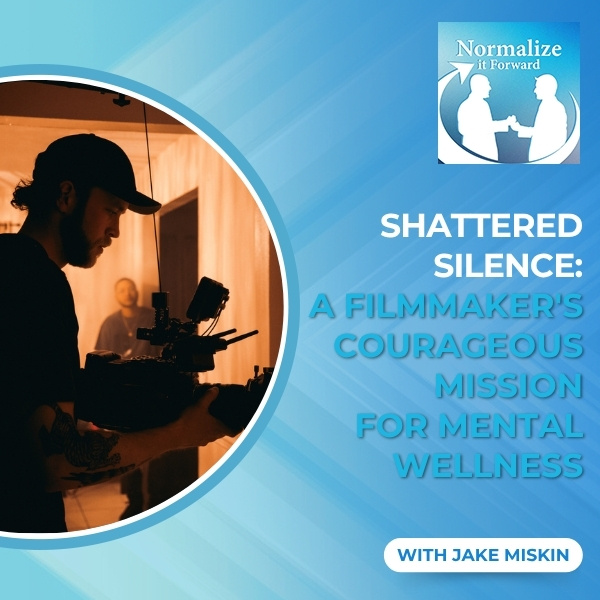


Normalize It Forward - Marc Lehman | Jake Miskin | Mental Wellness


Ever wondered how personal tragedy can ignite a powerful movement for change? Join us as we welcome Jake Miskin, the visionary screenwriter and producer behind the critically acclaimed film, Shattered Ice. Inspired by the heartbreaking loss of classmates to suicide during his own youth, Jake channeled his grief into a compelling narrative that tackles the unspoken complexities of mental health and community healing. In this profound conversation, Jake shares the deeply personal journey that led to Shattered Ice, a film designed to spark crucial dialogue, especially among young adults and athletes. Discover how storytelling can be a powerful tool for connection and why breaking the silence around mental health is more vital now than ever before.

Reading about mental health is hard. Let’s schedule a free consultation.
—

Watch the episode here


Listen to the podcast here


Shattered Silence: A Filmmaker’s Courageous Mission For Mental Wellness With Jake Miskin

I am so excited to welcome to the show, Jake Miskin. Jake, how are you, sir?

I am good. Thank you for having me.

Thanks for being here, Jake. Jake is a Screenwriter and Producer, best known for his debut film, Shattered Ice. Born and raised in Needham, Mass., Miskin attended Needham High School, where he experienced firsthand the tragic loss of multiple classmates to suicide during his teenage years. These personal experiences deeply influenced his decision to create Shattered Ice, a film that delves into the complexity of grief, mental health, and community resilience.

Shattered Ice premiered at the Sedona International Film Festival and won the Most Impactful Film award. Through Shattered Ice, Jake Miskin seeks to break the silence surrounding mental health issues, particularly among young adults and young athletes, and to inspire communities to engage in a meaningful dialogue that fosters healing and support. Jake, welcome in. How are you?

I am good. What an intro that was. Thank you.


Normalize It Forward - Marc Lehman | Jake Miskin | Mental Wellness


I’m excited to hear about it. It’s so funny, whenever I read intros, everybody responds the same way. They’re like, “Is that me?”

I was like, “I don’t know if that was me they’re talking about.”

Why don’t we just jump in? Tell us a little bit about Shattered Ice, how it came about, and obviously, how we can view it.

Normalizing Mental Health Conversations Through The Power Of Storytelling

Yeah. Shattered Ice is a feature film. It’s about 100 minutes. It’s about the impact of losing someone to suicide at a young age in the conversations that young men, young boys in particular, are trying to navigate or questioning or wondering how to have these conversations. The journey it takes that it takes a village and a community to come together to realize communication really hopes that it normalizes the conversation. Shattered Ice uses hockey as the way of entertaining the film and the audience. We truly believe that storytelling could heal and again, normalize the conversation.

I love the concept. You guys, in many ways, you’re doing similar things to normalize it forward, just bringing topics out around mental health and wellness that are hard to talk about. Let’s face it, even the word suicide, people don’t like using that word. People don’t like talking about the topic. It’s one of those things that’s out there in our community, and we don’t have a choice whether we address it or we don’t address it. It’s still out there in our community. Let me go back for a minute, because your inspiration around this sounds like it had a lot to do with your own growth as a youngster in Needham. Tell us a little bit about that, Jake.

Personal Inspiration & The Avoidance Of “Why” In Grief

Yeah, when I was in high school, we lost multiple students to suicide, classmates of ours in the community and everything. There was just a real dark cloud over that time. Even after graduation, there was multiple deaths after that as well. It really hit our family hard, and me, personally. Writing this really helped with my grieving process and creating stories and characters and a world where this could be told. Friday Night Lights, the show, was a big inspiration as well of how deep they highlighted a community, and that’s what I want to do with hockey and highlighting my experiences and conversations that I was trying to have growing up.

Pay attention to those around you. Check in with everyone and have real, meaningful conversations. Share on X

Yeah. I’m, first of all, so sorry for all of the losses you endured. It sounds like your community was hit really in a severe fashion, and I can only imagine. One loss is one thing. Multiple losses, there’s that ripple effect. As a therapist, I’ve been around this so much, and when I hear about a loss on a college campus, for example, my first thought beyond what a horrible tragedy it is, is what about that ripple effect? Who else has this touched that we don’t know about?

Sometimes, students will share with me, and it doesn’t even matter if they know the person. It’s a contemporary. It’s a type of loss that just hits a person in a different way than, say, a car accident or any other type of loss. I can only imagine how that must have hit your community, it sounds like, in a very deep, long, sizable way.

The question that everyone always ask is why. Through Shattered Ice, I never wanted to touch upon a reason or anything, and I made sure that this story doesn’t touch upon that, because you never know. As soon as you put a reason on it, then audience members will be like, “That’s not my friend or my daughter, or my son or my teammate.” Make sure that you pay attention to everyone and make sure you check in on everyone, and you actually have deep conversations. It’s okay to have those conversations and don’t feel like my feelings don’t matter and that people don’t care when I’m telling someone else.

Yeah, it’s huge. I think as men, we have particular difficulty doing that, but I love your message, and I couldn’t agree with it more. Just finding the words, pushing yourself to just say, “Are you alright? I’m really concerned about you. Even if you’re awkward, even if it doesn’t come off eloquent, even if you don’t want to, believe me, it’s way worse on the other side when someone has taken their own life.

Maybe it’s someone saying, “I need help. I’m having these thoughts as well.” Whoever you tell, it’s okay.

Jake, thank you so much for putting this project together, because I think that message right there that you just touched on, for so many, when they watch something like this and they walk away with that message, that could be a difference maker for a lot of people.

As you said in the intro, we had our premier out in Sedona, 2,500 miles away from how I wrote this film and the world it’s in. Usually, at these festivals, you have a Q&A afterwards, and it’s usually all about the filmmakers and the cast and audience members wanted to find out about their stories. Instead, the room was lifted and people wanted to share their own story and how they related to a character, and how the feelings that were brought out on screen is how they were feeling. It truly was incredible. One of the actors turned to me and said, “Mission accomplished.” This is starting a conversation that people are relating to it, unfortunately, but it’s good that Shattered Ice is being a tool to help spark that.


Normalize It Forward - Marc Lehman | Jake Miskin | Mental Wellness


It’s resonating. I’ll give a shout out to my good friend, Eric, who runs a great organization called Same here Global.

I know him as well. Eric’s awesome.

He talks a lot about 5 and 5, and the stat out there of 1 in 5 people have mental health issues, and how really, all 5 of us, 5 and 5, we’re all susceptible. When a person thinks, “Not me,” or, “Not my kid,” or, “Not my partner,” that’s when they let their guard down. I truly believe that we all have life circumstances, that if they add up in the wrong way, we’re all susceptible to real struggles. Looking out for your friends, looking out for your siblings, looking out for your family members, looking out for your coworkers. Looking out for people. I think it’s our job in many ways.

Let me ask, I think that the topic of mental health is so broad and, as you were mentioning with regards to Shattered Ice, with Normalize It Forward, I noticed as I started having show after show, people began asking me more and more questions. They began sharing more and more about their own mental health, whether it was anxiety or whether it was depression or eating disorders or bipolar disorder.

So many people out there don’t have an actual diagnosis. They just feel terrible or they’re inundated with worry and to the point where their life is sometimes unmanageable. I find that when people share those stories, they share with other individuals and they find, “A lot of people out there are suffering.” Statistically, a lot of people out there are suffering.

One of the large populations that I work with on a regular basis is college students. The mental health of college students is awful. It’s moving in the wrong direction. Anxieties are up and depression is up. Unfortunately, the suicide rate is way up. You’ve been entrenched with this project and this topic, so I just wanted to ask your thoughts on maybe why. What do you think?

The Negative Impact Of The “Chase” & Social Media On Mental Health

The way that you said that as well, this has been an eleven-year journey creating this film, and the people that I’ve talked to are shared what I’m doing, because without the whole community coming together and making this happen, listening to stories, this movie would never been told, and the story would never been told.

Throughout that journey, it’s the same thing with you. People, for some reason, talking about a movie or a story, it brings down the guard. They ended up sharing more with them, with their own life with me than they haven’t done before previously. I get what you’re saying with that, when people are asking you more questions and all that, but in the reason why, honestly, I don’t know. It could be a lot of factors with how fast times are moving now.

I know a lot of people just throw up social media as a thing, but that truly is a factor with having a device in your hand at all times. The worry of you’re falling behind. There’s a quote in the movie that the father who lost his son says, “The hardest thing is that you always feel like you’re falling behind the village, that people are moving faster than you are, so your anxiety builds up, or your worries build up, and you’re not fulfilling what you’re supposed to be fulfilling.”

I think it’s just comes with how fast our life is moving now, how everything is connected. We’re feeling even sometimes more alone than usual. Sometimes, you’re trying to get in contact with your mom or your dad or your sibling, but it takes a day or two to call the person back because your life is so busy. I think it’s just a multiple of factors, especially with college students and the majority of the life they’ve been living in.

In a world that’s more connected than ever, life moves so fast that we often end up feeling more alone. Share on X

Yeah, it’s an interesting point, Jake, and I want to expand on it for a moment because it’s I think this will resonate a lot with my audience. There seems to be this chase. There’s this chase for something. I’m not even sure what it is. I think people think it’s happiness. I’m not sure it is. I watch young people chasing getting into a certain school, getting a certain grade, getting a girl to date them, getting a certain job. It’s funny. When you watch someone do that and they attain what they’re looking to attain, you would think that they would savor that moment and enjoy what they’ve achieved. Nine times out of ten, they’re onto the next thing.

I’m guilty of that, too, through this whole process. A lot of people have asked me if I’ve taken a moment to enjoy this moment. I’m always thinking about the next thing because I don’t want to fall behind. You truly do have to take the moment and take in what is actually happening with you on that day or that week and decompress it all, too.

No doubt. I found myself saying that a lot to young people when they’re approaching graduation, high school or college, and really stopping for a moment and just recognizing what they’ve done. This is a huge achievement. For so many kids, they’re just onto that next item. I think if there’s one thing, maybe we can, as adults, try to preach a little bit even through our own actions more as role models is trying to be in the moment.

Try to recognize, “I’m having a cool conversation with a cool guy tonight. This feels great.” Being able to recognize if we help one person through our conversation tonight, that’s one more person out there that has received some assistance from our conversation. I will say this. I’m impressed continually how open young people are in terms of talking about mental health.

I will say that’s a huge difference. A lot more younger people are open to talking about it, which is incredible.

I think movies like Shattered Ice, you put that out, kids view it, and all of a sudden, as you said, their guard is down and they’re able to talk about things that they wouldn’t have chosen to talk about, but they’re talking about it now, which is great.

That’s what I really think narrative storytelling and seeing it on a screen or a film, I think there’s a lot more. Ted Lasso is a great example. Shrinking is a great example. Adolescents that just happened on Netflix is big show. It’s how storytelling really sparks the conversation in people, because getting thrown numbers in your face can sometimes even be harder to look at or a documentary where you know it’s a real story.

Sometimes, it’s harder to take in and you shut down more because you don’t want to be a statistic or that person on that’s telling you a real story back. When it’s a fictional character, you can relate to a character, and you have that comedy and that real heaviness. My friends and I are talking about Ted Lasso all the time and his struggles and relate and you’re relating to it, or all the character arcs of Shrinking and how they all have real issues, but they use comedy as a way to highlight them. It’s just like any other family out there that are going through this.

Shrinking, in particular, was written brilliantly. They dealt with some really challenging topics, and they did that through exactly what you just said. Really remarkable. I highly respect your field in that. It’s obviously not something I do. I think it is a really interesting vehicle and way for people to be exposed to topics and as you said talk about them, which is really remarkable.


Normalize It Forward - Marc Lehman | Jake Miskin | Mental Wellness


Still be entertained by it too because that’s the other thing with the stigma, when you say the word suicide, you instantly you turn away or like, “This is going to be a heavy topic,” but like you said, normalize it so it’s like you are able to talk about it and have the conversation.

Tell us, Jake, if people want to view Shattered Ice, how do they get a hold of it?

Yeah, so right now, we’re doing the film festival circuit, so we submit to all the film festivals across the country. We’ve gone into Sedona and we just announced that we got into the Berkshire International Film Festivals out in Massachusetts.

Congratulations. That’s great.

That’ll be happening in May 2025. We have a couple more festivals that we can’t announce yet. That would be in 2025. We’ll be doing private screenings throughout New England, partnering with organizations and hosting screenings with them, and then also doing a high school and college tour. We’re going on 10 to 12 campuses across New England to show the movie, have a Q&A afterwards, have a panel, and basically have the conversation that we’re having now, how storytelling is important. Obviously, our audience is student athletes, and broader into the whole community at the school. That’s our goal for 2025, our social impact campaign, and then hopefully, it’s in theaters ne nationwide in 2026, and you are watching it on Netflix or a streaming.

I know you’re in the middle of that process, so good luck with the rest of the year. I’m really excited for you guys and certainly, anything we can do in Normalize It Forward, or any of our socials to advertise for you, we’d like to help in any way we can. Going back to what you mentioned about athletes, and honestly, I meant to ask you this earlier but wanted just to touch on this.

Athletes in particular, they’re an interesting topic, an interesting group of people in that I find that when I’ve worked with athletes over the years, they have not only a persona to maintain, but there’s also certainly, in particular in sports, there’s also a, “I’m not going to tell my coach I’m struggling because I’m going to get playing time cut,” or, “I’m going to have this, I’m going to have that.” Without knowing much about the movie itself, I’m curious just your thoughts on athletics and how mental health and wellness intersects with that topic.

Sports As A Vehicle For Mental Health Dialogue

It’s great that you brought that up because the biggest reasons why I used hockey as the driving vehicle in Shattered Ice and the world that I want to build is create more stories using sport as that vehicle and talking point because sport is when athletes receive their first obstacle, their loss, their first loss, maybe their first friendship, their first win, their ups and down is a rollercoaster. Their journey in sport really brings out that innocence in people and their natural environment that they want to be in.

Unfortunately, on the mental health side of things, it’s right away stigmatized that these athletes have such a perfect world because you know who is struggling or who is the premier athlete right away. You get put into this box and you feel like the person who’s the star athlete is okay all the time because they’re performing well.

The person who’s either not playing as much, they’re okay. They must be hurting, they must be frustrated, annoyed. All of them need to be open with each other in such a big world that it doesn’t matter what sport you’re playing. There are some sports that are more in your face and you feel, but even individual sports, you’re so alone all the time.

Just like with Jarren Duran on the Red Sox, you’re sitting out in the outfield for nine innings straight by yourself and you’re talking to yourself. I’m so happy you opened up about his struggles. A lot of athletes do that. I truly think sports is a perfect avenue where people are related because even as kids, like I said, where you might have had your first heartbreak, your first loss, your first struggle, or your first love in your first friendship, or your first coach, your first mentor. There’s a lot of intersection going on.

Sports are a powerful avenue for connection. As kids, many of us experienced our first heartbreak, loss, struggle, love, friendship, coach, or mentor through sports. There’s so much intersection in those moments. Share on X

It’s interesting because I pay attention to when things like those stories break like the Duran story, I heard reactions to it. I can’t believe that happened to him as though he’s inhuman. I hear that also in the entertainment world, musicians. When musicians cancel legs of their tour because they’re having mental health issues, I can’t believe that happened to them. That notion of we’re all human beings and we’re all susceptible. We all have things that happen and we all have our own journey.

For me, I would like, as much as possible, for young people to understand, it doesn’t really matter who you are. It doesn’t matter how much you make for a salary, who you married to, or what you do for a living. Everybody has things that they struggle with from time to time, and even Red Sox players and musicians. I think that message is really important for young people to understand.

I like how you’ve done what you’ve done with Shattered Ice. I think it really allows for the topic to resonate with people, I’m sure, on a number of different levels. I can’t compliment you enough about what you’ve put together here and how hard you’ve worked on this. Again, kudos to you, guys. Good luck with the rest of the journey. Jake, if I can put you on the hot seat just for a moment and ask. In Normalize It Forward, we typically ask all of our guests to nominate a friend, a coworker, a relative, someone that you know who might be helpful for us to interview next on the show. Any thoughts?

I do. He’s a mentor of mine, and honestly, I wouldn’t be without him, getting me through this journey and helping Shattered Ice get made. His name is Tamlin Hall. He’s out of Atlanta, Georgia. He runs a nonprofit called Hope Givers. Their mission is to normalize the conversation through storytelling. He does a great initiative with students creating short films and getting into the high schools and having these live events. He wrote and directed a movie called I Am Holding On. That’s why I reached out to him in regards to his journey. He’s just been a mentor ever since, and I think he would be a great person to talk to.

Thank you so much for that nomination of him. I will certainly get his info from you offline and reach out and connect and hopefully, we’ll have him on the show. He sounds like a really interesting individual. I love the work that both he and you are doing out in the community. Again, keep it up. Anything we’re able to do to support, we’d like to. When Shattered Ice is around, get out there and watch because it sounds like there’s a lot to the topic that people would benefit from. Jake, thanks again. I appreciate it.

Thank you. This was awesome.

Thanks for coming out. We’ll talk to you soon.

Sounds good. Thank you.


Important Links


About Jake Miskin

Normalize It Forward - Marc Lehman | Jake Miskin | Mental WellnessJake is the Founder/Owner of Nehoiden Street Films. Jake spent the early part of his career in the sport industry world, until he took his leap into filmmaking.

Jake resides in Massachusetts with his wife Lexi. Jake believes Nehoiden Street Films will be a disruptor in the Independent Film space by combining authentic New England stories and mental health to help create powerful conversations.

Shattered Ice, his first film premiered at the Sedona International Film Festival and won The Most Impactful Film award. Jake graduated from Springfield College with a BS degree in Sport Management.


Reading about mental health is hard. Let’s schedule a free consultation.
Normalize It Forward - Marc Lehman | Shannon ONeil | Mental Health


In today’s high-pressure world of youth sports, mental health is often overlooked. Shannon ONeil, a seasoned lacrosse coach with more than 15 years of experience, joins Marc Lehman to discuss the importance of mental health care for young people in sports. As the head coach at IMG Academy, Shannon has transformed the girls’ lacrosse program into a national powerhouse with a focus beyond winning. She emphasizes why it is vital to create a fun and supportive environment where young athletes can thrive and develop a deep love for their sport. Gain valuable insights on navigating

—

Watch the episode here


Listen to the podcast here


Balancing High Performance With Mental Health With Shannon ONeil

Everybody, welcome to the show. This is the show where we talk openly about mental health and wellness. We are welcoming in coach Shannon ONeil. Shannon, welcome. We are joined by Shannon. She is from the IMG Academy Lacrosse Program with fifteen years of experience leading young women to success on and off the lacrosse field at the high school and collegiate levels.

Shannon is a native of Newburgh, New York. She attended Villanova and became a two-time All-American and team captain there. She is still second in Villanova’s all-time Women’s lacrosse record books for total career points, assists, and ground balls. Shannon currently leads the girl’s lacrosse program at IMG Academy in Florida. In her first years at IMG, the program size has almost doubled.

The nation and the national team have risen from being unranked to 40th in the country. The team is hoping to break the top 25 rankings this spring, but she didn’t just move to Bradenton to win. Shannon’s mission since day one has been to create the best female high school playing experience in the world for young women who love to compete. She credits the program’s early success to two main factors, a persistent commitment to ensure her athletes have fun while chasing her biggest dreams and relentless pursuits to create an environment where young women learn to genuinely root for one another.


Normalize It Forward - Marc Lehman | Shannon ONeil | Mental Health


Shannon, thank you so much. Welcome.

Thanks so much for having me.

Of course, absolutely. Now that I’ve thoroughly screwed up your intro.

You’re good. That’s the worst part.

Rise Of Anxiety & Depression In Young Athletes

I don’t want to jump into the topic at hand. Mental health and wellness obviously has just incrementally grown and as I’m sure your occupational path of coaching has you around young people all the time. You probably cannot help but hear about and talk about and maybe even see some of the dramatic spikes in both depression, anxiety, and even other things on and off the field. Is that something that you’ve recognized over the years?

Yeah, we definitely have seen a spike. I had left the coaching world for a bit and came back into this world, and I would certainly say it’s different nowadays. I cannot quite figure out if there’s this awesome phenomenon that the younger generations. They’re really comfortable talking about mental health. I don’t know if it’s so much so that people are feeling more anxiety and other studies that say there are and I’m sure that is the case with social media and that thing. I really think that kids are just really comfortable sharing some of that sometimes. That piece I think is really cool and really neat.

Defining Self-Care For Young Athletes

I agree. I think that’s a really good positive spin on what’s happened. I totally agree. Over the years, I’ve noticed that tremendously with young people there’s just a comfort in this topic area. Certainly, kids talking about therapy, kids talking about getting help, and kids coming to people that are in their world that are trusted adults like coaches, like assistant coaches, like physical therapists, like people around them where they look for that.

They look for that ally and look for that conversation. That’s a really positive point, Shannon. I totally agree. I’m curious, I know as a coach, there’s so much more to your job than practices and games. I’m curious the phrase self-care gets thrown out, thrown around a lot. As a therapist, I talk about it a lot. When you think of self-care for your athletes, what does self-care mean to you?

It’s funny, we put into place, last year we put something new into place, it’s called a Protect Your Peace Pass. We actually physically give our kids tickets that are designed to help them wake up in the morning and just say like, “Today, I’m not feeling this.” We give them two passes a semester.

I love it.

Like this is what I self-care. It’s like, I think we’re pretty good at and coaches on the whole are getting good at identifying, “This kid might be struggling a little bit and reaching out and being proactive.” I think there are days that are just harder and more difficult for some reason, whatever that reason might be. We actually here in our program, we developed these to protect your peace passes that our kids have gotten pretty comfortable using those, which is great. That’s the whole point of them but that piece says to them like you literally just have to text the coaches and say, “I’m using my protect your peace pass today and there’s no explanation.”

There are no questions. It could be the day before a game. It can be the day before a test, whatever that thing might be that’s causing them extra stress and we give them a couple of passes that way. For me, like for our self-care stuff, that’s one thing. The other things we’ve put in place that I think are really helpful like we meet every day now. These kids are different. They do have anxiety. They’re anxious about what’s coming next a lot. I personally think it’s just a theory that because they have access to so much information all the time when they don’t know something, it really is anxiety-inducing.

We meet in a locker room every day, fifteen minutes before practice starts, and we literally go through everything that’s going to happen at practice. They don’t have to walk out to practice thinking, “We need to run today. How much are we going to run? What are we going to do?” We’ll draw up if we’re doing new drills or something. We’ll draw those up just to take some of that stuff off for them.

I think for me personally, like I did come back into this world. I’ve got fourteen nieces and nephews. I came back into this world because I had felt that shifting even in my own family. I just thought like, “What can I do to give back?” When we’re here every day, we get up every day. I have three other full-time female coaching staff members and we get up every day in the whole focus of our planning is how do we make this a wonderful day for these kids. Some of that is really focused on what is the best way for us to allow them self-care. There’s just some of that.

I love that. Predictability. That’s huge.

It’s huge.

Supporting Athletes Through The Recruiting Journey

You made me think of two things. I was thinking of grade school, and elementary school when they’d put the the schedule up on the board. Good for young kids. They know what’s coming and I think that’s true for older kids as well. I think probably brings their anxiety down, knowing what’s coming. The second thing I thought of, and this is tough, and I’m curious your thoughts on this, is recruiting. Recruiting is a process that is anything but predictable. You guys can help them with your half, but obviously the rest of the country in terms of where they’re recruited is a very unpredictable thing. I’m curious, I mean, that’s a huge topic, but I’m curious, what’s that like from your perspective?

It’s crazy. It is definitely unpredictable. I would say for sure it’s the biggest stress-inducing year. Our recruiting year in lacrosse is after sophomore summer. It’s right now for about twelve of our kids. It’s been a lot. I will tell you, it is as stressful for the players as it is for the families. We do a lot of work just helping everybody take a deep breath. The mantra we use a lot here is we don’t get you recruited, you get you recruited. That’s number one.

If people feel like they’re empowered to actually carve their own path, I think that’s also really helpful for young women to understand. Nobody can make a phone call and just drop an offer in your lap. This is such a wonderful time to be a female student-athlete. The opportunities that our kids have these days are off the charts compared to even 2, or 3 years ago. That’s really neat. We help them embrace like, “This is a wonderfully exciting time.”

Like you are getting opportunities that you have not been able to get for years. That’s really cool. I think one, helping young women or young athletes understand they own this piece. Like we can put you in the right positions. We can get you playing your best. When you show up and you play in front of college coaches you have to deliver and so you own that. That’s a powerful thing I think for our kids but it is not easy.


Normalize It Forward - Marc Lehman | Shannon ONeil | Mental Health


Again, we talk about what we do, what we can control and there are things we cannot control. Like you can control how hard you’re working. You can control a couple of things, but some things you cannot control. You cannot control what a college coach looks for in that particular year, or whether they need your particular position for that particular year, and all these sorts of things.

It reminds me a lot of regular college admissions. Sometimes for the first time, kids are getting rejections from schools they thought was a sure thing. I watch my own patients that I work with they’ll submit on November 1st and they’re just waiting and waiting. There’s literally nothing they can do at that point. They just have to wait and realize, “If I’ve done my job and I’ve put my apps out there, I’ll get in.” One thing I see, and I’m curious about your thoughts on this, is that a lot of young people, whether they’re athletes or non-athletes, they tie it to future happiness. If I don’t get into the right school, somehow my life is changed.

I think there’s two things going on that we fight against all the time. For us, and it is very similar to the general college admissions. Having a really tight, small list like you grew up saying, “I want to go here.” That is a real challenge in today’s world, whether you’re an athlete or not because the opportunities are just slimmer. Honestly, like everybody has really good grades. That’s where they’re headed.

I think that’s one thing going on like, “Can we get a broad list?” Tell me not what schools you want to go to. Tell me what you want out of a school. Do you want to be in an urban area? Do you want to study business? Tell me those things and we can get a list together that gives you an opportunity to be successful. I think that’s number one, that’s been helpful in that process.

The other thing, and this obviously, but like my favorite quote is, and we talk about this a lot with our kids, “Comparison is a thief of joy.” There is like, it’s too easy now to compare consistently like every day, waking up, seeing fifteen commitments, seeing twenty, “I’m better than her. I did this better than her. I went to a thing with her.” We really try to help kids focus on their journey and their own timeline because it’s intense for sure.

Comparison is the thief of joy. It has become too easy to constantly compare yourself to others. Share on X

It’s intense and it’s individualized. There are around 5,000 colleges out there. One would think there’d be more than one right school. I like how you said that. I think that’s really spot on what do you want to get out of this experience? I think that their answer is probably something that can be applied to a lot of different schools and a lot of different school settings.

I think it really shifts the conversation and we’re working on that here because I think the norm is to go out and say, “What are your top ten schools?” We do it in admissions and we do it for athletes and it’s like, “Really you don’t make the decision.” The college coach makes the decision. The admissions office makes the decision, so you don’t really get to just say where you want to go and get one of those opportunities. We work on that a lot. I think for a lot of our kids these days, just because of, I don’t know, lots of things you probably know better than I do, but this may be their first disappointment.

From their families, this might be the first disappointment they need to endure for their child. If you’re a parent, you understand that most parents really mean well. Like it is not, it’s a visceral reaction to watch your child hurt. That’s really what’s happening. You’ll hear people in sports talk about the parents this, the parents are crazy, the parents are this. If you’re a parent yourself of an athlete or a college-age student, you realize like really, they’re just hurting for their child and they don’t have control over the outcome either. That’s really hard for parents to get in line with. It’s hard.

How Young Athletes Can Manage Their Stress Levels

I think along those lines, Shannon, we so often we talk about things like anxiety and depression, and the opposite of unhappiness is happiness. What’s going to make their child happy, what they think is going to make their child happy is what they’re what they’re pushing for, which makes total sense. I think that along those lines, one of the things that I find myself talking a lot about in this show is how to make environments successful.

What is it that a young person needs to do? Staff can offer certain things like you were just talking about before, but not every student takes it upon themselves to use those things. Let’s put ourselves in their shoes for a minute. We’re a high-level athlete, we go to IMG Academy, we have great staff around us. What is it that we need to do as an athlete, as a teen, as a high school athlete to be able to manage our own stress levels? What comes to mind? What sorts of things would you say they should do?

I think the hardest thing and we’re reminding our kids all the time, this is actually the fun part. When you’re at IMG, you are at school with 1,500 teenagers that are chasing their dreams. It doesn’t mean they’re perfect. It doesn’t mean they’re perfect athletes. It just means they’ve got a goal and they’re chasing it, which is really cool. When you walk on this campus, you can feel that energy, which is nice. It gives you that energy as well. The thing I’m always reminding our kids about in particular is like, this is actually supposed to be fun.

If you’re showing up for, if you’re at IMG and you’re coming to practice and you’re dreading it and you’re saying, “We should be somewhere else.” That’s not actually what it’s supposed to feel like. For us, when you come to one of our practices, you will see my best players all the way down to the players that need the most development. You will see them dancing. You will see them singing in line. You will see them chit-chat, laughing, because that’s the energy that we bring as a coaching staff because I think that kids are at their peak performance and successful when they’re having fun.

Somewhere along the way, we’ve stripped that from them and we’ve made this a business. Sports at 16, 15, and 17 years old, that’s not a business. You’re supposed to be making friendships, building relationships, and getting coaching relationships that you’ll have for a lifetime. All the things that we had growing up. We do a lot of surveying here at IMG, and some of my earliest comments, my first year here, my second year here, the kids would write, “She’s great, but she’s old school.”

I would say, “Yeah, I’m old school. I believe in fundamentals. I believe this should be fun and I believe you should have your best friends on the team.” Those are the three things. Here, I am super competitive. You probably know I have four older brothers. I want to win as much as anyone else, but that’s not the pinnacle of where we’re headed right now. What we talk about here is you root for each other everywhere. I think for an athlete to be successful, even at the next level, and they just don’t know this yet, you have to be able to genuinely be a great teammate.

For an athlete to be successful, even at the next level, you have to be a great teammate genuinely. Share on X

You have to understand the power of how powerful is it for a team and a group of young women to know that they actually have 39, 40 kids that want what’s best for them? That’s crazy. That’s what we focus on here. We don’t always get it right. The kids don’t always get it right. I think at the end of the day, that’s what we’re striving for every single day. Like can you root for each other genuinely on the field, in the classroom, online, in your Snapchat, like wherever that might be. I think that helps kids be successful, honestly.

Such a positive vibe. I think the other piece that probably doesn’t get talked about much is this is temporary. Like athletics is not a forever thing. Having coached my son and over the years and been around sports, I mean, I feel like athletics mimics life so often. Like you think about in adulthood, how many teams do you work on all day? To be a good teammate, whether you’re on an actual team, an athletic team, or as an adult on some other type of team, I think you’re teaching these kids how to do that and the importance and the value of that, which is huge, Shannon.


Normalize It Forward - Marc Lehman | Shannon ONeil | Mental Health


Honestly, it’s what gets me up in the morning is why I came here. Also, we are having kids in the third grade worried about where they’re going to go to college or where they’re going to play in college. It’s like, we’re missing all of the development as a human because we’re so focused on that. I mean, we’re giving up family vacations for eleven years so that kids can go play college sports. You don’t have to do that.

That’s the other thing we do with our families here. It’s like, yes, there are important pieces to the puzzle. You have to play club in the summer. It’s a big recruiting tool, all of the things. Guess what? You can go to the beach for two weeks. We’re constantly like, we’re on the phone with our parents all the time. Like, “Do you think we should do, the parents will ask do you think we should do X, Y, Z?” Like, “She didn’t get into this thing. Great. Tell her congratulations. She didn’t get into that thing. She gets a weekend off.”

That’s honestly how I feel. I think my mission is to prove out that these girls can have fun, can take family vacations, and still can be elite athletes with all the opportunities that they would have had if they gave all of that stuff up. I just know it from personal experience. My son’s an athlete and we gave him a lot of vacations and a lot of time together and I would do anything to get that back. You don’t get those periods back. I guess it’s my mission to help families understand that they can reach their goals and still have some fun along the way.

I love it. I think it’s resisting that urge to be intense and of course, the urge to be intense just like quickly translates into anxiety and difficulties for kids, which makes their production go down, not up. I was laughing because as you said in third grade, I was like, “I was learning the rules to four square.”

I’m good at that game. Actually, I was really good at that game.

I’m in third grade and boy times have changed. I think that in many ways you’re such a good role model for these kids, because number one, you’ve achieved it yourself. Number two, you give them positive messages for them to take with them because they’re going to have intense coaches. They’re going to have intense teammates. No matter what you say or do, that’s going to be there at some point for them.

Impact Of COVID-19 On Student Athletes

Those are kids that have to decide, do I in fact embrace that intensity or am I able to really continue to enjoy the sport that I love while also enjoying life? Which is like a nice balance. I’m curious, I mean, you’ve been at IMG for a bit and I’m assuming you were there through COVID. I guess I’m wondering how would you say things have changed for kids since COVID has been less prevalent.

I came here actually the year that COVID stuff got lifted. I came on September of 21. It’s right at the tail end of that. I’m seeing what everyone else is seeing like it’s got used to being in their rooms and passing time in their room. We’ve got like, I don’t know if you’ve ever been here, but we have killer facilities here, honestly. That’s not a plug for IMG, I’m the same. Like we’ve got a pool here that would rival any pool these kids could ever swim in. The huge TV. You would think that they should be out there like they should be out hanging with their friends.

They have the time at night, they have all these things. I just say, I think the biggest impact of COVID is kids got really comfortable doing everything online, obviously, and texting. Again, we work on that. We have in-person meetings. Like when we have meetings, our kids put their phones up on the thing. They never have a phone with them. All the things to get better at communicating, I think is what we’re working on all the time. I think you see it. I’m sure in your work every single day. Again, it’s back to the comparison thing. Like we see it all the time. We just ask them to put their phones away a lot when they’re with us.

Addressing Suicide Concerns Among Student Athletes

I think it’s super helpful. I mean, we’re definitely seeing a trend. I think eventually it’d be nationally of high schools, really either banning phones or reducing phones and stuff like that. I think it’s wonderful. It gives kids a break. I’m curious, can I put you on the spot for a second and ask? I would imagine as a coach, you come across lots of different things. The one topic no one ever wants to talk about is suicide. Unfortunately, suicide is a very real thing. It is right now the second leading cause of death in young adults.

When you look at the population of like fifteen, so basically high school and college-age kids. It’s a topic that comes up and we cannot avoid it. I guess I’m wondering, if you had some words of wisdom or advice, if there was a player out there, maybe one of your players out there that had concern about a friend. Friend disclosed to them, “I’m really on edge. I’m thinking about this, this, and this.” What would you say to that one person? What words of wisdom would you offer to that student?

It’s a really hard one. We talk to our kids a lot about this. Like, best friends take care of each other. It’s emotional for me because we say this all the time in our office, “Not on my watch. I’m not going to go through that in my program.” We do talk to our kids about this. We do bring them in the office. If we think someone’s a friend of somebody that might be struggling, and we will say, “If you’re best friends, we need your help.” We can see lots of things, but we cannot always see the depth of what somebody’s feeling. I refer often. That’s all I’ll say.

We cannot always see the depth of what somebody is feeling. Everyone needs a little bit of support. Share on X

The minute I think somebody needs a little bit of support, I refer because I think it’s important and I’ve lost people in my life to suicide. I think kids are, they’re short-sighted. They’re getting disappointed or they’re not reaching their peak level or whatever it is that they want right now. Lots of conversations about that with our kids for sure but yeah, to the safety point. That’s what I tell my kids, “Often and early, you come to see me often and early if you think somebody’s struggling and we will see if we can get them to help.”

I love that approach. I love that approach that you guys are there and you make it really clear regularly because so often that’s not the case. I think that when students feel like they’re not, they don’t have that opportunity. They don’t seek it out. They don’t look for it but because these kids feel that from you guys, they’re definitely more inclined to come to you. As you said, this is way above their pay grade. It’s not something they’re used to at all.

They’re certainly short-sighted. When kids come across what they feel is insurmountable and these types of issues come up, they don’t realize that this is something that will pass, but it’s certainly something that they probably need some assistance getting through. Good for you guys for getting involved and having an aggressive approach toward it because it’s one of those things that you do have to push on because kids tend to have that mode of like, “I’ll take care of this myself.”

Yes, sorry to cut you off. I think it’s important for us just because in a boarding school environment, too, it’s like a college environment. We can see things in person that maybe a parent cannot feel over the phone or whatever that might be. I just feel like that’s why we’re aggressive about it.

I appreciate it. I think it’s amazing what you guys do. Shannon, listen, thank you again for taking the time today. I know you guys are super busy. The topic of mental health and wellness is near and dear to me, obviously, and certainly want to have that open conversation and dialogue with people like yourself just to be able to get point of view and perspective. I feel like once these shows go off live and kids are reading to them, my hope is that even if there’s one tip or suggestion or hint that kids pick up on, then we’ve done our job. Thanks again for making the time and really appreciate you being here.

Thank you and thanks for everything you’re doing. I really appreciate you having me.

Absolutely, have a great day, Shannon. You take care.

You too. See you.


Important Links


About Shannon ONeil

Normalize It Forward - Marc Lehman | Shannon ONeil | Mental HealthShe joined the IMG Academy lacrosse program with 15+ years of experience leading young women to success on and off the lacrosse field at the high school and collegiate levels. A native of Newburgh, NY, Shannon attended Villanova University and became a 2-time All-American and team captain. She is still second in Villanova’s all-time women’s lacrosse record book for total career points, assists and ground balls.
Shannon currently leads the girls’ lacrosse program at IMG Academy in Bradenton Florida. In her first three years at IMG, the program size has almost doubled, and the national team has risen from being unranked to 40th in the country. The team is hoping to break the top 25 rankings this spring season. But she didn’t just move to Bradenton, FL to win.

Shannon’s mission since day one has been to create the best female high school playing experience in the world for young woman who love to compete. She credits the program’s early success on two main factors; a persistent commitment to ensure her athletes have fun while chasing their biggest dreams and a relentless pursuit to create an environment where young women learn to genuinely root for one another.

Normalize It Forward | Randy Spelling | Self Care


Self-care is not selfish. It’s essential. In this episode, life coach Randy Spelling joins Marc Lehman for a candid conversation about self-care and mental health. They dive deep into how self-care is more than just indulgent moments; it encompasses setting boundaries and finding simple joys like a refreshing walk to clear the mind. They discuss the challenges faced by today’s youth, including rising anxiety levels and the impact of digital communication on real-life interactions. Tune in for insights that inspire a healthier, more fulfilling life!

—

Watch the episode here


Listen to the podcast here


Embracing Life’s Challenges Through Self-Care With Randy Spelling

Introduction

We are meeting with Randy Spelling. Randy, thank you so much for joining us and taking the time. How’s the weather out your way?

It’s beautiful. It’s probably in the high 70s. It’s going to be in the low 80s. I can’t complain. What about you?

It’s a little warmer than that. It’s about 95 out here. A little warmer than I would prefer but that’s okay, indoor and air conditioning. We’re all good. Out this way, we usually get those temperatures a bit in the summertime. Randy, let me introduce you a bit and I’d love to hear a little bit more about who we are and what you do. Randy is a life coach. I know you’re a former actor. Randy, I have just to admit, I turned on to your show which I love, by the way. Randy runs a show with Brian Austin Green and I believe Brian’s fiancé, Sharna Burgess. It’s called Oldish. We would love to hear more about that and other things that you’re up to you.

I’ve known Brian for what feels like 30 years, but we’ve known each other a long time. He called me out of the blue and said, “I’m watching your videos on Instagram and I’m inspired. Would you do a show with me? I have this idea.” It was to make an impact, reach people, and answer questions that at this age, we say that it’s not an age but it’s seasoned in life that you get to where you start to ask, what is this all about? Why am I here? Is this it? Can I make my days better? Can I do something to feel better?

A lot of what I’m sure we’re going to talk about is normalizing things such as having a bad day, being down, and is there some form of depression. We’re not diagnosing anything but we’re bringing on experts. I’m helping people to have the conversation, ask the right questions and also have some fun and entertainment value while doing it, but to start to tackle like how do I feel better on a daily basis? We know that if we feel better on a daily basis and we get more exercise, if we do some of the things that we know we should be doing and we check those boxes. It adds up no matter what age you are living a better life.


Normalize It Forward | Randy Spelling | Self Care


Self-Care

No doubt. I couldn’t have said it better and you’re right. What brings us together is the topic of mental health and wellness. No matter how old you are, everybody is susceptible and impacted in some way. Our challenge literally every day in our world is, what are some of those things that you can do? Even small things that you can do to take care and to let yourself feel better and ideally have a better path toward things. That brings me to my first topic I want to ask you about self-care, which I know you know a ton about. I wanted to ask you just your thoughts of like, when you hear the phrase self-care, what do you think of?

When I hear self-care, I think of ways to love myself more. I think of setting boundaries because boundaries are a huge form of self-care. It’s like self-care luxury getting in a bubble bath or getting a massage or getting your nails done. Self-care could be anything. For instance, I came in from work and jumped in to do dishes and dinner with my family. There were about four questions coming at me at once.


Normalize It Forward | Randy Spelling | Self Care


At some point, my daughter was trying to make this new dish that she wanted to make. The kitchen was a mess and she said, “We don’t have this ingredient.” I said, “That’s okay. I’ll go to the store.” She said, “No, you don’t have to do it.” I said, “I want to do it. I need a walk.” I walked to the store and that four-minute walk was myself there because I could feel the tensity and the stress rising in me. I knew that that wouldn’t end.

It’s free and simple. I walked to the store but I used that for a minute to decompress, to take a look at trees. It sounds like a platitude here, but it’s amazing how getting out of your walls, prompts and voices can connect you to something different. That’s all we need, a rain change, a focus change, or a perspective change and that works wonders.

It’s amazing how getting out of your walls, prompts, and voices can connect you to something different. Share on X

You’re 100% right. As a therapist, I talk a lot about the five senses. The way we make sense of our world is through those five senses. If we shift and we change one of them, that’s why listening to music, going for a car ride or a walk and doing those things can make us feel different and oftentimes, better. Self-care comes in a lot of different shapes and sizes. Some of the little things that you just talked about, it was overlooked a lot by people.


Normalize It Forward | Randy Spelling | Self Care


Simply setting those limits because like you, sometimes people will come home and they just simply want to be with their family. They don’t want to answer business calls or respond to emails. They want to have some time with their family. In order to do that, you have to go back to setting those limits. It becomes important.

It’s so funny when we talk about these self-care moments, whether they’re small things of going for a walk. It’s something I was saying to my daughter is just talking and saying how you feel is a form of self-care. Saying, “I’m struggling with something.” That’s huge to get out and you see this in your work. Writing is important. Talking is important. Getting anything out of your head and onto drawing, painting, or writing. Getting it out in some form is so incredibly impactful because otherwise, it’s like a pinball. It keeps going round and round and creates this pattern of pressure cooker.

We are self-caring but it’s like you can self-care in the wrong way and you can self-care in the right way. What I mean by that is reaching for your phone. We’re trying to self-care and self-soothe at that moment. It just might not lead to the feeling that you want. Vices and addiction or things like that. People reach for a drink or a cigarette or something.

That, funny enough, is someone trying to practice self-care. “I’m stressed.” “I had a hard day.” “Let me pour myself a cocktail.” That takes the edge off. It’s the way that we talked about it. After a while, when someone’s reaching for a drink and there’s no judgment here. It’s like every single day if you’re reaching for a drink to take the edge off. There can be other ways to do that. It just becomes the habituative.

Very well said. It’s important for people to think of it that way. As you said, there are things to reach for that are healthy and maybe aren’t but I do agree. Anxiety level is in everybody. I treat young adults. Anxiety levels in young adults are so high these days. Way higher than when we were kids. It becomes important to do what you said. It’s to figure out what works best for you.

I have some kids on college campuses. They’ll throw their earbuds in and they’ll walk further. Great. It clears your head. I have some kids that will smoke pot. Again, as you said, not the greatest option but they’re reaching for something to try to figure out a way to care for themselves. Ultimately, what they’re trying to do is to relieve stress.

Youth Anxiety

I want to ask you a question because I’m seeing this, too. I think everyone is starting to see this explosion of anxiety kids. It is amazing to hear the conversations, which I’m thankful for in one sense that there are these conversations happening. It’s more mainstream that kids can say, “I’m feeling anxious or I want to fidget with something or something’s not right.” It’s happening so much. It’s so prevalent. What do you think this is from?

It’s funny. It’s one of the questions I want to ask you.

We’ll ping pong.

I would answer by adding to it and then answering the question. That is, this generation is growing up with so much more around them. Here’s a great example. If you said to most people in their 40s and 50s, “When you were in high school, did you know of anybody who either tried to hurt themselves or completed taking their own life?” They would probably say no. Nowadays, if you say to a kid in their teams that same question. Not only did they know somebody. They’ve got several people on that list. That’s just the reality of their world.

They’re growing up around a lot more extreme depression, extreme anxiety, and extreme anxiety. I certainly don’t think phones have helped. In many ways, phones have created a lot of intensity for kids that isn’t necessary. Quite honestly, I would say to you, right back at what you said earlier. The fact that kids don’t interact this way as much as they had when we were younger has created a tremendous amount of stress and strain.

If I say to a kid, “You’re sixteen, let’s talk about going into a store to apply for a job or you’re nineteen, let’s talk about going back to see a professor for office hours or you’re 21, let’s talk about networking with someone in business.” Kids will frequently push back at me because they don’t like that direct interaction. They’d rather Snapchat or text. They like indirect interaction. Unfortunately, that creates a lot of pressure, stress, and strain. In life, you just simply need to be able to have that interaction. There’s certain things that require it and when those scenarios come up for kids, it’s hard.

Do you think that there’s anxiety and angst around having to have those interactions and it feels so uncomfortable that they’d rather just not engage at all?

I see it all the time. Here’s a great example. Kids go to college. You have a random roommate. That’s terrifying to some kids. You have all these random people in the hallways they don’t know. They’re going from a group of kids they knew in high school to nobody. That’s terrifying to most kids. Believe it or not, Randy, when I treat kids that go to college. They’re more worried about that than they thought about their classes.

I’m not surprised. Do you know how the whole introvert and extrovert thing became popular? You see phases. It’s like gaslighting. In the last couple of years, it is like all the rage and narcissism. I started to watch these trends having done this now for a long time. Introvert, extrovert, and empath became big thing. It’s interesting because this always existed. You have people who are more introverted. People who are more extroverted, but because of phones, the way that kids are communicating through text and not picking up the phone and talking and sitting in person.

It blew my mind. I was telling the story. I was talking to a teenager and she was showing me Snapchat. I wasn’t that familiar with it. I was asking these questions and she said, “This is how we hang out.” I said, “What do you mean?” She said, “We’ll be at a coffee shop. My friends and I will sit in a semi-circle or a circle all on Snapchat.” Their snapping. Whatever you call it, snapping each other in the circle. That isn’t mind blowing, so I wonder.

In terms of normalizing conversations, normalizing the fact that it can feel normal to be anxious about social situation. I feel anxious about social situations sometimes. I don’t like small talk. I can connect with people well. When I’m in a big party, the idea of going up to anyone and talking, I don’t love but I thought there was something wrong with me. I created a story around it and then narrative. Now, I made a deficit.

In terms of normalizing conversations, we should normalize the fact that it can feel normal to be anxious about social situations. Share on X

I’m not going to want to step foot at a party for a long time because I was like, “There’s something wrong with me.” I’m bad or I’m not enough or I’m comparing to other people. Having more conversations like this and being able to say yes. For some people, this is easier. This is a skill. It takes practice. Other people are feeling this way and kick up the dust a little around this. We can normalize it and say, “Hey.” Not only is it normal. There’s tools for this.

You use the right word, skill. There are a lot of kids out there. I find most kids out there have to work at this. It’s not a natural thing to do. I’m still thinking about that example you gave. I picture a kid with like five phones at a table. We were groomed as kids to go out and play in the neighborhood and interact. Kids don’t do that anymore. When they get to a situation like a high school or a college. That is terrifying because they don’t have a lot of experience with it.

Here’s the cool thing. If they’re able to hang in there and give themselves and practice it, if you will, each day and have a willingness to join a club or join an activity and say hello. Even small little things instead of someone walking by you in the hallway. Say hi. Interact with them. Take those small steps. You start to see that kid begin to build that skill set, which is amazing. It’s truly amazing.

I have an idea. I think we should do a social experiment and have some tech that pops up emojis. AI is all the big rage. I would love to see the social experiment of kids who feel uncomfortable engaging in real life being able to communicate with emojis and they can talk. I wonder because everything is through text and there’s so much emoji and abbreviations. If that were a part of live interaction, would it make it more comfortable because it brings some of the comfort of the screen and the hiding behind in the way of communicating in real life?

It’s an interesting point. I certainly have kids with their parents. I’ll say sometimes, “Communication is important even if you have to start with text. Let’s start somewhere.” That becomes a pathway. You may be on to something. There are a lot of kids out there with social anxiety and just a resistance if you will to that connection.

You might be onto something. You might be a good link for some kids to be able to be able to make. I will say this, Randy, without something like that. Those kids that just walk by a kid in the hallway will literally sit down next to a kid in the classroom and not say a word. Those kids aren’t building that skill set and remain unhappy. You can see why a lot of young people struggle with that.

Post-COVID Wellness

Another interesting topic. You talk about trends. People talk about post-COVID constantly. I get it. That turned our world upside down and it affected things. Many individuals were in their homes and isolated. Many people lost family members and their jobs. It was a topsy-turvy time for the entire country. World, in many cases. When you think about wellness and you think about how wellness has changed from your perspective since COVID?

The landscape has changed a lot. I went from doing a lot of things in person, speaking gigs and whatever to doing mostly online. That has changed. Here’s how I see it. It’s like if you hear loud noises, if you’re around someone who yells a lot and you don’t like it. You might not know how it’s affecting you, but after a while even when there’s no yelling anymore. When you hear a loud noise, your nervous system flinches. Is it going to be someone yelling? Is it something bad? Am I in danger?

We all have enough information some more than others about trauma because that seems to be such a hot topic. It’s like there’s this trauma response that got activated through COVID. It hasn’t stopped because once it gets activated, then you have the political landscape. You have all of the polarization in everything. You have wars. You have live direct feeds of people being attacked or murdered. All these things, unfortunately, that are happening but the live feeds of seeing is just reactivating the fear and the stress response.

I feel like everyone is walking around like this, but the sun’s out. It’s just like we go back to life as normal. There’s all of these things happening in the background that are causing so much static. If we’re looking for solutions here, I tell people weekly, there’s no shame in turning off the news feed. You’re not a bad human being for not watching 24/7. Some people are like, “I’m being silent.” No, you’re taking care of yourself.

If you’re not taking care of yourself, it can be very hard for you to take care of those around you if you’re a parent or you’re a partner or you have to do things in the world. That’s okay. We talked about self-care. Go out and go for a walk. Unplug if you need to. Say no to things more. Say yes to things that fill you up and light you up. We have to prioritize this and put it like this. When you have a health crisis, you prioritize things pretty quickly.

I’m not labeling here. I think to a degree, we all can contend with having a health crisis. Some are more on the spectrum than others. Some are more in dire need, but if we look at it like this, I am having a health crisis. What do I need to do to care for myself better? What do I need to do to lower the threshold of stress because there is just too much? Even if you can’t see it, it’s not invisible. It doesn’t just go off and eaters. It has Innovative affecting and you will start seeing health things, unfortunately, in the coming months or years. We have to lower this threshold of stress because it’s too high for most people.

I would agree. I’m thinking about that. You mentioned the election. As I mentioned before, I treat a lot of kids on college campuses. In the last few months before their semesters ended, there were encampments popping up all over college campuses and talk about unpredictable. One kid said to me, “I didn’t see this on the tour.” These are scary things that are in their world that they have no control over.

Advice For Young People

To your point, trying to figure out something they do have control over and ways to manage that becomes critical. It just becomes so important. Probably a good segue. Let me ask you this. I feel like for many adults, our journey in life has involved a lot of suggestions and advice from people. I know, for me, I had several important mentors along the way that guided me well. Randy, if you were talking to young people directly. Is there a piece of advice that you’d want them thinking about and considering?

There’s so much. I think talking and expressing yourself cannot be overestimated. It just can’t. Daily, I have people of all ages who I’ll ask a question. They have probably thought about the answer a million times but saying it and hearing themselves say it out loud like we talked about. It gets it out of their head. Once it’s out, then they have the ability to go, “Do I want to read and digest that or not?” It’s like regurgitating something and going, “That’s what was in there? I don’t know if I wanted to do that.” Please don’t overestimate the power of speaking in witness of people.

Talking and expressing yourself cannot be overestimated. Share on X

That can be a mentor, a therapist, a coach, friends, or family. Friends and family are always the best depending on how support is and non-neutral or neutral they can be but still, it is so vital. Another piece of advice I would say is just from growing older and yes, I have the show called Oldish, things change by decade. They do. I have two daughters and I will tell you what they go through as a kid and in middle school, coaching people and watching teens 20s or 30s. What you care about in high school, in your twenties starts to change as you change and grow.

There is a shedding like snakes and lizards when they shed their skin. You do shed skin over time. I hope to instill hope in the fact of waiting in the idea that if you can get through, if you can navigate through, learn some tools, regulate yourself, and navigate things better things can and will usually do get better if you’re just practicing a little awareness. Putting your head in the sand and not dealing with anything that you have to deal with yourself. You’ll have to deal with it at some point. Practicing a little awareness like we’re talking about and moving through. You will get to a different rest and then a different raft. All of the sudden, you’re on an island and, all of a sudden, you’re on land. You’re like, “I’m building a house.”

Moving in a good direction. I love that. That was a tough question I asked and you handled it well, Randy. The power of conversation is so important. I just find so many young people tend to hold everything up and in their hearts. They don’t let it out. What they often find, especially in my office, is when they do, now we can massage it, work with it, talk it through and come up with solutions.

It doesn’t have to be a therapist. It can be a coach. It can be as you mentioned a family member or a friend. It could be a lot of people, but find your person. Finding your person is so important. Randy, let me ask you this because I don’t want to take too much of your time. Part of the conversation what normalizes it forward is I hope to continue the conversation. I hope to help normalize mental health and wellness and give people an understanding of we are all susceptible. We are all dealing with these things. The more we talk about them, the easier they become. I often will ask for someone to nominate a friend, a co-worker, a relative, or someone who you think might be helpful for me to interview next so the conversation can continue. Can I put you on the spot and ask?

I have a friend in colleague and I just saw something that she posted. I thought of her. Her name is Sura Kim. Her handle is Surah Flow. She has been a coach for a long time and she’s moved into the meditation space. What I love about the work that she does is it’s approachable. One thing that I hear literally at least three times a week, “I know I should meditate more.” People always have this idea that meditation is such a staple of wellness, which it should be but the way to approach it feels so daunting. I love the work that she’s doing because it’s approachable and easy. I think it could help a lot of people.

I appreciate it. I find you tremendously approachable. Thank you so much for that. I will reach out to her and connect. Randy, please tell our readers where can they find you? Where can they find your show?

You could find me on Instagram at @RandySpelling. I have many offerings and things on my website. It’s RandySpelling.com and the show is Oldish. You could read it anywhere. We have a website where you can get more footage and different things. It’s on OldishPodcast.com and the first episode of Season Two comes out soon.

I can’t wait. I’ve been watching it. I’m excited to see Season Two. Randy, thank you so much for your time, energy, and your thoughts. I appreciate it.

Thank you. You, too. Good to talk with you.

Thank you. Take care.

Thank you.


Important Links


About Randy Spelling

Normalize It Forward | Randy Spelling | Self CareRandy Spelling is an American life coach, author, and former actor, best known for his work in helping individuals find purpose, fulfillment, and balance in their lives. As the son of legendary television producer Aaron Spelling, Randy grew up in the entertainment industry but later shifted his focus to personal development and wellness.

Through his coaching business, Randy Spelling Coaching, he guides clients in overcoming obstacles, building self-awareness, and achieving personal and professional growth. His approach emphasizes mindfulness, self-discovery, and practical strategies for living a more meaningful and authentic life.