Tag Archives: Men’s Mental Health

Normalize It Forward - Marc Lehman | Jake and Joe Sharp | Men's Mental Health


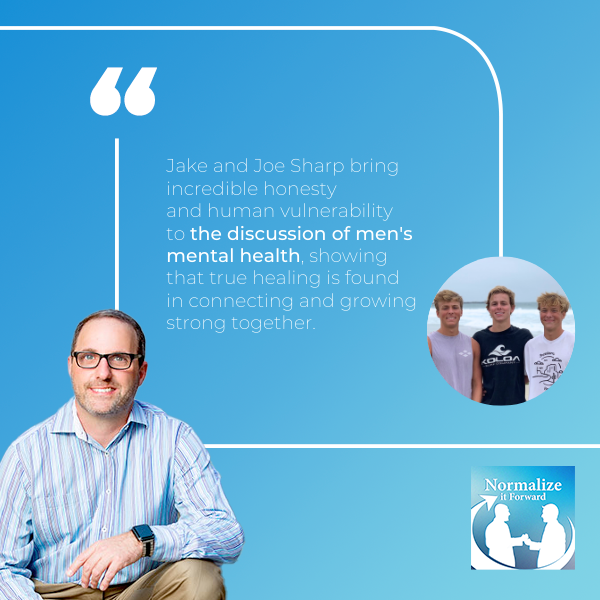
Men’s mental health takes center stage as we hear a story of turning pain into purpose. Marc Lehman welcomes identical twins, fitness coaches, and mental health advocates Jake and Joe Sharp, who turned the tragedy of losing their younger brother Sam to suicide into a powerful mission to help others heal. They speak with incredible honesty about the impact of grief, the darkness of depression, and overcoming the isolating grip of shame and perfectionism. Their raw, real, and deeply human conversation explores the life-changing role that community, physical wellness, and finding hope played in their journey, showing listeners that true healing means connecting and growing strong together.

Reading about mental health is hard. Let’s schedule a free consultation.

Watch the episode here


Listen to the podcast here


Healing Doesn’t Mean Hiding: Fitness, Shame, And Men’s Mental Health With Jake And Joe Sharp

We are here to talk openly about mental health and wellness. I have two awesome guests, Jake and Joe Sharp. Welcome, gentlemen. How are you, folks?

Amazing. Thank you for the invite.

Thanks for being here. We are joined by Jake and Joe. Their stories embody strength, vulnerability and purpose. Jake and Joe are identical twins, fitness coaches and mental health advocates who have turned their unimaginable loss into a mission to help others heal. After losing their younger brother Sam to suicide, they made a powerful choice to speak up, share openly and to help people know they’re not alone in their struggles.

Through their coaching, podcasting, and advocacy, Jake and Joe are breaking down the stigma around men’s mental health and showing that healing doesn’t mean hiding. It means connecting, feeling and growing strong together. They’re journey is raw, real and deeply human. It’s one that continues to inspire a ripple effect of hope. Jake and Joe, welcome to the show.

I appreciate it. I love the introduction.
 

Normalize It Forward - Marc Lehman | Jake and Joe Sharp | Men's Mental Health


Thank you.

We’re super grateful to be here.

I’m super happy you folks are here. A good place to start if you don’t mind. I’m sure you’ve told the story a bunch but my readers, I want to just give some contacts and give them a sense of where you folks have been and where you are now. Where would you like to start? You tell me.

Turning Pain Into Purpose: Our Men’s Mental Health Origin Story

We give you folks the context of why we started all this, why we started on social media and created a platform of mental health advocacy and why we do Fitness coaching and all that story. It’s powerful to hear someone about their purpose and maybe the darkness that they came through and the light that they share. Jake, if you want to start sharing that.

Did you want to start with Sam? I feel like our main reason and you shared a lot in the intro. It was to create a safe space for mental health. For us, that goes back to losing our little brother Sam. He struggled a lot with his mental health, depression, OCD and shame. We lost him back in 2020. Both of us were in Mexico for church missions. We were not in the State of Arizona, where our family lived. After losing him, we woke up to the mental health world.

It took us a while because it shook us badly. It put us both in a tough spot mentally as well with depression and anxiety in trying to deal with grief. We were struggling a lot with coping with his loss. I feel like a big part of our purpose was turning that pain of losing him to our purpose of trying to help others with their mental health and how they manage their life.

There’s so much purpose behind why we do what we do. We run a group. We run coaching and we help people create healthy lifestyles in the physical aspect. We’re coaches that also focus on mental health as well because we know Sam is with us as we go about our work every day. We’re always thinking of how we could help just one person or someone that may be in the same place that Sam was in. Where he felt that he had to hide or he wasn’t enough or that he made too many mistakes that he couldn’t come back.

All the things that people wrestle with or the darkness of suicidal ideation like me and Jake. We’re constantly driven by, “How do we help that person? How do we give them just a little bit more hope?” That’s what drives us every day, running our group, our coaching and posting about mental health advocacy. It’s showing the individual that there’s hope, there’s light for them and they’re needed on this earth. Also helping and giving them a couple tools to help them.

Grief just comes in ways and hits you out of nowhere. Some days you seem fine, and then some days, you're just wrecked again. Share on X

That’s beautiful. I have to say, first of all, you have a huge fan in me. I follow your Instagram. I’m seeing a lot of what you folks post.

Thank you.

Very inspirational. I’m serious. Awesome stuff. What’s your Instagram handle? Throw it out to my readers.

It’s @JDuoFit and it’s on Instagram, TikTok and YouTube.

Follow these folks. Their stories are amazing. I love what you’ve done here. I have to say I find you folks to be incredibly honest, incredibly down to earth, and incredibly human. For three men to sit around and talk about this type of stuff is rare. There has to be more of this and for you folks to tap into that. I’m on my own fitness journey so I’m vibing with you folks. This past year’s been awesome.

For you folks to recognize when someone’s having a tough moment or a tough day, just saying to them, “We got you. We’re here for you. We’re supporting you. We understand.” That’s huge. I’m looking at that sign behind you. Even just being nice to people. I don’t know why it’s so overlooked but it goes so far to just be kind and say something nice. I’m moved by what you folks are doing and I’m sure of the many people that you’re assisting. Thank you for what you folks do and the work and energy you’re putting out there.

You’re welcome.

Thank you.

I appreciate it. It’s important for my readers to understand, folks. First of all, let me ask. How old are you?

24 but basically 25.

I’m a twin, by the way, so I want to ask you folks these twin questions. I’m fraternal and not identical. I’m sure you folks get those different questions people ask. I want to know. You lost your brother a few years ago and I’m sure it rocked your world. If you don’t mind, folks. Can you tell my readers a little bit about the impact? Any corner of the story that you think would be helpful for my readers to know about death, loss is one thing. A loss to suicide is a whole other level. What do you think?

The Unexpected Impact Of Suicide Loss And Grief

I would agree. It’s a sucky club to be a part of, but we’ve been blessed in a way to know a lot of people that maybe have lost family members to suicide or loved ones to suicide It sucks. It’s the worst. There’s no beating around the bush with that. It’s made a change in her life, not only because it’s premature. He was sixteen years old. We’ve talked to many people that have lost loved ones of suicide and it’s super out of the blue. It’s super unexpected for a lot of them. To give you some backstory. We knew a couple members of our family, especially my mom. She took my little brother Sam to a lot of ketamine treatments, therapy appointments, and medications. They did a lot of different things.

I struggled with depression a lot in high school and I knew a lot. My little brother Sam and I experienced a lot of the darkness of depression and struggle throughout high school. When we’re in Mexico and he died by suicide, it was like it hit us. It’s unexpected. The impact it leaves on someone is it’s time heals. Jake and I are in a different place a few years from death, but there is not a day we go by where it doesn’t hit us and it’s not something that we think about how life could be different. Even with a good time and family.

Sam’s Struggle: Overcoming Perfectionism And Shame

We’re just with family all night and it was the best. You just go back to that and it’s like, “Why can’t Sam be here?” It’s the worst. It’s just the constant nagging of like, “He’s supposed to be here.” It’s a long lasting impact. We’ve come to know grief and all the weird things about grief. It comes in waves and hits you out of nowhere. Some days, you seem fine then some days, you’re wrecked again. It turns you upside down. It’s tough. I would say for the readers, Sam struggles a lot with perfectionism and a lot with shame. He was feeling like he wasn’t ever going to be enough. He stressed so much about the future and it left him deep into depression. Even suicidal thoughts because he thought he had to be perfect.

He thought things had to go a certain way or he was not enough. I know that’s such a big thing, especially now men or young adults. They don’t feel enough at times. It’s my message or Sam would tell us now, “You’re always enough.” He would tell us, “Your human. We’re not supposed to have everything together,” and to hold on to the present, what we have. Continue to work through those paints and those mental health struggles and the future does look bright. It is going to work out as you keep working through it.


Normalize It Forward - Marc Lehman | Jake and Joe Sharp | Men's Mental Health


That’s what I want to share and I think Sam would share because that’s one of the main issues he struggled with, his professionalism. It’s okay to struggle. It’s okay. That makes us human. That makes us real people. That helps us connect with others. When we struggle and open up about it, when we’re in pain and we can tell someone and try to work through it. That’s what makes us human and leads to the great moments of life. If it’s hard to see the future now and if it’s hard to feel enough. I want you to know it’s okay to struggle and there is a brighter future.

Something that came to my mind very quickly that is super impactful for me. I’ve had a couple conversations with a good friend and maybe he gets on the show because he just came to my mind. He lost his sister to suicide just a couple years ago. We’ve had a couple deep conversations. He’s such a great dude. His name is Nate and I’ve had a conversation with them at the gym. The reality of grief, the loss of suicide, and just the deeper pain that brings on family and parents. We talked a lot about how losing someone to suicide has changed us individually in some way of blessing.

Being more empathetic. Jake and I didn’t know the side of empathy and also just knowing some of the pains and the darkness and part of life, just the hurt of life. Jake and I grew up in a home that didn’t have a lot of trials like taking care of financial usually. We’re pretty well in the home, but it showed us that life sucks sometimes. This loss both showed us empathy and I got to talk to Nate about that. We got super deep. Maybe that’s the person to get on this show.

I would love to have him on, Joe. It’s a great idea. There’s so much here, folks. Again, I appreciate your openness about this. For a lot of men, it’s just so hard to talk about some of these deeper issues. Especially the perfectionism you were talking about earlier, where they have that pressure on us. The irony is that it doesn’t exist. We’re chasing this thing and we’ll never get it because it’s not there yet.

I like what you said earlier and it’s important for my young adults to take this in that whatever they’re going through will pass. It’s a matter of giving it time and having hope. Your brother went through a lot. It sounds like you went through a lot of treatment and I’m sure a lot of pain. I’m sure there isn’t a day that goes by where you folks don’t wonder what it would be like if we were here.

I know this is a horrible statement to hear but I hear it a lot. I hear kids in my office sometimes saying things like, “People wouldn’t miss me if I wasn’t here.” Nothing could be further from the truth. I want my readers to understand that pain because it’s like that’s a whole that will never be filled and it’s hard to describe, but I appreciate you folks opening up about it. Honestly, the more we can tear down some of those walls and the more we can have conversations. I feel like that’s the use of this show.

I want people to understand like, “If it means listening to this show in the car with your kids so that you folks can have a conversation. Go for it. Have that.” Everyone we help creates a little bit of a ripple. I appreciate you folks. I do appreciate where you’re coming from. I’m curious if we could pivot to fitness and wellness for a minute because I know that’s your main focus these days. Where did that come from? How did that come out of this pain?

From Grief To Growth: The Pivot To Fitness And Wellness

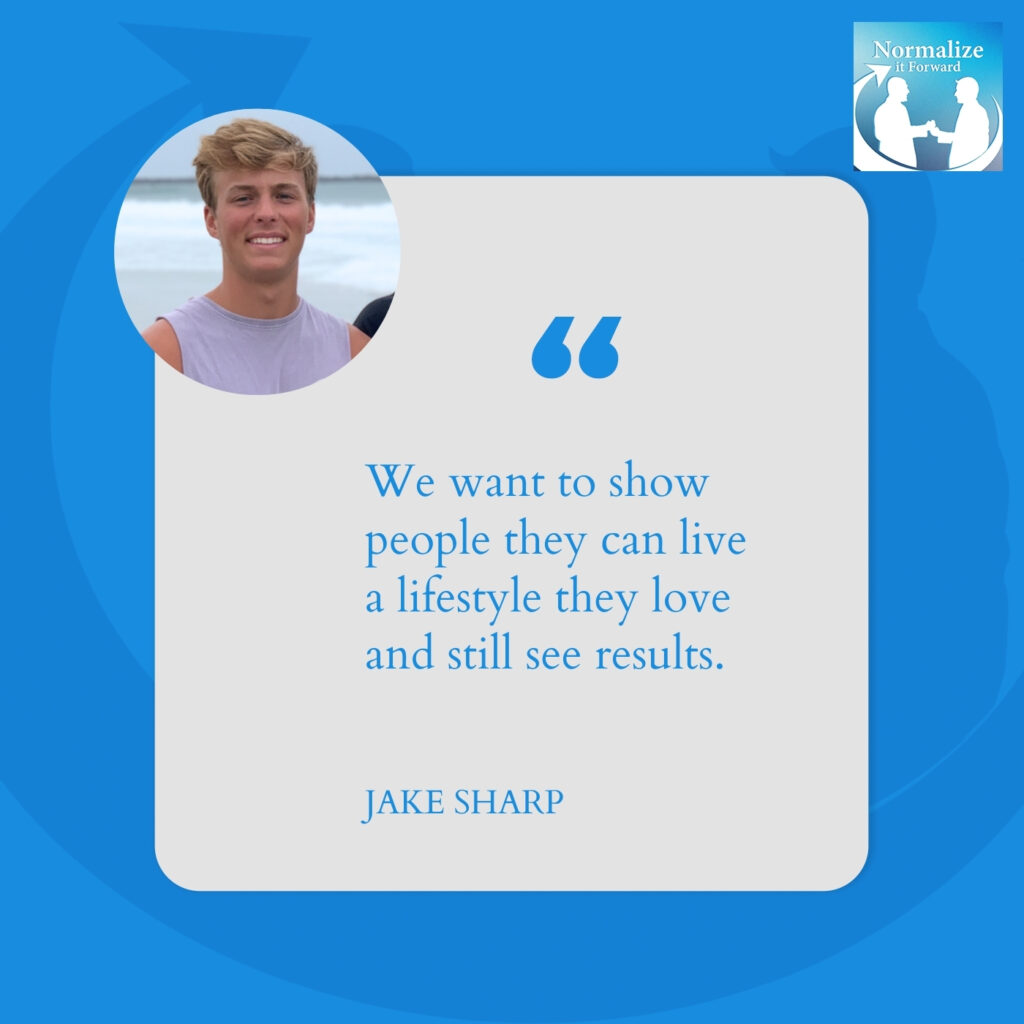
That’s a great question. That’s what we are focused on, to make an effect on the mental health space and all. A lot of people again fall into that perfectionism. That they have to be perfect. They have to be extreme athletes or extreme bodybuilders in order to look better, feel better, and feel enough. We disagree. We want to show people that they can live a lifestyle that they love and see results. It honestly comes out of losing Sam that kept us motivated, inspired and driven to make it happen. We want to help the mental health space. That directly correlates to what we do in physical health.
 

Normalize It Forward - Marc Lehman | Jake and Joe Sharp | Men's Mental Health


Joe and I, with our own struggles, the second part of that. We had a lot of low self-confidence as we grew up, especially in high school. We were not confident at all. We were chubby, skinny fat kids and no muscle. We were slow. We didn’t have a lot of confidence in ourselves. In our senior year, we dropped a lot of the skinny fat and got lean and gained a little bit of confidence then we left our missions. We gain like 50 to 55 pounds in a few short months coping with overeating.

We’ve always had a binge eating habit even through the skinny fat days, but on those church missions, we coped a lot with overeating. When we came back, losing Sam and being fat, those two came together. We were driven and it took a lot of failures. It took a lot of lessons. It took a lot of moments where we did over time and time again, but we learned different lessons. We learned how to build a lifestyle that we love and that’s what we’re focused on. Our whole brand is lean and confident because we do care about your confidence and your mental health. That’s part of what we do. It’s building a lean and healthy lifestyle for you with consistency with something that you love.

I would add to that. We focus on shame and helping people identify shame. We want to make it clear. We’re not professionals. We’re not therapists or counselors that talk through one-on-one with individuals that come to their chair. We know their importance because we’ve done the work with therapists ourselves for our own struggles around things like pornography, food, and all things that we use to cope with throughout the great process.

We imply that in our coaching and our community. Our group focuses on that a lot because we know that shame blinds us. It keeps us stuck when we shame ourselves and attack our identity and think, “We’re discussing. We’re broken. We can never figure this out.” We’re always talking about our identity and shaming ourselves. We can’t move forward. It was my therapist back in the day who said shame is blinding us. You can’t move forward when you have shame there first. That’s what we help a lot of our clients do and our group. We help them identify and begin to tear down that shame and start building new beliefs.

Shame blinds us. It keeps us stuck when we shame ourselves and attack our identity. Share on X

It’s awesome, folks. I completely agree and I hear about it all the time in my office. It is one barrier that keeps people stuck in the mud and from changing. I’m curious. You folks find the gym and your own mental health impacted by lifting and wellness. Can you take us through that a little bit and help us understand where that came from? It sounds like you folks had your own struggles with that at one point.

The Best Antidepressant: Exercise, Lifestyle, And Emotional Management

I struggled big time in high school with my own depression and it was dark. There was another battle after losing my little brother and coming back then dealing with grief and feeling like I was lost. There’s days like when people talk about when you feel that depression or anxiety and it feels physical. It’s like you can’t get out of bed.

I had multiple days after losing Sam like that or it was physical. I couldn’t seem to get out of bed, so I fully empathize with people. I know the darkness that depression can bring and just being wrapped up from shame. Shame from different habits that I want to kick, binging pornography and repeating that cycle and just beating myself up even more. The depression just swallowed me, then finding the gym. We constantly talk about the studies showing exercises are one of the best anti-depressants. What you eat, how much you eat, and the nutrients you get do matter for your mental health. We stress that with all the people.

We truly believe mental health is improved by your lifestyle. Get therapy. Maybe even medication is something that you look into. That’s a tool but without lifestyle, without you changing what you do, how you think, how you believe and what you believe about yourself, your mental health is not going to change long term. That’s what we truly believe with what we’ve seen with ourselves, our journey being not confident, struggling with overeating, pushing heavy weight, pushing our intensity, whether that’s weights, basketball or walking. Learning those tools, those lifestyle changes, overcoming, overeating help our mental health.

They help our anxiety and depression when we learn to manage our physical health. Those two are directly correlated in our eyes. Focus on the lifestyle. Again, therapy is probably one of our favorite tools to build out emotional management skills and work through our grief and our coping skills. If therapy is something you’re looking into, amazing. The same thing with medication. If you can’t seem to get moving, get momentum, medication is a great thing to look into but focus on long term change with lifestyle habits.

What Is Step One? Taking The Smallest Move Forward In Men’s Mental Health

I agree, folks. It’s funny. As you’re talking and you’re talking about a gym or a therapist or eating habits or meds, it’s a matter of trying to figure out where to start. As you were talking earlier, Joe, about getting out of bed. For some, it’s just like putting on pants. It’s like, “I can’t even get dressed,” and just figuring out step one. I have to say too I’ve worked out at a lot of gyms over the years.

Finding the right gym that you can be comfortable at, don’t feel judged and people are welcoming is huge. I’d say the same thing about a therapist. I’d say the same thing even about friends. One of the things that is big is when a person in high school is struggling and going through things like you folks have. Trying to figure out where to start is like step one. What was your step one, folks?

In high school, one of my first steps was to get into therapy. My mom was super good about that. I got into therapy when I was like seventeen years old. Going through the grieving process, I got it to therapy pretty quick just to process the trauma of losing Sam, suicide and all that. That was another good first step but just when it’s hard to get out of bed.

I heard something from someone that was contemplating suicide what helped him when he couldn’t seem to even do anything or think about doing anything that day. It’s just to take the little step possible. Go brush your teeth and take a shower. Celebrate that as a win and celebrate like, “I’m taking one step forward.” It ties so much and that’s why I love fitness, the gym and nutrition. It’s like we have to stop thinking it’s all or nothing or I need to be perfect.

We have to stop thinking like it's all or nothing or that we need to be perfect. Take the pressure off and take one step forward, whatever gets you moving in that direction. Share on X

A lot of things with mental health. It’s like taking that pressure off of you. Quit comparing. Take the pressure off you and take one step forward. Whatever gets you moving in that direction. You don’t have to do something huge that day, but focus on the small little steps and the direction you want to move. That’s what I would say.

My first step honestly would be finding someone I could talk to that’s safe, won’t judge and that will literally just listen to you. I find that after losing Sam, that was probably seriously how I got moving. How I got better from my grief or improved my anxiety was just talking about something that I was struggling with to someone else. That was a big win for me. It’s just connecting with someone and it didn’t even need to look like a conversation that led to a lot of action in that moment. It was the act of me just opening up to someone kept me trusting things can get better. Finding that hope was my first step.

It was me then realizing it’s okay to be where I’m at. It’s okay to be a beginner in the gym. It’s okay to be a beginner with this mental health journey. It’s okay to be where I’m at. That doesn’t make me any less of a human. That doesn’t mean someone else is a better person than me at all or I’m weak. That doesn’t mean that at all but being okay to be where I’m at. It’s like I’m going to learn key things that help my life get better where I’m at, and then find someone to open up to. That’s my approach to that.

It’s huge. We’ll say, folks, I’ve seen my own therapists over the years but many more patients have visited me over the years. I’ve thought a lot about what it is like for a first meeting when a young adult comes in. They don’t know me at all and they’re probably feeling a bunch of different things walking in. What was it like for you folks the first time you saw a counselor or even not a counselor? Jake, as you said, an adult to talk to. What was that like?

The Courage To Seek Help: Trusting The Uncomfortable Process

It can be a little bit uncomfortable. You’re trying to dip your water, dip your toes into something new and it can be a little bit uncomfortable. I feel like again that’s where real progress or real change happens. It’s like, I’m going to trust if I am a little bit uncomfortable. I tell a therapist or someone the truth of where I’m at, the struggles and the things that are hard in my life that maybe I can find some hope. If you don’t find them empathizing or listening, that’s okay.

Real progress or real change happens in the uncomfortable. Share on X

That doesn’t mean you’re wrong and doing that. You talk to someone else or you get a new therapist. That’s okay but it can be a little bit uncomfortable. That’s human nature. It’s having faith or saying, “This is what real change does look like or real progress does look like. I got to be willing to be uncomfortable or sit in that. I got to trust this process.” That’s where it starts.

That’s huge, Jake.

Jake and I both opened up to our parents about the things we were struggling with or depressive thoughts or anxiety. Our parents were very loving, especially her dad growing up. We battle with our own shame around different things but we grew up in a loving family. Stepping into our therapists, Travis’s office, for the first time when we’re younger, like seventeen. It can be very awkward and weird because they are someone that is just here to listen and here to maybe guide your thought process to give you some tools. That’s all the therapist there.

They know how to listen and how to give you the right tools. When I think about that when I first started therapy and then went into therapy for grief, my marriage is like three different things. I’ve learned different things every time and it’s so cool to build skills of emotional management of, “This is why I might be doing what I’m doing or how can I listen better? How can I be that safe space for someone else?” Looking back to embracing not being perfect but embracing the uncomfortable of, “This is me learning and I’m going to this process to learn tools.”

 

Normalize It Forward - Marc Lehman | Jake and Joe Sharp | Men's Mental Health


It’s very well said, Joe. I use the baseball mentality of like, you got to open your glove up. You got to come into the open. You have to come into it realizing you’re going to learn stuff and that stuff can be applied if you choose to apply it. Jake, use the important word hope. When a person is depressed, they know what the word means but they haven’t felt it for a long time. I would just paraphrase your words by saying take that bold step. Whether it’s a therapist, a coach, a teacher, a parent or another adult. You take that bold step because you want to create some hope.

I applaud everybody who does it. It takes a lot of courage. I’ve got plenty of people break down in my office over the years with all that emotion. I would say to anybody reading, if you’re in that spot, have that courage, find that person and reach out. It’s interesting, folks. I’ve now done enough interviews over the last couple years to talk to several different people about the topic of depression and suicide. Everybody eventually says the same thing, find somebody. Find somebody to connect with, find somebody to be open with and this too shall pass.

It’s all of the same phrases that get said. The more we’re able to spread that gospel and help people understand, it’s tragic and my condolences to you, folks, for your loss. There’s nothing I can say to make it any better other than I’m sorry. Certainly, you folks have figured out a way to turn your loss into something positive. For that, I’m amazed. I am inspired. I’m sure my readers will be as well. I’m sure you folks have your moments. You’re good in your current moments but we appreciate all of what you’re doing. I just want to cheer you on from over here and say keep doing what you’re doing folks because it’s good stuff. It’s helping probably more people than you realize too. It is.

Thank you. A lot of times, it’s when we post or we run our community, sometimes you get those doubtful thoughts and be like, “Are you changing anyone’s lives? Is your content helping?” We appreciate that and we won’t ever stop.

Normalize It Forward: Nominating A Future Guest

I’m pleased to hear that. In the spirit of Normalize It Forward, Joe, you touched on this earlier but typically I asked if there’s a friend, a co-worker or a relative that you want to nominate to have someone come on the show next. Let me know and I’ll do my best to wrangle them in and have them on at some point. Any thoughts, folks?

I’ll send you over Nate. I’ll talk to him too and I’ll send them over and see if he’ll be available doing this.

Thank you, Joe. I appreciate that. I want to thank you for your time, your energy, and everything that you. I want to keep telling you keep doing what you’re doing because it’s inspiring me and that takes a lot. I’m moved. Know that the wellness that you’re spreading is helping lots of people out there. I appreciate it. I do.

Thanks, Marc. It means a lot.

Thank you. We’ll keep doing our thing.

It’s good to talk to you.


Important Links


About Jake and Joe Sharp

Normalize It Forward - Marc Lehman | Jake and Joe Sharp | Men's Mental HealthJake and Joe are identical twins, fitness coaches, and mental health advocates who have turned unimaginable loss into a mission to help others heal. After losing their younger brother, Sam, to suicide, they made a powerful choice — to speak up, to share openly, and to help people know they’re not alone in their struggles.

Through their coaching, podcasting, and advocacy, Jake and Joe are breaking down the stigma around men’s mental health, showing that healing doesn’t mean hiding — it means connecting, feeling, and growing stronger together.
Their journey is raw, real, and deeply human — and it’s one that continues to inspire a ripple effect of hope.


Reading about mental health is hard. Let’s schedule a free consultation.


Normalize It Forward - Marc Lehman | Dean Daniel | Men's Mental Health


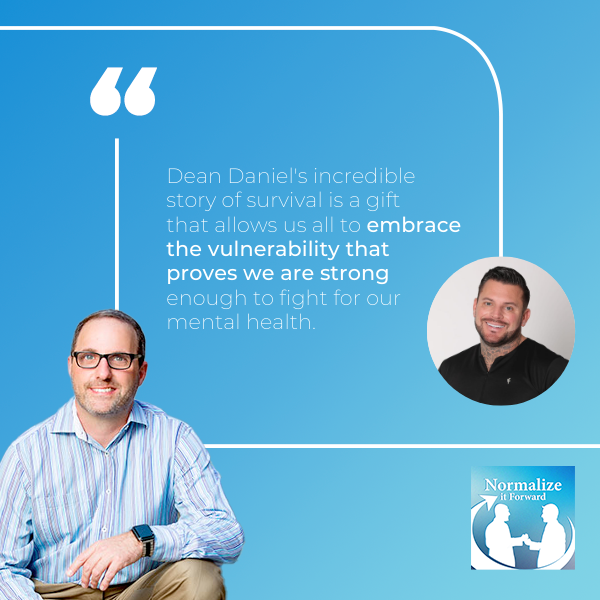
The true strength in men’s mental health isn’t toughing it out, but taking off the mask and choosing to fight another day. Marc Lehman sits down with former athlete turned passionate mental health advocate and founder of Unbeaten, Dean Daniel, who shares his raw and incredibly powerful journey through chronic pain, eight spinal surgeries, and multiple suicide attempts. As a proud ambassador for Tough To Talk, Dean opens up about the stigma surrounding men’s emotions, the devastating effects of silence on families, and the life-changing choice he made to live and help others realize they are never truly alone.

Reading about mental health is hard. Let’s schedule a free consultation.
Watch the episode here


Listen to the podcast here


Taking Off The Mask: Breaking The Silence On Men’s Mental Health With Dean Daniel

We are here to talk about mental health and wellness. I am here to welcome Dean Daniel.


Normalize It Forward - Marc Lehman | Dean Daniel | Men's Mental Health


Dean, welcome. How are you?

I’m good. Thank you so much for having me. I’m excited. I appreciate you for having me for this conversation.

I appreciate you being here. I’m going to run a quick intro to my audience, and then we’ll get into things. Dean is a passionate mental health advocate and a proud ambassador for Tough to Talk, an organization dedicated to breaking the stigma surrounding mental health and suicide. Don’t let me forget. I want to double back and hear more about Tough to Talk.

Through public speaking, podcast appearances, and community work across the UK and beyond, Dean uses his own journey, including living with chronic pain and its impact on his mental health, to show that vulnerability is strength and that speaking up can save lives. He’s the Founder of Unbeaten, a movement and apparel brand supporting mental health charities. More than just a brand, Unbeaten stands as a message of strength, solidarity, and survival, a reminder that no matter the challenge, we’re never truly alone. Thank you so much for spending some time with us.

My pleasure.

From Athlete To Advocate: The Start Of Dean’s Chronic Pain Journey

Dean comes from across the pond, as they say. I hope things are well over in England. I thought maybe we could jump in and talk a little bit about your story and where you’ve been. My audience will want to hear about that.

No problem. I’ll take it back to the start. I used to be a 200-meter runner. I was running for both club and country. I was living the dream. I was living the life that I was destined for. I wanted to make the Olympic Games. I wanted the medal at those games. I wanted to be the best that I could be. Unfortunately, after a successful start to my career, I had a nasty car accident. Unfortunately, I wasn’t able to run at that level any longer. As you can imagine, I was devastated by that news, but I thought to myself, “If I can’t make my dreams happen, then I want to help others achieve their dreams.”

I got into the coaching side and personal training side to help others get to where they wanted to go, if I couldn’t get to where I wanted to. I had a successful number of years doing that. I loved it. I loved seeing what I was turning people into, both from a physical and from a confidence and mental side. As we are all aware, the fitness industry, especially when we’re talking about the fitness side, works for both physical and mental capacity. I loved it.

One evening, which is when my story took a dramatic turn, I was training myself. I had gone to the gym. Unfortunately, I’d lifted too heavy with poor preparation. I didn’t sleep and wasn’t eating before that. I felt a sharp lower back pain. As those blokes do, we think, “We’ll battle through. We’ll carry on to the session,” but within about 5 to 10 minutes, the pain was agonizing. I had to finish the session.

I’ll cut a long story short. I got rushed to the hospital, and I had to undergo my first spinal surgery. This was back in 2018. This is when the journey started. Since then, I’ve had eight spinal surgeries. I’ve fallen down the stairs, top to bottom, maybe 5 to 6 times. I’ve developed something called vasovagal syncope, which is where your body is in so much trauma and so much pain that it switches off. I found that out.

Through one of my surgeries, I was on holiday with my young one. It was his eighteenth birthday. We all went through it to celebrate that. Prior to that, I was collapsing. I didn’t understand why. My wife had to conduct CPR on me one random day because I’d dropped down in the front room. We all were like, “What’s going on? Where does this come from? I don’t understand it.” She had to perform that. The defib was called for. The paramedics came. They rushed me to the hospital. That’s when I’d done my tests and checks and found out that this is what I’ve got.

The first time I understood anything to do with mental health was about then because I’d started to realize that I wasn’t the person that I wanted to be, and what I previously was. We went from that point to maybe 2 to 3 collapses a day, which was then preventing me from driving and preventing me from being a normal human being. I couldn’t leave the house without worrying about the embarrassment that I may collapse and an unfortunate stranger may have to find me, putting them through all that stress and strain.

My mental health started to deteriorate quite quickly from there. As you can imagine, it was a shock. Those blokes, as we do, especially within the UK, the stigma around mental health is so bad. I used to lock myself away in the bathroom, turn the shower on, and sit there crying. I then wipe my eyes, come back out like nothing has happened, and be this dad and this husband that I wanted to be. Deep down, I was dying inside. It was awful.

I ended up going on the holiday with my family. To be honest, at this point, my mental health was at rock bottom. Nobody knew. No one could see it, but I was fed up with the pain. I’d lived with this chronic pain for over eight years. I’d gone from a shell of my original self. I felt that I was a burden on my family. I wasn’t the husband that I should be. I wasn’t the dad that I should be. I wasn’t the friend that I should be. I started to deteriorate.

Before this holiday, I was in the hospital. I was on the top floor of this hospital. I looked out the window and I thought, “If I could jump out this window now, I would.” Physically, I couldn’t because I was still getting, at the time, wheeled to the bathroom and wheeled to wherever in wheelchairs and whatnot. That alarm bell started to ring at that point, like, “Hang on a minute. This isn’t right here. Something isn’t right.”  That’s when the mental health journey started.

The Stigma And Crisis: Crying In The Bathroom And Contemplating Suicide

I messaged my wife at the time and said, “I don’t feel well. If I could jump out of this window, then I would.” She contacted the hospital and everything from there. I got support whilst I was in hospital. For me, the alarm bells started to ring at that point. To be honest, I didn’t understand it because I’d never thought that mental health or anything would affect me or would hit me. This person, who was outgoing and a confident guy who was living his best life, however many years ago, has gotten to this point. I was like, “Why me?” I didn’t understand it.

I had another surgery, and I’d come out of that hospital. It was nine weeks altogether in this hospital. I got out and they said, “When you’re going to be in there, you’re going to be doing your recovery period.” I won’t go into too much about it because it’s in an illegal arena at the moment, so I’ve got to be careful about what I do and don’t say.

I was telling people, “My pain is high. My pain is alarming me. This is getting worse.” No one was listening to me, but I was told, “It’s okay. This is a process. This is a recovery stage. This is something that you have to expect. You’ve had a number of spinal surgeries that, unfortunately, are going to do this to you.” I knew deep down that something wasn’t right.

Since then, what we found out was that there were multiple medical failures. I was right. I was failing, which was pushing my mental health. I was right. It was true. Since then, I’ve tried to fight. I’ve had a number of further surgeries since that point. I hit rock bottom at one point. Back in 2023, I had had enough. I said to myself, “I can’t do this anymore. My life is not worth living.”

I looked at my family, and they were seeing me going through all of these issues. They were seeing me going through this pain. It was awful. I said, “I am not allowing this to happen anymore. I need to relieve them of the pain,” although I was struggling with it. It was going to be me who had to make a decision of whether I was or wasn’t here. I needed to make that decision because I didn’t want them suffering anymore because of how I felt.

The Last Holiday: Emergency Surgery And Heavy Medication Load

We then went over on that holiday for my son’s birthday. To be honest, not many people knew at the time, but that, for me, in my head, was my last holiday. I was going to make sure that my son had the best eighteen birthday and had the best holiday. After that, I was checking out. It’s hard because I look back, I didn’t want my son, my daughter, and my wife to be without their dad and husband, but I had to make that choice because I felt it was the best for them.

We went on holiday. I ended up collapsing over there twice. On the day that we were returning home, I collapsed quite badly on a restaurant table. I was rushed to the hospital. As I was coming around, my nine-year-old daughter was screaming, “Is Daddy going to Heaven?” I’m lying there, trying to talk, saying, “I’m here,” and then I blacked out.

When I woke up, I was in intensive care in a Spanish hospital. I won’t go into too much detail because we’d be here all day. I went in there, having been told that there were failings from the UK. We needed to do emergency surgery because issues were occurring, and I was losing sensation down my legs. I had to have emergency surgery in a foreign country and then got air-ambulanced home. For the second part of the surgery, it was a nightmare.

That’s crazy.

In turn, my mental health was spiraling because I’d heard all these things about what had been done to me and why I’ve been left like this. Having to leave my family in a foreign country and having to be this person that wasn’t me was horrendous. My medication was increased. I was on 36 tablets a day. I don’t know what you guys have in the States, but I was on the likes of Oxycodone to Panadol, Tramadol, Pregabalin, and Diazepines to name a few. High-end pain medications. It was turning me into a person that I didn’t want to be. I didn’t know who I was. Toward the end of 2024, I had had enough. I said, “This life is not for me.”

Everyone experiences pain differently, from different angles and life maps, but when you're in it, that sharp pain feels like yours alone and no one can take it away. Share on X

Before I say any more, I have to warn you and anyone who’s reading that there’s a talk of suicide. I had had enough. I stopped the medications. I said to my wife, “I can’t do this any longer. I can’t do it.” She said to me, “You’ll be okay. Let’s keep going. Keep fighting.” Deep down, I was crumbling inside. I was having this strong outer exterior of, “Look at me. I’m okay,” but inside, I was turning into mush.

I managed to get out of the house with high levels of medication and alcohol. I took myself out of the way and attempted my life on that occasion. It was at the point where I felt that nobody else needed me. Everyone was better off without me. Although they suffered at that time, in the long run, my perspective was that they would feel better down the line because they wouldn’t have to watch me go through what I was going through.

I should have been sectioned, but they took me to a hospital. I was found by a couple up in the woods. They called the police. I was then taken to a hospital. I had to do all the reversal treatments and whatnot. They wanted to section me, but because of my chronic pain and my back issues, they suggested, “Let’s not put him in that type of environment. Let’s take him home, but make sure that the house is a secure unit.” We did that, but in turn, that made my wife lose her job, which was more financial stress and a burden on me. I felt like that was my fault.

I was spiraling by this point. It got to the point where enough was enough. I tried to listen to the crisis team and to my family, but there was only me who could experience this pain. I always say this. My pain was my pain. Other people experience their pain as well from different angles and different means. Once you’re in that pain, you know that that’s your pain, and no one can take it away from you.

The Ultimate Act Of Despair: The Window Jump And Turning Point

I was saying to everyone, “Although you’re trying to help and you’re trying to speak to me, I understand it. I respect what you’re doing, but you haven’t got a magic wand to wave it away, and then I’m okay.” I was respectful to the team. The crisis team was amazing. They were here every day for me. They were supporting me, but it wasn’t enough.

One evening, I realized that the window was left open. We were on the top floor of our house, and the window was left open. I said to my wife, “Could you do me a quick favor? Could you nip down and grab me a cup of coffee?” I knew my intentions, and obviously, she thought she was going to make a cup of coffee. She went downstairs, and I managed to get up onto the window ledge, jump the window open, and jump out backwards in the hope that that would end the suffering that was me, the family, and everything would stop. I was hoping this would stop, and they could get on with their lives without me interfering. That was the turning point for me.

As you can appreciate, I woke up. I don’t know how, but I’m so glad that I did. I woke up, and it was like something out of a movie. There were flashing lights. There were sirens. I had my wife screaming and my family having a breakdown on the floor. I couldn’t move from my neck downwards. I could move my eyes. I thought, “What am I doing to my family here?”

The destruction and devastation that I was causing was horrendous. You can never take it away from that individual who’s going through that suffering and that pain, but you don’t see what it’s doing to the people around you and what it will do moving forward. I remember looking, and I thought, “I have to stop this. I have to fight. I can’t do this to them. It’s not fair,” and then I blacked out.

I woke up in the hospital. I don’t know how, but my mom was there. We’re such a close-knit family. My mom gave me the biggest cuddle, and she was crying. She was like, “Dean, you are here for a reason, the reason why you’ve survived this. You’ve had two attempts on your life. You fell down the stairs from top to bottom.” I fell down the stairs. I’ve gone through the wall at the bottom where my head has gone through. I’ve gone through all that. I’ve had all these medications thrown at me. I’ve had these vasovagal collapses in random places. I have damaged my wrists, my face, and my knees wherever I’ve landed. She was like, “There’s a reason why you are here.” I looked up and said, “Yeah, I know.”

I stayed in the hospital for two weeks. When I came out of the hospital, I lay in bed, and I was in agony. My wife said, “How are you doing?” I said, “I’m okay. I realized that I need to live, I need to change, and I need to make sure that I can help people from getting to the point I got to.” I get a bit emotional thinking about this bit. She said, “We’ve got CCTV up around our house. I need to show you something. Do you want to see it?” I thought, “I know what’s coming.” She said, “The paramedics had asked that we see the footage of the CCTV to see how you landed in terms of injuries and whatnot. Would you like to see it?” I didn’t know what to say, but I thought, “Let’s do it.”

She passed me the iPad, and I read it. I opened it up and I was like, “That was me?” It was awful, honestly. At that point, I turned to my wife and said, “This stops now.” She said, “What do you mean?” I said, “I’m going to change. I’m going to make a difference. I’m going to make sure that nobody gets to the point that I got to and that everyone can realize you can be a normal guy or a normal lady.”

From wherever you are in the world, you can quite easily get to the point that I got to, from the first alarm bells ringing to the thoughts that you next get to the point where you’re attempting your life. I look back and I’m lucky. I’m lucky that I’m still here. I’m lucky that I’m able to sit here and talk to you, meet some amazing people along the way, and help.

I’ve said that I will carry on going and make sure that I save as many people as I can. I used to say a bit of a cheesy word. If I could save one person, then that’s amazing. I’ve done my job, but there are so many people out there that are going through these struggles that I don’t want to save ten. I want to save as many people as I can.

No matter where you come from in life, no matter what area, your religion, your race, or wherever you’re from in the world, it can hit you. Mental health doesn’t choose its targets. It hits you, and it hits you hard. When it does hit you, we need to make sure that we’ve got the resources and support, and we know that we’re not alone.

Breaking The Stigma: Why Everyone Is Susceptible

I have a thousand questions. I’ve got to order them in my head. Number one, thank you so much for your honesty and your vulnerability in telling us your journey. I’m so sorry to hear what you’ve been through, but I want to thank you and tell you that we’re the lucky ones that you’re still here. People like you allow my audience and their families to understand that we are all susceptible. It doesn’t matter your background. It doesn’t matter how much money a person has. It doesn’t matter where they’re living. It doesn’t matter what school they’re going to. I want all people to understand, who are tuning in to a show like this, that we are all susceptible.

I have a good friend who runs a company, Same Here Global. I’ll give them a shout-out. Eric often says five in five. Meaning, the stat is 5:5. We are all susceptible. When a person glazes over that and says, “Not me. It never happened to me,” they run into more issues. Your story resonated with me on so many different levels. I can’t imagine any of my audience reading it, not having similar experiences, so thank you.

Thank you very much. I do a number of keynote talks around the UK and the world, wherever it takes me. I always say that I want people to relate to me. I’m no one. I always say this. I’m nothing special. I’m a guy from Teesside in the Northeast of England who has been through some dodgy cards or some bad cards but has come through them in the end. There were times maybe I shouldn’t have come through, but there’s a reason why I have. If I can do it, then so can anybody else because I’m nothing special. I’m just a normal guy.

I want people to be aware and help break the stigma around mental health and suicide. Share on X

There are people out there who will be reading this, thinking, “If he can do it, then so can I.” That’s what this is about. This isn’t about putting someone on a pedestal. This isn’t about making someone out to be a hero. That’s not me. I want to make sure that people are aware, and we break that stigma around mental health and suicide. I want to show people, “This is okay. Yeah. You are not alone.” We come together when we unite, and we talk more.

What you said about vulnerability is so right. When I do my talks, I always say, “I might as well stand in front of you all, strip off, and show you an open version of myself, like, ‘I’m completely naked here.’” I’m sure my vulnerable side is there. If that helps other people realize, “There is light at the end of this tunnel, and there is a way out,” then so be it.

I hear you. You mentioned men in particular. It’s so fascinating when I read about this online and how many men put that mask on. Your story about crying in the bathroom, so many of us have been through that over the years. We feel like we have to hide it. We feel like we have to wipe our tears away. If people are like, “Are you okay?” We’re like, “I’m fine. Everything’s fine,” and that whole thing. You’re not fine. What I want to push is getting young adults to understand that this is powerful. When you are not fine and you tell everybody you’re fine, you’re giving it more power.

It’s true. You’re feeding it.

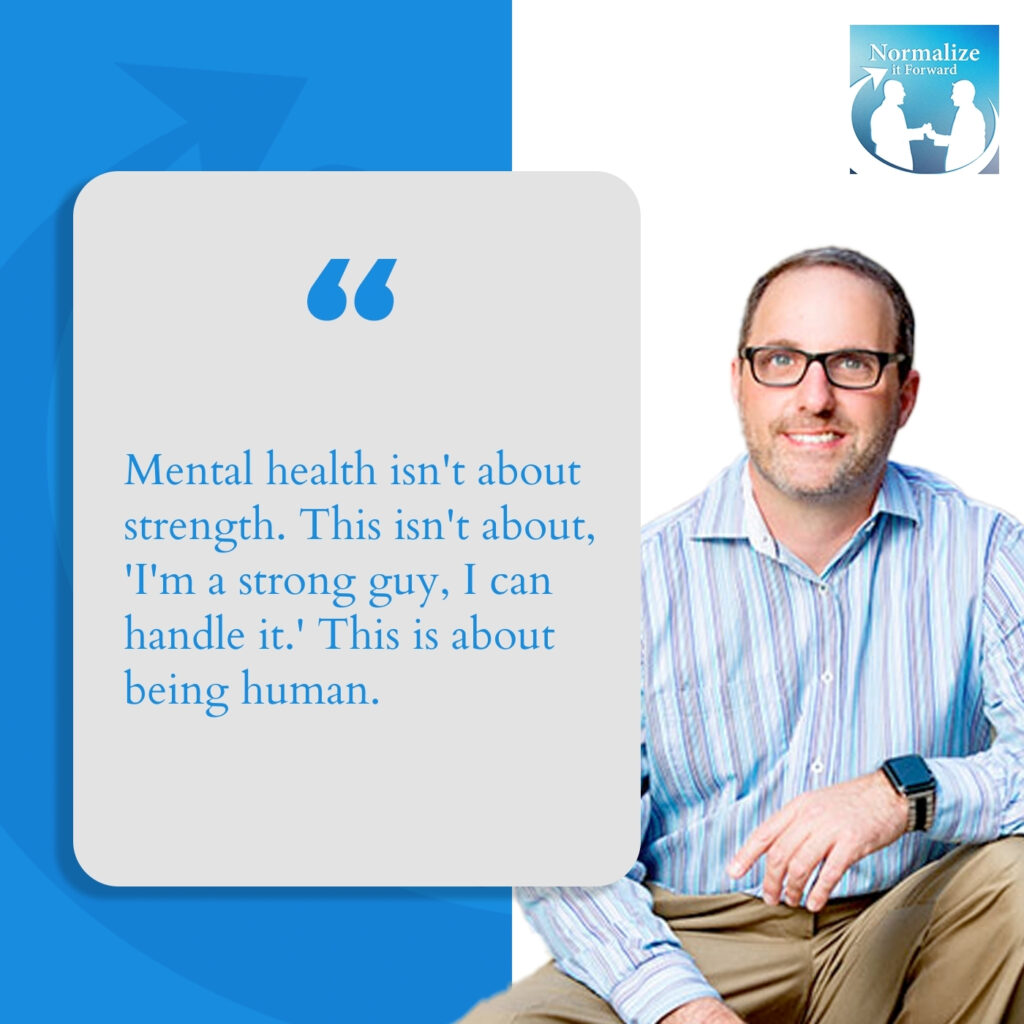
Unfortunately, it’ll beat you. It’ll climb higher than you. I’ve got kids that I know that try to harm themselves, do harm themselves, fail out of school, etc. To me, it is recognizing this isn’t about strength. This isn’t about, “I’m a strong guy. I can handle it.” This is about being human. This is about how, in your circumstances, which are different from mine and different from other people’s, we are all susceptible. This thing can take us down.


Normalize It Forward - Marc Lehman | Dean Daniel | Men's Mental Health


I applaud your efforts, number one, for not only being open and honest and vulnerable with us, but also talking about your comeback story. To me, the mere fact that you’re still here and we’re talking, and we’ve had a chance to meet, I consider that a gift. To me, that’s amazing. Let me ask. I’m curious. You mentioned your kids. How old are your kids, if you don’t mind me asking?

Ten and nineteen.

Crucial Advice For Young Adults And Parents: Take Off The Mask

A lot of my readers are young adults, between those ages, in many ways. For young adults in the United States and around the world, the statistics for mental health are not great. I read 65% of kids in the US who need help aren’t getting it for lots of different reasons. There’s a lot of suffering that goes on in silence, a lot of mask-wearing, and a lot of pretending. I want to give you a chance because you’re talking, in many ways, directly to them and directly to their parents. That’s my audience. I want to give you a chance to talk to them and to let them know from your perspective what would be helpful for them to do to try to address things. What do you think?

Personally, it is to take that mask off and to realize that you’re not alone. You may lock yourself away in your bathroom, your bedroom, or something like that, or you’re trying to put that mask on to go outside. It’s okay to take that mask off and say, “Listen, so-and-so friend. I’m not well.” You can go to your parents and say, “I’m not feeling too well. Is this something that I need to be concerned about?”

When it happened to me was when my wife found me at one point, and I was hysterical. I kicked the dog bed. The dog wasn’t in it, thankfully. I screamed out. She came down the stairs one day and said, “What’s wrong?” I said, “I can’t do this anymore.” Although I didn’t want anyone to see that, it was fine to do that because that’s how you could then get the support. We went to the GP, who then referred me to the crisis team. If you don’t open yourself up and your emotions and allow those thoughts to be released, then you can’t follow that next process.

From a parent’s side, I look at it from the perspective of my kids. I look at my little one and what she’s been through in terms of seeing me. I can laugh about it now. She came in at one point, bless her, and her dad was on the floor. I was on the floor, at the bottom. I’d gone through the wall at the bottom of the stairs. I had a full-body head thing on from the ambulance. I was on a spinal board. My little one comes in, and she has to see all of this.

You’ve got to look out from her parents’ side. I look at the telltale signs if she’s reserving herself a little bit more. I’m watching what she’s watching on her iPad or a TV. I know she struggled a little bit. Sometimes, we would see that she is quite quiet in the corner of the room and quite upset. We would say, “Are you okay?” She’s like, “I’m fine.” She’s putting that mask on and thinking, “I’m okay.” My son was the same. He locked himself away a lot because he didn’t like to see me going through that.

It’s looking at those telltale signs as well and thinking maybe it’s having a conversation and sitting down. Whether it’s to your parents, your friends, or your children, open up and show them that there is support there. I’ll be honest. When you’re in that place, you feel that there’s no support. You feel like you’re on your own, and there’s no one else who’s going through it. Unfortunately, there are so many of us who are going through it. If I’d have known a little bit more than what I know now, it may have helped those thoughts.

When you're in that dark place, it feels like there's no support and you're completely alone, but the truth is so many others are going through it too. Share on X

That’s great advice. I mention it to a lot of kids that I work with, “If you Google it, you’ll see statistically that there are a lot of people going through it.” It’s amazing. You and I work hard to break through that stigma and get people to understand that this is way more normal than people realize. It can get pretty bad and affect a lot of people around them. I appreciate that.

The Daily Fight: Self-Care Through Ice Baths, Music, And Meditation

A gold standard suggestion of finding somebody to talk to. It doesn’t even have to be a therapist. It could be a coach. It could be a friend. It could be a friend’s parents. It could be anybody. Let somebody know, “I’m not doing so great. I’m not in a great spot.” In many ways, that opens the door to getting some assistance. I’m curious about the level of how you’re taking care of yourself these days. You brought us through your story through 2024. I’m curious how 2025 is going for you.

I’m still in a lot of pain. The surgeries that I’ve had previously took me to a point where there will be no further damage going forward from that area of the spine, but it doesn’t mean that the pain, the suffering, and whatever else has happened to my body from that will clear up or dramatically change. I’m still in a lot of pain. I’m not in the levels of 10, 11, and whatever else. I’m still in 7, 8, and sometimes 9.

I do a lot of my own treatments. I’ll go and do ice cold therapy. I’ve got an ice bath in the garden. I do meditation. I listen to music. There are certain things that take my mind away from that side. I never used to think, “I don’t believe in meditation. I don’t think that will work for me.” It’s amazing if you can find something that takes your mind away from those thoughts or that moment.

For me, it’s pain. If my pain levels get too high, my mind starts to revert back to that point where it’s like, “Here we go. Is this pain? Is it back to the point where I can’t go in anymore? Is it back to the point where I don’t want to be here?” I’ll go in the tub, and sometimes, I think, “What am I doing?” Especially in the UK at this time of year, it’s not the best of ideas. I’ll go in, and for those fifteen minutes, I will focus.

Through my athletics, I’ve always been competitive. I’ll always try to compete against myself and go, “I’ll do an extra minute,” or, “I’ll do an extra two minutes.” Before you know it, those thoughts are starting to gradually go to the back of your mind again and start to ease a little bit. Sometimes, I’ll go in the shower or in the bath and put some music on. It brings me down a little bit. Although this is getting, maybe getting a little bit much, that’s easy by one type of treatment, music, or whatever.

If you can find something that pulls your mind away from those thoughts, even for a moment, it can help. Share on X

Great ideas. From that, I take, and certainly, I point out to my audience as much as I can, that self-care doesn’t have to be anything extravagant. When you take a look at, “This makes me feel better,” and it’s not hazardous, then do it. It could be a simple walk around the block, an ice bath, or music. Music is huge. Music is amazing. It’s a big part of my world.

We can get to so many different genres, and those genres make us feel differently. There’s calming music and exciting music if we want to work out, if we want to do this, or if we want to do that. It’s using that to our advantage to be able to center and help us block out some of that noise and stuff that’s in our heads. I appreciate those suggestions. They’re helpful. I’m curious. Is your nineteen-year-old in school?

He’s at university.

What have his experiences been like? Is this his 1st year or 2nd year?

It’s his first year. He has moved away from the area as well. He has moved a seven-and-a-half-hour drive away. He said he wants to open up and live. He’s an amazing guy. He works hard. He will be successful in the future. He’s working in law.

Good for him.

The university he’s going to is supposed to be amazing. It’s hard for me because I’ve come to the point where I’ve come out of that awful, dark place. I appreciate life. I appreciate meeting people like yourself, being able to speak to people, and people listening. It has humbled me a lot. I always say this. Although I’ve been through that shit that I went through, I’ve had to go through that to be the person that I am now.

Mental health doesn’t just affect the individual — it affects everyone connected to them. Share on X

It’s part of your journey.

This is it now. This is a new me.

Good for you.

I realized that there is more to life. Your loved ones appreciate everything that’s going on around you, even if it’s something so silly. Once it’s gone, it’s gone. When he goes to university, I’m like, “Oh,” because as a family, we’ve had a rough 8 or 9 years. Now, I’m like, “This is the time that I want to be me. I want to be a dad and a husband.” At the same time, when he goes there, we’re on the phone every day, video calling.

I want the best for him. For him to go down there and live his life as both a student and as a young man who is opening his life, like, “I’m going to make a difference. I’m going to do that,” I’m here to see that now. I’m blessed and grateful that I am able to see him flourish in his life, whereas a couple of months ago, he was nearly doing this alone.

When we talk about stuff like that, that doesn’t necessarily mean that he would’ve done that because he may have felt that he needed to stay here. He needed to support his mom and the rest of the family. My actions at that point could have changed the way his life turned out as well. It’s important. Everyone who’s reading needs to realize that. It doesn’t just affect the individual. It affects the whole network around you.

Death Is Permanent: The Devastating Impact Of Suicide On The Whole Family

No doubt. You hit on something super important. I want to emphasize it a little bit. Those individuals who have gone down the road of depression and gotten to the point of considering or attempting suicide, I often will hear patients talk about a convincing discussion that goes on in their head of, “Everybody would be better without me. Somehow, me taking myself out of the mix would make their lives better.” I’ve never seen that, and I’ve treated families post-suicide. It’s a hole that never gets filled. Life is always much worse.

You make a great point when a person goes through that. We’ve got waves in our lives of crappy times and good times. When you’re in that bad place, if you decide, “I’m going to make this move,” that’s it. It’s over. There is no more time.  I appreciate you saying what you said because to me, your son has benefited from you being here still.

As a parent, I’ve had kids in college. I think about how there are two sides to that. He gets to go, and you’re missing him, but you’re also thinking, “That’s what he’s supposed to do. I’m so proud of him.” There’s so much to that that we could talk about for hours. I appreciate you saying that because there’s a lot of misunderstanding from people when they talk about this topic. Suicide, let’s face it, is so hard to talk about. Please, everybody. Understand that I’ve never come across, and I doubt I ever will, a person who takes their own life, and it isn’t dramatically impacting everybody around them.

When I had the crisis team in and they were coming to my house, they informed me of what would happen if anyone had died by suicide. Let’s say it was me. I don’t know the exact statistics, so don’t quote me on it, but I’m sure it was an excess of 80% chance that the children will follow in those steps. I don’t know the exact numbers, but I’m sure it’s high. For me, 1% is high enough.

I’m close, especially to my daughter as well. She’s a daddy’s girl. We are close. It sounds awful, but she would be the type that would, because we are so close. We’ve got such a close bond. We are, as a family or as a whole, anyway, but with how we are, I look and think she could have been another one of those statistics. That breaks my heart to think that. Although I would’ve taken myself out of this pain and suffering, there would’ve been a heck of a lot more coming to her, my son, my wife, and whoever else around if it worked.

After the crisis team spoke to me and after we’ve come out of it all, the mental health nurse comes over and speaks to you. I don’t know if you’ve got the same process back over in the States, but you get your own designated person to deal with you. It was quite surreal and quite emotional when she said it. They had a meeting. When she came out and she knew what I was doing, how I’ve improved, and how I’ve gone from that point to this point, she said, “I’m going to tell you something now, Dean.” I said, “What’s that?” She said, “We had a board meeting, and you were the one that we thought we would lose. There was no question and no doubt that we would lose you at some point.” To hear that was surprising.

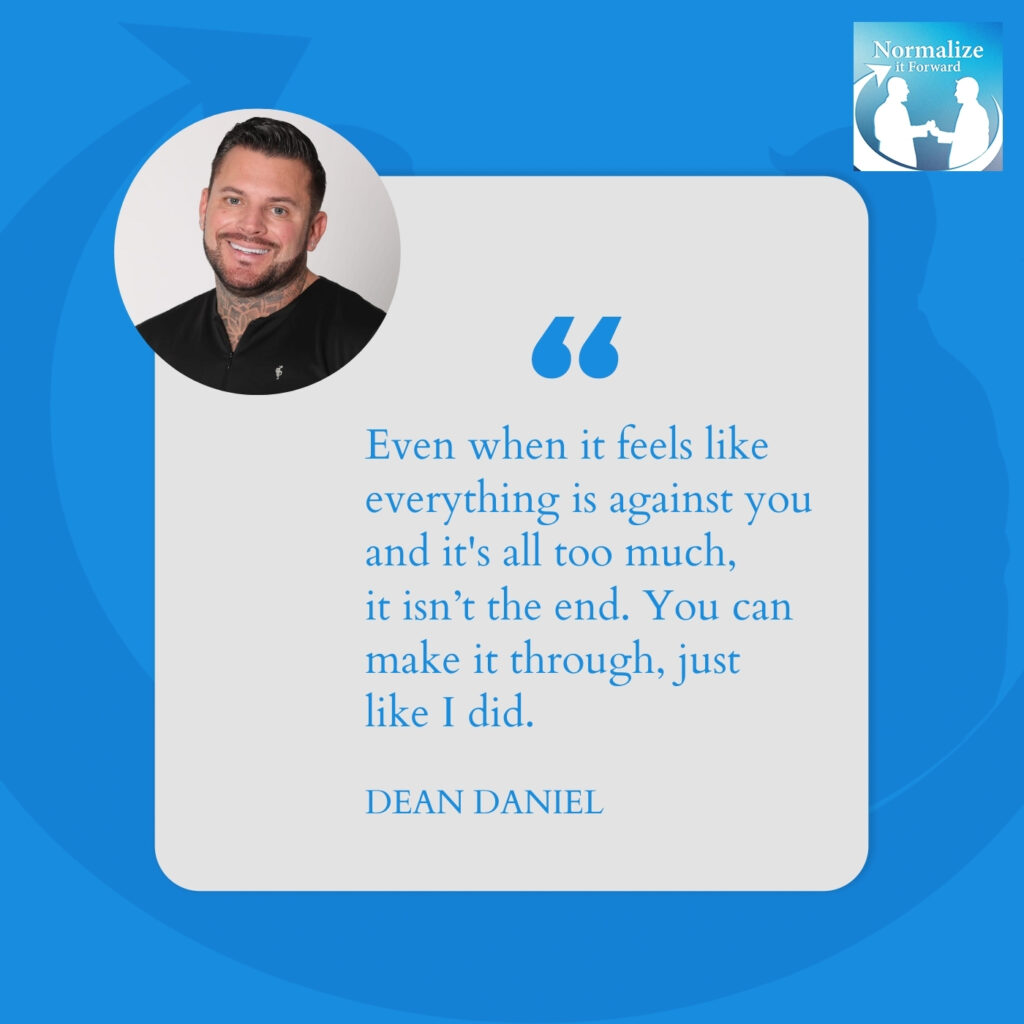
Although things may look like everything is against you and everything is too much, it shows that it isn’t. You can make it through, like me. I’m grateful because everyone around me can see the difference in me. What happens within the family as well as the whole unit changes. I look back now, and they were probably walking on eggshells. They were concerned about how if I say the wrong thing, then my mind would go into another place.


Normalize It Forward - Marc Lehman | Dean Daniel | Men's Mental Health


Mental health never switches off. This is the thing. People think, “I’m over that now. This is okay. One day, I’m okay. The next day, that’s it. It’s gone.” With mental health, you’re still going to have these ups and downs. I call them blips. I had one not long ago in regards to pain. I fell down a hotel stair reception, and it affected me. My mind started going, “Here we go again, Dean. What have you done now?” It was a blip. I have to be kind to myself and go, “This is okay. It’s a blip.”

You said this earlier and touched on it. Once you make that decision, death is permanent. There’s no going back. Once you’ve passed, you can’t go, “I wish I hadn’t done that.” You’ve got to be so careful because once you make that decision and go, there’s no going back. It’s sad. We’ve got to stop people from getting to that point. Listen to your mind. Listen to your thoughts and feelings.

A lady once spoke to me. I’ve got myself on men’s mental health groups. She came in, and it was the men’s mental health group. We were like, “It’s fine,” and got talking. After the meeting, she came back. We were chatting about something, and she said, “I didn’t realize how talking to someone can make that much of a difference.”

She was telling me about her family and whatnot. She said, “I want to get the person to come down, sit in here, and do your mental health group with you. I said, “I would love that.” She said, “I don’t think he appreciates his life at the moment either. He has gone through whatever he has gone through, but he is at the point where he’s thinking life is life.” They need to hear some other truths from other people. They need to hear other journeys and stories to realize that life could be a lot different.

In my groups, I have people who have sadly lost people as well. They’re coming to learn because they think, “I wish I did this. If I’d have done this, could so-and-so still be here?” That alone is a burden and trauma to hold for themselves. It isn’t the case. That’s why I do my groups as well, because people can open up, listen, and say, “I lost so-and-so two years ago. Would it have changed if I had maybe done this?”

I will say not from a professional side, but from an experienced side, “It doesn’t matter what you would’ve said and done at that time.” My wife could have said the right things, which she did. She did and said the right things, but I still did what I did. I always like the other side or the family to see, “Don’t hold yourself accountable for anything because it’s that individual who, unfortunately, is going through it.”

No doubt. I go back to your mom’s words. You’re still here for a reason. It has become clear to me in talking with you what that reason is. You have an impact on people with your story and your rebound. I love how you said what you said. Mental health doesn’t go away. It’s a constant push, like lifting weights. You can’t stop. It’s part of your lifestyle. I like that concept a lot.

Continuing The Conversation: Dean’s Nominations for The Next Guest

Let me ask you. I want to put you on the spot for one second. With normalize it forward, when I put it together, my initial thought was that I want to keep the conversation moving. It’s so important. I met you through our mutual friend Shakka, an amazing artist out there in the UK. For those that don’t know him, look him up. He’s fantastic. I had the opportunity to meet some amazing people along the way. One of the ways that happens is I have the people I interview nominate a friend, a coworker, a relative, someone who you think would be helpful for me to interview next. Any thoughts as to who you’d like to nominate?

Yeah. I’ve got two. One would be my wife. What we were touching on there was that you see it from a different side.

I’d love to talk to her.

Everything that I’ve said in terms of making me feel like I was a burden and they were good without me, she’ll have the other side. When we did one of my talks a few weeks back in London in an amazing event called Ideas Fest, which was such an amazing event, she came in. She’s not been to many of my talks because it’s raw and emotional. I imagine that if the tables were turned and that was her standing on that stage talking, I would be exactly the same. She sat right in the front row. She was there, and she was sobbing. It was tough for her. One of the ladies who organized the event came out. I don’t know if you guys have got a TED Talk over in the States.

We do.

One of the guys had come in and was asking a Q&A after the talk. I had brought her into the conversation. She had done a bit of a talk, and I said, “What you should do is a TED Talk.”

The more we educate and talk about mental health, the more each generation will grow, heal, and improve. Share on X

That’d be great.

I was like, “You’re getting the story from both sides.”She’ll say, “I never felt like that. I’ve never felt like this. In my head, this is how it felt.” That might be a good way.

I would love to talk with her. That’d be great.

I’m an ambassador for Tough to Talk. That’s around breaking the stigma around men’s mental health, going into workplaces, and educating men from the ground upwards to show that we can show emotions. The more education we have, in the next lifetime, it’s going to improve. There’s an amazing guy called Steve Whittle. He has had his own journeys and his own story. I’m sure he will love to speak with you. He’s such a great gentleman. We are so aligned in what we do. That’s why I went to his organization and said, “I’ll be honored to be part of it.” He’s an amazing guy. Hopefully, you can get him for an interview.

I’ll get their info from you offline. I appreciate the nominations and hope to get them both on the show. That’d be fantastic. I  want to thank you again. I know you’re busy, taking the time to talk about these things. You scrunched it into a short period of time and did a great job telling us, because I know this is something that could be talked about certainly for many hours. You’ve been through a lot. I want to let you know, at least from my perspective, that I admire your strength and your ability to continue to push forward and help others. To me, that’s one of your superpowers. Keep up the good work. It was great talking to you.

That means a lot. Thank you so much for the opportunity. It’s been a pleasure meeting you and letting my story out to all your readers.

Our pleasure. Have a wonderful day. Take care.

Thank you. You too. Take care. Bye.


Important Links


About Dean Daniel

Normalize It Forward - Marc Lehman | Dean Daniel | Men's Mental HealthI am a passionate mental health advocate and proud ambassador for the incredible organization Tough to Talk, with a dedicated mission to break the stigma surrounding mental health and suicide.

My goal is simple but powerful: to be a voice for mental health. I amplify stories of resilience, promote access to vital resources, and inspire hope through honest, open conversations. By sharing my own journey including the challenges of living with chronic pain and its impact on my mental health I aim to show others that vulnerability is strength, and that speaking up can save lives.

Through speaking engagements across the UK and internationally, podcast appearances, online platforms, and grassroots community work, I strive to empower individuals to prioritize their mental well-being, seek support without shame, and understand that recovery is a journey, not a destination.

I believe in the power of compassion, education, and community to transform how we as a society view and treat mental health.

I’m also the founder of Unbeaten a movement and brand that will feature on clothing apparel, with proceeds supporting mental health charities. Unbeaten is more than just a brand. It’s a message of strength, solidarity, and survival. A reminder that no matter the challenge, we are never truly alone.


Reading about mental health is hard. Let’s schedule a free consultation.