


Human performance is often associated with pressure. People are pushed to their limits just to achieve the best results. Although such a challenge stretches you to do whatever it takes to succeed, you may also be putting your own well-being at risk. Marc Lehman sits down with Kyle Stark, former Assistant General Manager and Director of Player Development for the Pittsburgh Pirates, who shares his insights on working with professional athletes who are constantly pressured to give their peak performance every single game. He explains what it really takes to develop people, not just performers, into high achievers who have a real sense of identity, leadership, and resilience. Discover why you do not have to sacrifice your mental health just to deliver better outputs and unlock bigger goals, but by simply being yourself and enjoying the ride.
Reading about mental health is hard. Let’s schedule a free consultation.
—
Watch the episode here
Listen to the podcast here
Leveling Up Your Performance With Kyle Stark
I am super excited to talk openly about mental health and wellness with Mr. Kyle Stark. Kyle, so nice to have you on the show. Thanks for being here.
Awesome to be here, Marc.
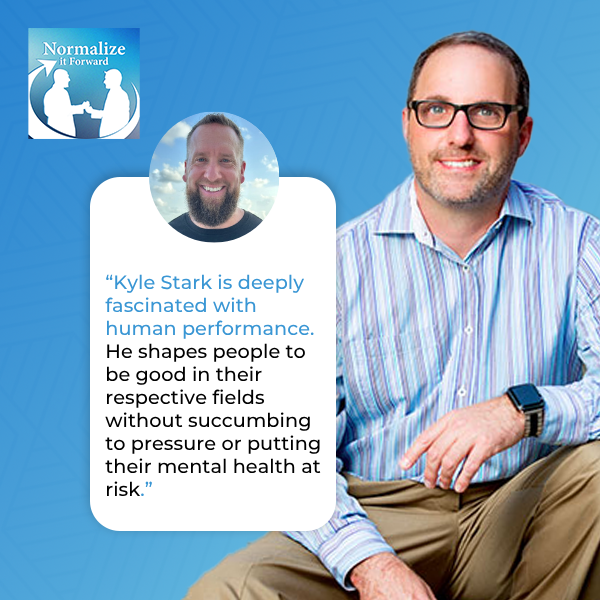
I appreciate you being here. Kyle is a former assistant general manager and director of player development for the Pittsburgh Pirates from 2009 to 2019. During his decade with the Pirates, Kyle wasn’t just developing talent, he was shaping culture. He helped build systems that supported performance, accountability, growth, and resilience at the highest levels of professional baseball.
What makes Kyle different is that he understands something most people miss. Performance doesn’t come from pressure alone, it comes from environment. Kyle has worked with athletes, executives, and organizations to build structures that both support excellence and well-being. Something that aligns perfectly with what we talk about here. Identity, pressure, and culture, and how that shapes mental health. In this episode, we dive into leadership, identity, resilience, and what it takes to develop people, not just performers. Kyle, once again, welcome to the show. Thanks for being here.
Fired up to be here. Love this topic, love the opportunity to connect with people and try to figure this out as we’re all on our journey, so thanks for having me on.
Working With Professional, High-Performing Athletes
I appreciate you making the time. I know you’re busy. I have so many questions for you. Number one, I’m a huge baseball fan, so that is always top of mind for me around player development. As we were talking previously to turning on the recording, players are players, and they’re people. In many cases, you’re dealing with players. You had a long period with the Pirates, and I know you were with Cleveland previous to that. Tell us a little bit about what it’s like to interact with professional athletes. I know it’s a big question, but break it down for us.
Yeah, I think it’s a great start question. A lot of times, when I’ll spend time with organizations and leaders in a wide range of sport, military, business, wherever, one of the stories I like to tell is it was one of the first interactions I had. I started in Cleveland coaching college and then I was working for they were the Indians at the time, now Guardians.
My dream was, “Be at the highest levels, tip of the spear.” early on in my time there, pretty quickly, I got immersed in a lot of different activities with the Major League team, got a lot of access. I was seeing up close and in person what do the best in the world look like? I’ll give you the abridged version, but one of our best players at the time, I was bouncing through the clubhouse before a game, fifteen minutes before first pitch.
He’s having a conversation with one of our coaches, pretty animated, pretty emotional. I make note of it. We go through the game, he gets a couple knocks, has a good game. After the game I ask our coach, I say, “What was up with so-and-so?” He says, “What are you talking about?” I said, “Well, before the game, he seemed pretty emotional, pretty worked up.”
The coach said, “That’s him every night. He’s panicked, he doesn’t think he’s going to get another hit, he doesn’t think he’s very good, but then he gets to a spot where it’s like, ‘I’m going to trust my training, you know what, I’m going to go compete and find out.’” It was just a reminder for me that people are people. We’re dealing with the same things, the same struggles. We’re not wired different in that space and I think from afar we’re like, “They must be different or there must be something unique about them.” No, they’ve figured out how to handle the stuff that gets thrown their way differently.
I appreciate you bringing that up. It’s such a great topic because to the casual fan we see that and we think they’re robots. We think nothing bothers them. Here it is behind the scenes. No, they’re actually wired very similar to us and just on a larger stage, I suppose.
Yeah, it was amazing how many times fast forward and having just witnessed up close and in person thousands of players in their development and to see how many are like, “What’s going on with so-and-so? Well, he had a fight with his girlfriend. What’s going on with so-and-so? They just lost a parent. What’s going on with so-and-so?”
On down, it’s all about this nature of being human. A lot of times we like to say, “We are people before performers,” we’ve got to make sure we’ve made sense of that. The downstream effect shows up in the performance, but who we are as human beings and how we experience this life definitely matters and is a universal truth across all human beings.
We are people before performers. Share on XI was doing my homework on you and was looking up some of the players you’ve worked with and the Andrew McCutchens of the world, and I came across a name that really got my attention. Gerrit Cole. Probably because I’m a huge Yankees fan. Gerrit Cole is such a fascinating individual and I just wanted to ask without going into any particulars. You used the word resilience, and I’ve seen him come back from injury after injury and he comes back like a machine. I guess I wanted just to ask about the Gerrit Coles of the world, but the resiliency piece of a professional athlete. How would you describe that?
I think a lot of times we naturally think, “Okay, the best in the world have less adversity, setbacks, challenges.” The reality is they don’t. In fact, I would argue the closer you are to tip of the spear, the further you go actually probably the more that you encounter and have to navigate and whatever else. It’s just a matter of, “Okay, well what do I what happens when I get those?”
There’s a book called Antifragile, really good look. It could be looked at individually, but it can look at organizationally. Fragile means that stress and adversity, whatever else, breaks us. The next level that the author argues is really this idea of resilience, like, “It’s not going to break me, I’m going to keep on going.” He argues that the best in the world are actually antifragile, this idea that actually, “I’m stronger for going through the adversity, the stress, the bounces, whatever else.”
I think and I’ve found that the best in the world, they nobody necessarily signs up for the adversity or for the bad bounce or whatever else. However, they respond differently and not just get through it, but really lean into it and know that “This is stretching me, growing me, this idea of constantly trying to get better all the time.” to come back to Gerrit, is a perfect example of that. He’s obsessed with being the best he can be, and so everything that gets thrown his way, he ultimately reframes as a way that’s going to bring out a better version of Gerrit Cole down the road.
How Young Adults Nurture Resiliency In Face Of Adversity
I could talk to you about the Yankees for four hours, but that’s not why we’re here. I’m wondering, you know about that resilience piece, because you’ve had the luxury of working back in college and then up to the pros. You’ve seen basically young athletes grow and go through that process.A lot of my audience is young adults, and most of them are not professional athletes, but many of them have athletic backgrounds. Many of them face different types of adversity. I guess I wanted to ask, what did you learn about young adults having worked with them and seeing them grow like that in terms of adversity?
Yeah, I think it’s awesome because I think you just look at a lot of studies on development and different stages of development and it’s so rapid and obvious. When you’ve got little kids, you leave on a business trip, you come home, it’s like a new creature there. Obviously, as you progress in life, I think the thing that’s interesting for me is the development process is no different. It’s just a lot of times, we end up with some more things that are solidified in us, ingrained in us, wounds, challenges, hurts, whatever else.
We’ve built up some extra stuff, we’re carrying a little bit extra stuff, and so how we respond to that potential learning loss or that potential adversity, there’s some stuff that just makes it a little bit harder for us to navigate. I think the ability for us to be honest about that, recognize where we’re at, but then still lean into that. “This is a development opportunity, this is an opportunity to come out stronger, this isn’t a threat to who I am, this is an opportunity for us to take another step.” the longer we go, the more baggage we have or the more ingrained some habits are in terms of how we respond to that challenge in front of us.
I love how you said that, Kyle. To clarify, when you say “we,” you’re talking human beings. When we face adversity, I love how you reframe that, and I want my young adults to hear that. Those challenges aren’t necessarily roadblocks. Those are opportunities to grow and learn. I think if we reframe them like that, we’re not as frightened of them, and we also recognize that when we come out the other side, we’re actually stronger for it.
I think as just to go one step further as you’re talking there, Marc, I think a lot of times being in the world of development, I think the best organizations, the best performers have a development mindset, meaning that they’re trying to get better all the time. I think if I’m in a performance mindset where I’m trying to perform perfectly all the time, it just can keep us guarded, we don’t take risks, whatever else.
Those who know we have to perform, it’s not that I’m shying away from that, but it’s this idea of this journey I’m on, and so how I go through this potentially leads to even a better performance down the road. We would talk about it with coaches, I talk about it with leaders, this challenge-support dynamic. How does the challenge and the support play off each other?
Challenge meaning pushing me out of my comfort zone, support meaning that I’m okay to do so and take a risk. I think as a leader, I’ve got to create that, as a coach, I’ve got to create that. My wife and I joke around about we complement each other well because she has a bias towards support and I have a bias towards challenge. I see adversity and I’m like, “Good, something good’s going to come out of it.” My wife always reminds me, “No question, however we also have to make sure that individual feels supported as they go through it and not just be like, ‘Great, something hard is coming.'”
Why Your Results Actually Matter
Yin and yang and that sounds like it works well together. It’s probably a good segue to ask you, I guess I’m wondering when you think about the mistakes that some of the organizations make focusing too much on results. Tell me a little bit about that.
I’m glad you asked. This is a topic I’m passionate about. I think how we talk about all these things can give some mixed messages, especially to young people. I think we’ll be like, “Well, it’s about the process, it’s not about results.” No, it is about results. The reality is in professional sports you have to perform, in your job you have to perform, in all these things. It’s not that results don’t matter, they matter a ton. I’ve found that the ones who understand it the best though know, “I can’t control the results, I can control the inputs, I can control the process.”
“I can control the whatever I’ve described as these non-negotiable things I have to do consistently well, and if I do them consistently well enough, the results will show up down the road.” I think when we tell people results don’t matter, it’s a lie because deep down that individual, that performer, that young person knows results do matter.
They pay people for reason, they give me grades for reason, my boss does performance reviews for a reason. When we try to remove that pressure as opposed to redefine how we solve for that pressure instead of maybe giving some other tools to help us respond to that pressure I think’s the more important thing, if that makes sense.
I think it makes a lot of sense and it’s something I say a lot to young adults. You can control your effort levels, you can’t control the outcome all the time. It’s funny, you got me thinking about I don’t know, you name it, baseball player who’s going through a slump, 0 for 20, 0 for 25, and you hear the commentator on the game say, “They’re going through a slump.”
You know they’re working hard. The outcome is not there. Literally, that’s just the game of baseball, literally like a month later, they could be 20 for 25. It’s just the up-and-downness. I could see the easy translation for, again, my audience is recognizing most of us aren’t Major League baseball players.Most of us our outcomes are either grades, as you said, we’re getting annual reviews at our job, whatever the outcome is, we can control our effort level and the outcomes are important. The outcomes do matter.
I think the reality is the reason why we put so much pressure on ourselves is because the results matter. We care about these things. If I say they don’t matter, it’s a lie and then there’s an internal struggle like, “What are we talking about?” As opposed to, “No, those matter.” I think asking ourselves “Why do they matter?” I think’s a separate conversation because I think sometimes, we can get off course with why they matter to us. To say, “Okay, they matter, so what then is our play?”
We put so much pressure on ourselves because the results matter. Share on X“What are we going to commit to?” Attitude and effort’s an easy one. “What are we going to commit to to increase the chances of that happening and recognize I don’t have to have all the circumstances perfect for me to perform well.” As I face adversity, as I face different challenges, those things are not threats to performance, they’re not derailers to performance, they’re ultimately things that are probably going to make us a better version of ourselves as we go through them and sometimes can help us to be have even better performances.
I remember going to the Hall of Fame with my son many years ago and we’re doing what I think a lot of people do, looking at the plaques, looking at the stats and came across the greatest baseball average of all time. Was it Hank Aaron? The best batting average? He looks at me, he’s like eight, and he says to me, he goes, “He hit he only hit 400.” and I said, “Yeah, that was the greatest of all time.” He goes, “That means that he failed 6 out of 10 times.” I go, “You got it.”
That’s part of what I love about baseball. You go one step further, Nolan Ryan, greatest strikeout pitcher of all time, also had the most walks. Pete Rose, all-time hits leader, also the most outs. The reality is as we’re going through this, if you’re really continuing to push the limits of your performance, that means there’s going to be a lot of failures along the way. How do I respond to that? How’s it making me better? How am I working through those things are all the bigger part of the story as opposed to win or loss, success or failure.
Staying Curious About Human Behavior
When you were overseeing high-talented players, I guess I wanted to ask what were some of the early warning signs when you knew they were struggling emotionally? What were some of the things you might have noticed?
I think probably the biggest lesson I’ve learned in that space is that while people are people, we’re all unique people. All unique individuals. I think as we would talk with our players, I think there’s some common buckets that players would fall into. I think this applies to leaders, humans in general. For some it may show up a little bit more in emotional control. It might show up in some emotional regulation. For some it may show up in some attention control in terms of where they’re focus and what are they focusing on. Are all of a sudden like we’re focusing on things that don’t matter. For some it shows up in their self-talk and how they’re talking about things and more their thoughts.
I think the big premise that I would share with both individuals but for yourselves but also leaders and coaches, parents, we had a psych who, when he worked with our scouts and our coaches, used to always say, “Be curious about human behavior.” When I’m curious about human behavior, I start to notice things. I start to notice, “This individual’s acting a little different. I’m seeing something different.” I think a lot of times we operate in this world of focusing on results instead of focusing on the person in this journey. When we’re curious about human behavior, I start to go I start to notice more things and I start to then probably lead to some more questions, probably some more noticing to be able to figure out, “What’s going on here?” I know something is off with this individual.
Yeah, the original Ted Lasso theory. I like that. It’s a brilliant thought and you’re 100% right. Everybody is unique, everybody has a unique background and everyone’s been taught different things from their families of origin that they grew up in. Just because they’re playing a sport together doesn’t mean that they’re not coming from all different walks of life. That must have been it must have been fascinating to be able to individualize and recognize that. I think baseball in particular has become a melting pot of different cultures over the years. I can imagine some of the coaches and staff probably needing to do their own homework to recognize what is culturally appropriate and what is not.
I think we always we would joke around about like, “Okay, we’re seeing something in a guy’s swing or his delivery.” The reality is that’s not what the issue’s there. There’s something causing that, and can we peel some layers back to figure out what’s going on and be able to identify that? We always said, “Listen to players. They’ll tell you what’s going on.”
I think about this with people, like if I’m listening to my wife, she’ll tell me what’s bothering her, what’s going on. I think a lot of times, we just want to go to the diagnosis and see the fix, it’s like “Just let’s keep listening, they’ll let us know what’s going on.” I think a lot of times, more often than not it would come down to this identity space of, “I’m equating my performance with who I am and I’ve not been able to make sense of that.”
It just occurred to me as you said that. I think in some cases, your role in player development was parental to some of these players. I find myself saying that all the time to parents, “You’ve got to listen more. You’ve got to really hear what they’re saying.” if they’re not, back off and eventually they’ll come to you.
The Atlanta Braves historically back in the day they always talked about having gray-haired coaches on their minor league coaching staffs. Dayton Moore, former GM of the Kansas City Royals, used to always talk about, “The coaches we want or the system, the organization we want is one that you would feel comfortable putting your own son in.”
We would talk about something similar with the Pirates in terms of, at the end of the day, we talked about turning boys into men, we’re growing them up to be to be men, both because we felt like that was a competitive advantage on the field, but then ultimately, we felt like it was a huge impact off the field both short-term and long-term. Our role in that is helping them walk through all those different challenges, make sense of who they are, start to stand on their own two feet, start to be able to handle all the challenges and the eyeballs and the adversity and everything else on them and be able to to stand strong as they navigate all of it.
Those are the gains that people get from being involved in a a good organization, I suppose.
I think we always recognized at the end of the day, we did believe that developing championship men and a lot of the best organizations in the world, the All Blacks talk about better men become better rugby players. Ours was the idea better men are better baseball players. We felt like it’s a competitive advantage. We also recognized that we were developing the next generation of husbands, fathers, coaches, whatever else.
Our commitment was to these guys was it we believed it was going to show up on the field, but we also felt like there were some long-term bigger implications in this. Which is hard because our entire job revolves around winning games, but the ability to say, “Okay, put that in context to free us up to make sure we’re focusing on the things that matter most,” knowing full well we believe that that shows up on field as well.
How Professional Sports Approaches Mental Health Over The Years
You’ve had such a long career in this area, I guess I’m curious from when you first started to to recently, how has professional sport treated things like mental health differently over the years?
It’s fascinating. When I first started with Cleveland, I think Cleveland was maybe 3 or 4 organizations that had full-time psychs dedicated in this space. Baseball always had EAP for some support off the field, there were like 4 or 5 organizations that had performance psychs dedicated to helping you on-field performance.
When I started in Pittsburgh, the numbers weren’t that much different. Over time, we saw an explosion of performance psychs flooding the market in professional sports. I think there’s some good to that, I think there’s some unintended consequences to that. Sport has swings pendulums. They do something, they swing the pendulum they’re like, “Alright, that didn’t work, we’ve got to swing the pendulum back.” You see a wrestling match going on with sports now with, “Okay, we’ve flooded the market with performance psychs professionals, that’s hitting some things, not hitting some others, we’re still wrestling with the same problems and challenges.”
It’s easy for us to say mental health is completely different, we’ve got to create a separate bucket for that and we’ve got to flood it with professionals in that space. I think organizations that understand that we’re dealing with human beings, that all these dimensions we can’t split up into components, it’s a whole person. How the physical impacts the mental which impacts the emotional which the spiritual impacts all these.
Understanding those things and then understanding how do we have not a million resources to throw at a player, but do we have a consistent approach? We have resources, we have expertise. More than anything we’re helping the coach who’s with the player day to day. When we realize, “ this is beyond our beyond our skis, we need to bring somebody else in,” I think the coherent, unified, holistic approach the organizations that are doing that, I’ve found, are doing it the best.
I will say that sport continues to recognize the need, throw more resources at it, and I don’t know that generally we’re doing it any better. I think part of it’s in all honesty because the expectations, the pressures that our young people are feeling have never been greater, and I think parents, coaches, everybody else has to look in the mirror and say, “We’ve got to own some of this,” and/or own how are they processing and navigating dealing with it, as opposed to trying to remove it.
I think you make a great point. Just to parallel, suicide unfortunately is the second leading cause of death in young people these days. As opposed to ten years ago it was number twelve, I think, so it’s moved in all the wrong directions. We know certainly in the last couple years there’s been some real public professional athletes that have taken their own life. When those things happen, I think the positives that come out of that is a spotlight on mental health.
You have athletes coming out and talking about their own mental health and trying to normalize it’s really what we’re doing here is trying to normalize the conversation such that we all put our pants on the same way and it’s we breathe the same air and one of us just happens to throw 95 and one of us doesn’t.We’re all susceptible. I think that when it comes to depression, anxiety and the pressures of the world, I’m sure those are things you’ve seen with many athletes you’ve worked with over the years.
I think there’s an element of, to some extent, we probably didn’t know any better. We’ve labeled some things, we’ve identified some things in some cases. Again, I think where we talk about the pendulum swinging, whatever else, I think as you’re touching on, when I got hired in Pittsburgh, we beefed up what we were doing on the mental side of the game. The guy we hired, Bernie Holliday, was excellent.
There are a lot of tools and ways to navigate human life and still pursue excellence on the journey. Share on XBernie used to always say, “Championship thinking’s 24/7. This isn’t about a performance thing, this is how are we thinking all the time.” When we were first doing this because baseball was very much a, “You’re weak if you do these,” so whenever I went into town in a clubhouse, I’d say, “How many of you guys have had a doubt at some point in the last 24 hours?” Everybody raises their hand.
I said, “How many guys have had have not composed their emotions, have not had good emotional regulation at some point in the next last 24 hours?” Everybody raises their hand. “How many guys had a hard time focusing on what mattered most?” Everybody raises their hand. I said, “Yeah, this is called being human. We all are navigating this.” We’re providing some resources to help us do it even better, and this will show up with in our relationship with our spouse, it’ll show up behind the wheel as I’m driving. Great place to practice our mental health is driving.
It’ll show up between the white lines on the baseball field. Trying to, again, recognize this is called being human is what this is. It’s not you’re jacked up, there’s something wrong with you, whatever else. It’s called being human and there’s a lot of tools and ways for us to navigate this and still pursue excellence on the journey.
Survive Everyday Challenges Through Coping Skills
One of the buzz phrases that is used a lot in my field is coping skills. I guess I’m wondering when you think about the athletes over the years you’ve worked with, what are some of the ways in which they cope? What do they do to reduce stress?
I’ll never forget one of the first lessons I learned working with a guy in professional baseball. He said that the best in the world, Big Leaguers, are ultimately just the best copers. They’ve figured out a way to navigate a hurdle they have. That could be physical, that could be emotional, that could be mental, it could be whatever else. We’re all flawed people, we’ve all got a limitation, and it’s just the best in the world figure out a way around that better than other people. As I think about some maybe some buckets of coping skills, I think those who have an outlet or something beyond the game is a huge one.
I just see this more and more as more and more pressures happen on kids. It’s like their whole day is scripted. Young people, it’s like sunup to sundown. When I’m not doing something, it’s really an escape as opposed to a productive healthy coping something else to go engage and do. It’s just really trying to, “I just want to escape this world I’m in,” as opposed to whatever.
I think that’s one. We used to always tell our guys, “Every you got to believe in something, you better understand what you believe in to help provide some context and some understanding of some of life’s bigger questions.” I think that’s a part of it. One of the things I joke with a lot of people, I’m like, “If you have purpose and connection, it takes care of 99% of our issues. Have I revisited why I do what I do and I’m consistently coming back to that sense of something bigger than just the performance? Am I connected?” Investing in relationships.
That’s not about quantity, although for some it is, but it’s like, “Do I have some quality relationships where I care about them?” We did a we had a community service program that was mandatory, and people always used to bust my chops, they’re like, “Well, if it’s mandatory, are they really serving?” I’m like, “No, they we need to give them a specific outlet for this to happen.” Hopefully over time, they’ll find a cause that means something to them that will be more than just the mandatory minimum hours. Again, getting our focus off ourself, going and serving someone else, being huge coping mechanism for our guys.
For some guys it’s physical, it’s a workout. For some guys, it’s not as much with baseball, but it’s to get outside because I think you’re connecting with nature, you’re connecting with something bigger in yourself. The breathwork is a simple one but a powerful one. Physiological benefits, mental benefits. Those are a handful of some bigger buckets we used that I’ve seen guys incorporate, both in baseball but also outside of baseball.
You had me thinking of some of my young adults that I work with that are on their way to playing Division One sports. As you mentioned, we’ve gone from when I was young to like playing baseball 1 season to like it’s all 4 seasons now.It takes over because they finish school and they go to their trainer and then they go to their nutritionist and then they go to practice and they go to. What I’m hearing you say and I think it’s really important my young adults hear this is creating those coping skills is really all about recognizing how important they are.
You can have all the talent in the world. If you don’t have those coping skills, something is going to take over. We’ve seen it over and over again with professional athletes who are super talented. I appreciate your answer and I really hope that my young adults take you on and pick apart that answer and maybe pick one or two of those things to say, “I have this interest, I should really develop this interest,” really creating a purpose for themselves. Really spot on.
There’s a guy I do some work with that talks about having a third thing. You’ve got your professional, you’ve got your personal, you’ve got your work, you’ve got your family. What’s your third thing? What’s that third thing that gives you life that is probably more of a sense of play or fun, without another element of our life having tons of pressure with it?
That allows us to not escape this pursuit of being human, but to maybe experience human in another way that doesn’t deal with, “We’re going to add more pressure, more stress, more in another aspect of your life.” I think it just gives us some perspective of, “I am more than the thing I do. I am more than the grades I get, the performance I have. I am more than that.”
It’s a great point and I would encourage the young adults reading, I’ve seen young adults that are ballplayers, for example, get cut. They go from like 24/7 to like, “What do I do now? I don’t have a purpose. I don’t know what to do.” I’ve treated those kids and those kids are really lost.I think having that balance, you work with the top athletes in the world and I think having that balance created allows those individuals to be able to get through probably some really tough emotional struggles that they might endure. Again, humans are humans. We all have our challenges and I think the topic of coping skills is really important.
From Pittsburgh Pirates To Mental Health Awareness
Let me shift to one other thing and just ask because as a family therapist, I’d be upset if I didn’t ask you this. I was trained in systems and I’m fascinated by the way organizations work and teams work and obviously there’s a parallel there to family. I wanted to ask how’d you get into this work? What was it that brought you to this work?
Yeah, so I, like most, dreamed of being a big leaguer and unfortunately, my career ended way sooner than I wanted it to. Just was consumed with baseball and, probably more than anything, I was consumed with the game, I was consumed with being the best in the world, wanting to be at the tip of the spear and so it was “Okay, well Major League Baseball is that.” I did my education, coached in college but knew I wanted to work in professional baseball. I wanted to run an organization and be able to build an organization that could consistently perform at a high level. Now along that way you have different roles that potentially changes some perspective on that.
Ultimately, I’m fascinated with human performance. How good can someone be in whatever field, in whatever endeavor, as a husband, as a father whatever. The more I did this, the more I became consumed with, “How good can we be?” not just the individual pursuit, but the collective pursuit. Teams, organizations, and creating the conditions and the environment that increase the chances of those things happening.
Our brain comes with us everywhere we go. It’s one of those things that I’ve seen it organizationally, I’ve seen it athletically, I’ve definitely seen it individually with people. Your work touches it all and I appreciate the commentary on this because to the casual fan, number one, we don’t see any of this. I think too to the young adult reading, it’s really helpful for them to understand trajectory-wise. These players were all young adults themselves at one point and many of them still are. Their struggles are very similar, they’re just on a different stage. I think if we can make our way through life recognizing “We’ve all got our challenges” and being a good friend to someone when they are challenged is important, and you’ll get that in return when it’s your turn to have a challenge.
As you’re talking Mark, something to throw at, one of the things I noticed over time, the best I’ve ever been around, and when I say the best, I’m not talking about like the best performers necessarily, but the ones who probably got the most out of their potential, that’s what I would consider the best I’ve ever been around. They fall in love with the journey.
The best performers are those who got the most out of their potential and fell in love with their journey. Share on XMy wife and I joke around because I’m a destination guy, she’s always the journey, “You’re missing things by just being obsessed with the destination.” We’ve gotten to a spot where we respect that it’s both, the journey and the destination. I think what I’ve noticed is that they are obsessed with this journey, this pursuit, and get to a spot where, “I’m okay knowing I’m never going to get there.”
I’m okay with that. I’m going to learn things about myself, I’m going to be a better version of myself as I’m going through all this. I share all that in terms of the analogy I’ll use a lot of times with, especially with athletes, is I think we always are consumed with reaching the mountain top. We want to climb the mountain, be at the mountain top.
That was my pursuit as I went into Major League Baseball. You get there and you realize, “Now what?” What ends up happening is if my whole thing’s about getting to the mountain top, number one, I probably don’t experience things on the journey the way I need to to pay off down the road. The other thing is once I get there, then I become hyper-protective and defensive of trying to stay there. “I’m afraid to come off, everything’s a threat.”
The reality is, once we climb a mountain, we realize there’s another mountain out there that’s even better and bigger that I didn’t even know of. Look how far I’ve come, I can appreciate how much progress I’ve made, so then we can come off and go climb another mountain. I think that’s the best I’ve been around, recognize they are mountain climbers, we are climbing mountains, and that journey’s never going to stop, as opposed to, “I need to get to the mountain top.”
I think that’s where sometimes even just that reframe helps free us up in terms of the pressure of having to be there or stay there or whatever else. The reality is if I get there and I don’t want to come off, I actually can sabotage my next journey because I get pushed off or whatever else, but instead of willingly engaging and going to the next one, it frees us up in a different way.
I love how you said that. I think we all have our journeys in life, we all have our mountains to climb and it always bothers me when I see someone climbing the mountain and not appreciating that opportunity to do so. Some of us reach the top and some of us don’t. I think life is just filled with lots of challenges and lots of rewards. I think anyone who’s been a parent realizes that, that you get your good moments and your tough moments.
You said it best and I think for young adults to hear that, it’s important because I think a lot of times, they’re just getting barked at by coaches. “Win games, stats this. Grades this, grades that.” It’s like you’re an athlete, you’re a collegiate athlete, enjoy the, enjoy the journey.
I think on top of that is sometimes like you said, not all of us reach the mountain. Some of us realize, “I’m climbing the wrong mountain, I need to go climb a different mountain.” I think that’s part of this whole journey as well. If I’m on the right mountain, I believe everybody can reach that mountain top to then say “There’s another one to go climb.” I think it’s hard. I think it’s easier said than done looking back than when you’re a young person in this pursuit. I do think that we’ll talk all the time about the best in the world are present more often than others. They really are maximizing the moment in front of them, which I would argue means they are enjoying and experiencing and appreciating the moments differently.
Who Kyle Roots For Right Now
Last question, nice and easy one for you. Who does Kyle root for these days?
Kyle roots for people and I would say an appreciation for organizations that are doing good. When you work in the business, probably the fan side of you gets squelched and it gets removed, and so that’s probably been gone for a long time. What I’m a fan of are individuals on this journey, and so there’s some friends, there’s some appreciation from afar. You see some organizations doing some things really well and there’s an appreciation for it. That’s not just sport, that’s all facets of life. I think who am I rooting for? I’m rooting for individuals that commit to this journey and i’m, and I’m rooting for groups of people who want to team together to do it special is who I find myself rooting for.
The best people in the world are present more often than others. They maximize the moment in front of them and appreciate moments differently. Share on XVery political answer, but I like the answer. It’s a good answer, Kyle.
Honest.
I appreciate it. I do as well. I think it’s really to me it’s thrilling to watch an organization pull it all together and work together and do their thing and, as you mentioned get to where they want to get to. I appreciate your thoughts on this.
We got some guys that were absolute knuckleheads when they were 18 to 22 who now have 3 kids and are at the tip of the spear in Major League Baseball. We also have a ton of guys that are impacting organizations in the corporate space, military space, so it’s really fun to see these guys as men going out and impacting their families, the organizations they’re in, and it’s really cool to see where they’re at now.
Discussion Wrap-up And Closing Words
They’re succeeding, they’re smiling they’re living life. Nothing wrong with that. To know that you might have had a small hand in that somewhere, Kyle, that’s awesome. Well done. I appreciate you spending the time with us. I know you’re busy and you offer a perspective that I’m interested personally in, player development and just the system piece of where you come from and what you offer to organizations I think is really amazing. I’m really hoping the spotlight of mental health continues to be out there, not only in businesses, in the military, and also in athletic organizations because as we started our conversation to come full circle, “People are people.” It is what it is.
I appreciate it, thanks for what you’re doing, Marc. If I can ever help you or any of your readers, don’t hesitate to reach out.
Thank you so much, Kyle.
Thank you.
Take care.
Important Links
About Kyle Stark
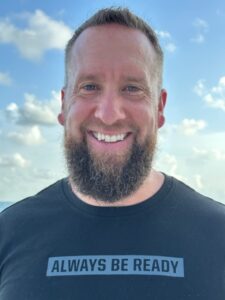 During his decade with the Pirates, Kyle wasn’t just developing talent — he was shaping culture. He helped build systems that supported performance, accountability, growth, and resilience at the highest levels of professional baseball.
What makes Kyle different is that he understands something most people miss:
Performance doesn’t come from pressure alone.
It comes from environment.
Kyle has worked with athletes, executives, and organizations to build structures that support both excellence and well-being — something that aligns perfectly with what we talk about here: how identity, pressure, and culture shape mental health.
Today we’re diving into leadership, identity, resilience, and what it really takes to develop people — not just performers.
Reading about mental health is hard. Let’s schedule a free consultation.