
Body image and eating disorders aren’t just clinical issues; they’re lived realities shaped by culture, technology, and family life. Drawing on nearly 25 years in private practice, licensed clinical psychologist Dr. Emily Gordon explores how perfectionism, social media, and comparison culture amplify these struggles — and how parents can support teens and young adults without adding to the noise. She mixes practical strategies with warmth, showing how boundaries, honest dialogue, and tuning in to one’s inner experience can become powerful tools for resilience and healing.
Reading about mental health is hard. Let’s schedule a free consultation.
—
Watch the episode here
Listen to the podcast here
How Body Image And Eating Disorders Affect Families And Youth With Dr. Emily Gordon
I am super excited to have Emily Gordon join us. Emily, how are you?
I’m good. Thanks.
Let me read a quick intro, and then we’ll dive right in. Emily is a licensed clinical psychologist with almost 25 years of experience. Dr. Gordon maintains a private practice in Natick, MA, where she provides therapy, supervision, consultation, and psychoeducation. She specializes in treating eating disorders and body image disturbances in adolescents, young adults, and women of all ages.
Emily often works with people navigating life transitions and parents looking to better understand and support their developing teen, and better care for themselves along the way. She enjoys speaking and writing about topics relating to eating disorders and body image, adolescent development, young adulthood, and parenting. In addition to our work with teens and families, Emily is also a parent to three teenagers. Emily, welcome. How are you?
I am good. Thanks. I’m glad to be here.
From Practice To Parenthood: Dr. Gordon’s Journey And Expertise
Welcome to the show. We’re excited to have you. First, I’m going to flip-flop and start with the last thing I said. Three teens. Tell me. How old are we talking?
Two are young adults. I don’t know if I can say teenagers anymore. Teenagers are so much easier. I have 2 in college and 1 in high school.
Like me, you’re around this personally and professionally. This age bracket, that is. You and I treat similar-aged individuals. We treat middle school, high school, college-aged, and beyond. Why don’t we start off with you telling us a little bit about your practice?
I have an office here in Natick. I have a lot of experience treating adolescents with eating disorders. I work with people in a dynamic, relational, IFS-informed way. I integrate CBT and DBT. I try to take a perspective of trying to understand what is going on for someone and how they tune in to the inside and tune out all of the outside. I’ve increasingly been working on supporting parents and people navigating mid to older life challenges. I’ve enjoyed doing that as well. I’m working on a range of issues.
It sounds like you cover a lot of ground in your office and see a lot of different people for a lot of different things. Eating disorders are such a fascinating specialty. I have that as a subspecialty of mine as well. My background is in family therapy. I was drawn to it because there’s such a family component to every individual who suffers from an eating disorder. I’m wondering if we could start with the basics. Can you tell my audience a little bit about what an eating disorder is?
With eating disorders, part of what’s so interesting about them is that they’re so complex. They impact so many different areas of life and functioning. An eating disorder is a focus on food, body, and preoccupation. What truly categorizes an eating disorder is a fear of fatness or gaining weight and an inability to maintain one’s health, however we are defining health.
There is a lot of talk about what is disordered eating versus what is an eating disorder. There are a lot of people on diets. There is all sorts of noise out there about what’s the right thing to do, what’s the healthy thing to do, what we should be doing, what we should look like, and what we shouldn’t look like. There is certainly a preoccupation in our culture. An eating disorder marks itself as this intense preoccupation in a way that gets in the way of health and healthy functioning.
That’s a good definition. That’s a challenging question I asked. That’s a good way of saying it. Having worked in hospital settings in the past, where I’ve eaten with patients who are severely impacted by eating disorders, meals take on a whole new level of intensity. I have seen patients being tube-fed and so forth. I don’t think people understand how impactful an eating disorder can be.
That’s very well said and important. What we also have to know and recognize is that eating disorders are incredibly serious. They have one of the highest mortality rates of all mental illnesses. That’s because it affects your mood and also your health, like your physical body. It is incredibly serious. We can’t talk about eating disorders without talking about this cultural piece. When you sit with somebody, whether you are treating them, or a friend, or a family member, it’s a brain-based illness. There’s something that happens in the brain that feels irrational sometimes. That’s what you’re speaking to.
Social Media’s Shadow: Impact On Body Image And Mental Well-being
I’m glad you brought that up. Maybe that’s a nice segue to talk about our culture and how that impacts things. I have a funny feeling that you and I can talk about this for hours. I promised I’d only take a little bit of your time, though. When it comes to this, social media has had a major impact on what I’ll call the competition amongst people.
I’m on Instagram and TikTok regularly for my business, and even LinkedIn to some degree. What I see in the social media world from young adults and what they post is disturbing and sad. It’s been a little bit since you and I were young adults. I often wonder what that would be like for us because we didn’t grow up with social media. Young adults have this interesting perspective. They don’t know anything but social media. I’m curious. I’ll ask you a huge question.
That’s a huge question, and I’ll try to answer that or speak to some of the themes and things that come up.
It’s perfectly fine. It’s a big one. How do you feel social media impacts body image?
There’s the larger issue first of social media and our culture, even before we get to eating disorders. I know your audience here is the college kids and young adult population. We have this culture of achievement, perfection, and having to be successful. There is all this pressure on all of us. Adults and parents are stressed. College kids and young adults are stressed. High schoolers are incredibly stressed.
One thing I want to say when I go on these shows is that we’re talking generalities. I understand that for each individual identity or population, it’s hard to come up with these generalizations, but we’re going to do that anyway for the purposes of this episode. There is this larger culture of achievement and perfection, and then we get into social media, appearance, looks, body image, and what we call diet culture. You said competition. I think what also happens is comparisons. Biologically, we compare ourselves to other people. There’s competitiveness.
When we talk about social media, what you and I may have first encountered with social media, however many years ago that was, the social media of today is very evolved and different. What’s driving social media now are the algorithms. That has added a whole new layer of danger, quite honestly, when it comes to all sorts of things.
What we know is that social media platforms get paid. They make their money by keeping your eyes on their platform. They’re competing with other platforms. How do they do that? They do that by making you feel bad about yourself. That’s the marketing industry. That’s the diet industry. That’s the cosmetic industry. The forces that we’re up against are these financially deep ways that these companies have of making us feel bad about ourselves, and then pushing us to more and more extreme content.
I know we’re here to talk about body image and eating disorders, but that has other risks in terms of truth, facts, and politics. This feeding us of more and more extreme information keeps us on the platforms. It keeps us feeling bad about ourselves. It keeps us feeling like we’re not okay the way we are and that we need to change. The magic bullet is, “If I look better, or if I eat this and not that, everything will be great. I’ll feel good. I’ll be happy. I’ll be able to compete with that other person.”
You probably have heard this. In the eating disorder field, we say that it’s about the food, but it’s not really about the food. It’s about something deeper in the way that people are using the behaviors around food and body to help them feel better. That is a valid and essential piece of how we feel good about who we are in this world, where it’s always in front of us. There’s always something more. There’s always something better. There’s always something coming at us. There are all these messages. We’re afraid to put it down. Teenagers are afraid to put it down because they want to be connected to their friends. They’re afraid that they’ll miss out on something, or they’re not there. It’s challenging.
Eating disorders are not really about the food. It's about something deeper, in the way that people are using behaviors around food and body to help them feel better. Share on XThe “Fast, Cheap, And Easy” Trap: Social Media’s Influence On Youth
It is, on so many levels. I feel like we could talk about this for months. I have a theory that I call fast, cheap, and easy. When I look at young adults, I feel like they’ve been groomed for fast, cheap, and easy. If things aren’t brought to you fast enough by Amazon, they create Amazon Prime so that everything’s fast. The kids that I work with love to eat fast food because it’s fast, cheap, and easy. They don’t care if it’s unhealthy. They love to eat that.
There are certain things in this world that aren’t fast, cheap, or easy. I try to point out to kids that most things in life that are fruitful take time, like school, for example. School is not fast by any means for kids. One of the loops that social media ends up teaching kids, whether it’s on purpose or not, is, “You can do this thing. Take this pill. Drink this. Do this. Do that. You’ll feel so much better.” Kids will order those things. Kids will buy those things. They’ll take those things and then, after the fact, find out, “That’s not the case. I ordered an item from a business, and they’re trying to make product.” In this world, if we want to feel better about ourselves, it takes time.
It takes time, depth, and tolerance of being able to tolerate discomfort, feelings, and disappointment. You’re right. There’s this fast, quick, and easy mentality. We can’t fault teenagers for that because that is the world in which they have grown up.
Agreed.
I don’t know why this moment stands out to me, but I had a baby in my arms, and I was pushing the button on the Keurig coffee machine. I had this moment of like, “We’re screwed if my kid thinks that all you have to do is push a button and the coffee will come out.” Not to mention the whole farming industry and what it takes to get a coffee bean, but all you do is push a button, and you get a cup of coffee. That’s the world in which they’ve grown up, and it looks like everybody else is doing it. It looks like everybody else is happy and successful.
I had a fascinating conversation with someone who was talking about their feed. It made me think about not only the fast, quick, and easy, but also what is real and what is not real. There is this way in which when you spend so much time on your device or on whatever platform, it feels real, and yet it’s not real. It’s also not always true, and yet it’s very easy to think that it is. That’s another obstacle that we are up against.
When you spend so much time on your device or platform, it feels real, yet it's not always true. It's very easy to think that it is. Share on XI’ve had lots of conversations with my teenagers. It depends on how long they’ve been intertwined with technology that they can understand some of these concepts, like when you talk about privacy, companies having your data, or where a screen belongs and where it does not belong. To me, the screen does not belong in the bathroom. Some people look at me like I have five heads when I say that. It depends on how old the kids are, what their experiences have been, how old they were during the pandemic, and what the family attitudes are around technology.
I agree. In many cases, I feel like when I talk to teens, these are what pacifiers are like to babies. They’re self-soothers. When you take a pacifier from a baby, it usually screams bloody murder. That typically will happen when a parent takes a phone from a kid. To me, that’s a little concerning because they’ve convinced themselves.
One of my ideas or something that I built my practice on and I fundamentally believe is that teenagers are pretty awesome. That’s why I love doing what I’m doing, and I love talking about what I’m talking about. It’s fascinating to me when you give a teenager an opportunity. I use the word teenager, but I mean teens slash young adults. To review, we know that teens are still developing. Their brains are still developing.
One of my supervisors once framed this for me in such a beautiful way. Even though somebody is 13 years old or 15 years old, they’re not 13 or 15 in every single way. Somebody who is 18 has some skills of a 9-year-old, some skills of a 12-year-old, and some skills of a 25-year-old. We’re talking about this wide range of skills and abilities.
We went away one time, and I kept saying, “We’re going to do a family day with no phones.” They finally looked at me and were like, “Do it already. Stop talking about it. We’re fine. Do it,” but I felt like I needed to prepare them. When you can ask them questions about what their experience is, what they notice, and what they think, it’s pretty awesome what they can come back at you with. I try to encourage those kinds of conversations.
Getting back to body image, I’m like, “What do you feel like when you open your feed? What’s in there? Who are you following? What are your friends posting?” We have a lot of rules in our house around what is okay and what is not okay. I’ll get a question, like, “Is it okay if I do that?” I’ll say, “What do you think? What do your friends think?” They’re like, “Is it okay if I ask my friends and I do this?” We’re having lots of conversations that are asking them to think and reflect.
Redefining Self-Care: Inner Wisdom In A Fast-Paced World
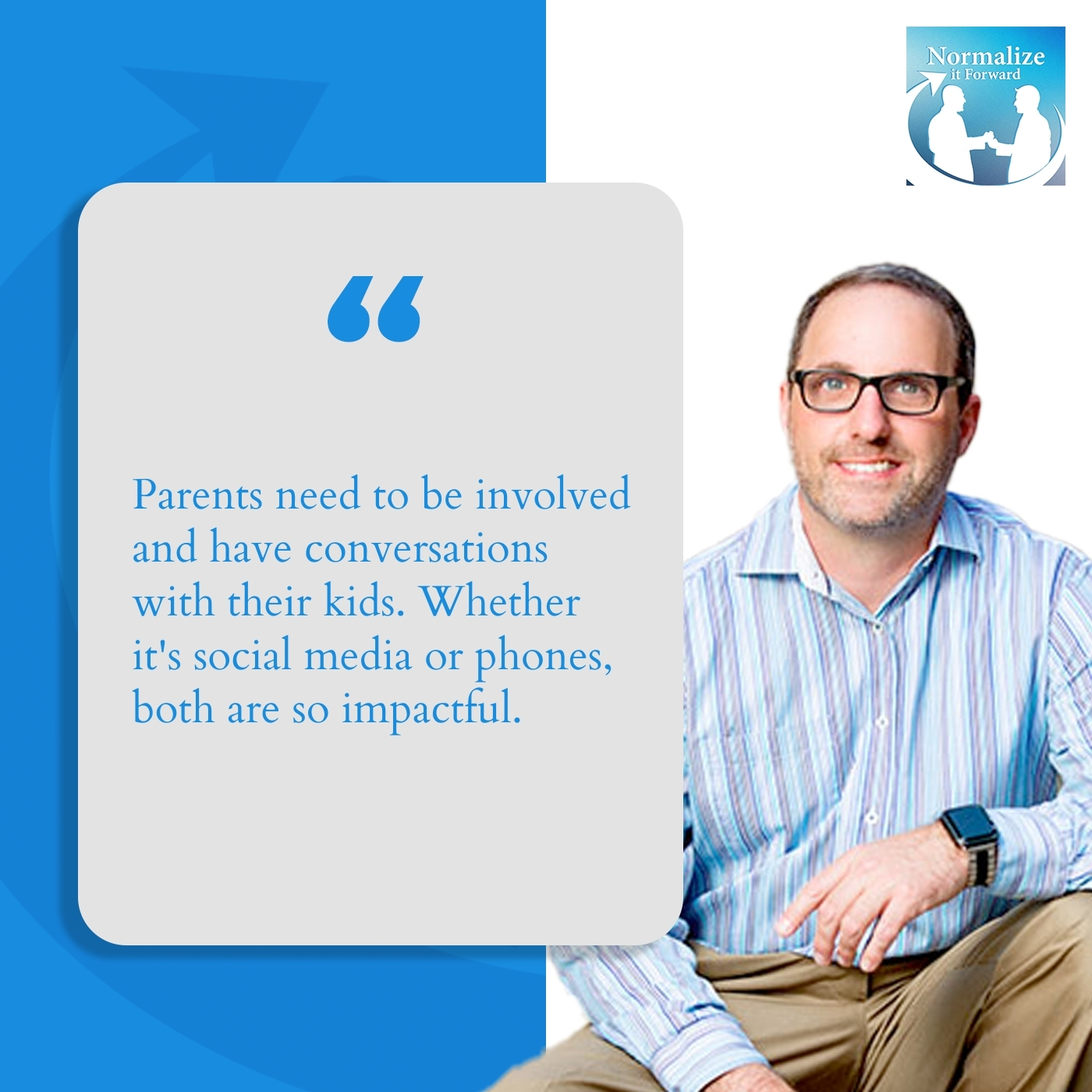
The theme of what you’re saying is so important, and that is parents need to be involved. They need to be having conversations with their kids. Whether it’s social media or phones, or both, they’re so impactful on kids. Sometimes, even picking their phone up and taking a look at their feed as to what’s in there can give you a sense of what they’ve been looking up and what the algorithm is sending them. That’ll tell you a lot. Let me pivot away from the topic of social media for a minute and ask this. Self-care is a buzz phrase that’s been talked about a lot in our field for many years. What do you think of self-care?
Self-care is tuning in and knowing yourself. In order to do self-care, you have to know. You have to be able to identify and label your own feelings. One of the things I’ve been working on is neurobiologically with our nervous systems and regulating ourselves. Whether we’re in the world, on social media, or dealing with conversations, we get activated.
It is being able to regulate our nervous systems to identify feelings, to be able to tolerate feelings, to be able to know what relationships feel good and are benefiting us, and what relationships are not working so great, to be able to have boundaries, and to speak up for ourselves. It’s nice to go for a walk or have a massage. Those things are important, too, but it’s way deeper than that. Self-care is building relationships so that you have them when you need them, and being able to make decisions about keeping yourself feeling good and healthy.
That’s a great answer. I’d love for my young adults who are tuning in to take heed to what you said. There are lots of ways to do what you suggested. Probably one of the most important things I heard is paying attention to yourself and asking the question, “Am I happy?” You could be lying to the rest of the world if you want.
In order to answer, “Am I happy?” you have to say, “What does this feel like to me?” Sometimes, as teens are developing, they may not be able to have the words that go with a feeling. It is like, “Where do I feel that in my body? What am I feeling? What am I not feeling? What’s happening in terms of my behavior? What are my goals, and how am I doing at meeting those goals?” It is asking yourself, “If my goal is to plan a soccer game, do well on a math test, or try out for a singing competition, am I taking the steps and making progress towards those things that I have identified as of value and meaning to me?”
Great point. What I was getting at was those teenagers who deep down know they’re not in a good place and are walking around with a mask on. Your point is very important. I would also point out the simplicity that we all have the ability to take those steps. Some kids may say, “I don’t want to,” or, “I’m feeling a little lazy,” or, “I’m not in the mood.” That’s fine, but we all still have the ability. I’m curious. I would love to put you on the spot. You seem like someone who could handle being put on the spot. I’m thinking of doing something new for my Instagram, and I would love to test it out on you. How about that? Can I do that? Is that good?
As long as you handle the technology part, because I tried something new on Instagram, and I failed at the technology.
College Transitions: What Parents Wish They Knew
No tech here. I’m just reading a question. I wanted to ask you a question as a mom. You’re stepping out of your therapist role and into your mom role. Having had two kids of my own go through college, I’m fascinated by what we learn as parents. Each year, there seems to be a good amount of learning. Let me read. As a mom who had kids go through college or even a couple of years of college, what’s one thing you wish you knew going into their first year?
My kids will tell you I can never take the psychologizing out of being a mom.
My kids tease me about it, too.
One of my friends had given me this advice, and I didn’t appreciate it at the time. As they’re getting ready to go, you feel like they’re leaving forever. The advice or feedback was that they come back, and you are building a new relationship. That has been important to remember. It’s also a lesson that’s related to something else I like to talk about, which is that change doesn’t necessarily mean bad. It’s different.
Change doesn't necessarily mean bad. It's just different. Share on XOne of the things I talk a lot with the kids I work with who are going to college is that there is a loss and a change. One of the things that we do a disservice to our aspiring college students is that we talk so much about, “These are going to be the best four years of your life,” or, “Aren’t you excited? You got into the school of your dreams.” We don’t talk about what it feels like to experience disappointment and what it feels like when we miss home. Those things are normal and okay. That’s something I wish I knew.
Those are good points. As you were talking about the transition and the loss, I think growth is hard. I also had a friend give me some advice, and it helped a lot. It was that they’re supposed to do this. As simple as that is, you forget that. You’re right. As a parent, there’s that loss and that sadness. It’s harder for families in some ways because our lives are the same, minus our kids. Their lives are new and exciting.
You’re on this precipice where you don’t know what’s coming. With a lot of things in life, we can look back and say, “It was okay. I got through it. I made it.” When we’re facing a precipice and we don’t know what’s coming, it can be scary. It’s also super cool to watch kids figure things out.
I agree.
It’s cool to watch them become themselves and find things. That is not to say that it’s always easy or that it’s always a smooth road, but to see them navigate, meet challenges, and find people and things that are so awesome is cool.
Empowering Students: Mental Wellness For College Life
I have one more question. This is more clinical, though. That was more for the moms. From our counselor backgrounds, when you think about kids that are reading this who are going off to college and their mental health and wellness, is there a suggestion you have for a kid that can help keep them balanced and managed heading off to school?
That is a great question and an important one. My advice would be similar to what I said, but tailored to a young person. It is that there are going to be ups and downs.
There will be ups and downs, and that is normal and expected. You're going to learn a lot about yourself. Share on XNo doubt.
That is normal, expected, and okay. I remember doing a semester abroad. I will never forget standing in the post office in a foreign country. At that time, we did not have cell phones or social media. I was trying to mail a letter home. I was in tears, and nobody would help me. Yet, those 3 or 4 months were the most amazing experience, not because they were easy, but because I saw, learned, grew, and did.
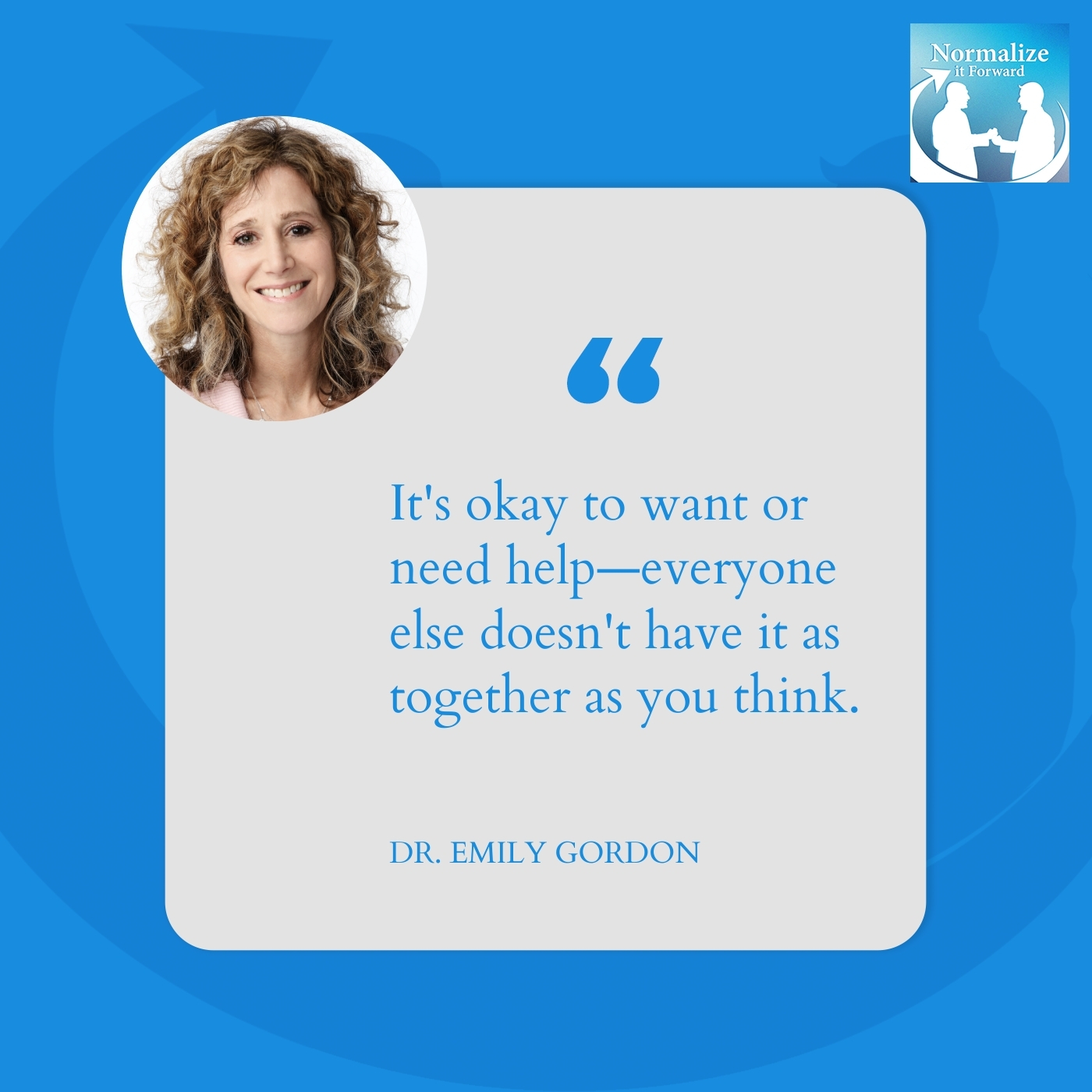
What I would say to students is, “There are going to be ups and downs. You’re going to learn a lot about yourself. You can do it.” Also, there’s so much support and help out there. It’s pretty amazing. There’s so much going on at these schools. There are so many people like you and me. It’s okay to want or need help. Everybody else doesn’t have it as together as you think they do.
That’s well said. I’m hoping my young adults are taking notes of your words. I would further that by saying I can’t tell you how many kiddos I’ve worked with that go off to school with maybe no anxiety or very little anxiety, and they come back with some challenges because growth is hard. The challenge can be high for some kids, but what you said makes so much sense and is so important. They need to realize there are people out there who can help and support.
In all different ways, whether that’s social, academic, health, or mental health. There are resources and support.
Kids have to be willing to ask and realize, too. If you don’t believe us, look it up on Google. Statistically, there are a lot of kids out there struggling. Homesickness is, to me, a pretty natural thing that most kids will encounter. I love what you said in your comments. “You’re going to do this. You’re going to get through this, and you’re going to grow as a result.”
I always tell kids, too, “If it’s not working for you, that’s okay. Let’s figure out what will.” Sometimes, we have to go and try things. Sometimes, we need to change our roommate. Sometimes, we need to change our school. Sometimes, we need to change our major. Sometimes, we need to change our path. We can deal with anything.
I transferred when I was in school, and I’m so thankful that I did. It brought me to UConn. When I was at UConn, I met one of my mentors there who opened up the whole world of counseling.
I know you’re trying to wrap up, but that’s another thing. We do this to kids. They feel like they have to know their path and that they have to have it figured out. I don’t know why we need to have kids applying to majors.
It’s a little crazy.
How do you know it’s seven? You don’t know things until you try to do things. There’s this pressure to know and to be sure. We can’t know things. All we can do is make one decision at a time. We as parents, as professionals, and as a culture can try to take the pressure off that you have to know and figure everything out, and trust that one thing will lead to another. It may not be the path you thought. That’s okay. Maybe it’s a more meaningful path or a more satisfying one.
Finding Your Path: The College Journey And Beyond
I completely agree. When kids come into my office at seventeen, they’ll go out of their way to tell me, “I’m majoring in Neurosurgery.” I’m like, “That’s cool.”
Some people know. Somehow, I knew I wanted to be a psychology major. I don’t know how I knew. I didn’t know that I was meant to be a psychologist, but it worked out for me. It doesn’t always, and that’s okay, too.
Let’s face it. When kids are in college, they’re pursuing something that they’re going to do for the next 40 years. To me, it seems like a decision we should take our time making. Some of my readers might be wondering because I often, at the end of interviews, ask you to nominate a friend, a coworker, or a relative to keep the conversation moving forward. I want to let everyone know that Emily and I have chatted offline. She has made some amazing recommendations that I do intend to follow up on. I appreciate all of the suggestions you made and want to thank you for your time and your perspective. It has been wonderful connecting with you.
Thank you. I agree. I somehow had a feeling we would have lots to talk about. Maybe we can continue the conversation someday.
I would love that. Thanks again. You have yourself a wonderful evening. You take care.
You, too.
Thanks.
Important Links
About Dr. Emily Gordon
 Emily Gordon, Psy.D., is a licensed clinical psychologist with almost 25 years of experience. Dr. Gordon maintains a private practice in Natick, Massachusetts, where she provides therapy, supervision, consultation and psychoeducation.
She is licensed to practice in the states of MA, FL and VT. Emily specializes in treating eating disorders and body image disturbances in adolescents, young adults and women of all ages.
Emily often works with people navigating life transitions and parents looking to better understand and support their developing teens and to better care for themselves along the way.
Dr. Gordon graduated from Northwestern University and earned her Psy.D. in Clinical Psychology from Ferkauf Graduate School of Psychology at Yeshiva University in New York.
She completed a Postdoctoral Fellowship in Child and Adolescent Psychology at McLean Hospital in MA, and was part of the team that started the Klarman Center for Eating Disorders also at McLean. Dr. Gordon has since supervised psychology trainees at both McLean Hospital and at the Boston Institute for Psychotherapy.
She enjoys speaking and writing about topics related to eating disorders and body image, adolescent development, young adulthood and parenting. In addition to her work with teens and families, Emily is a parent to three teenagers. You can find more about her practice at www.dremilygordon.com or on Instagram at www.instagram.com/dremilygordon.
Reading about mental health is hard. Let’s schedule a free consultation.
 Jacqueline brings over 20 years of experience in fashion, alongside a master’s degree in counseling psychology, to her work as a designer and advocate for mental health. Her journey through recovery from an eating disorder inspired her to create a fashion line that promotes both style and self-acceptance.